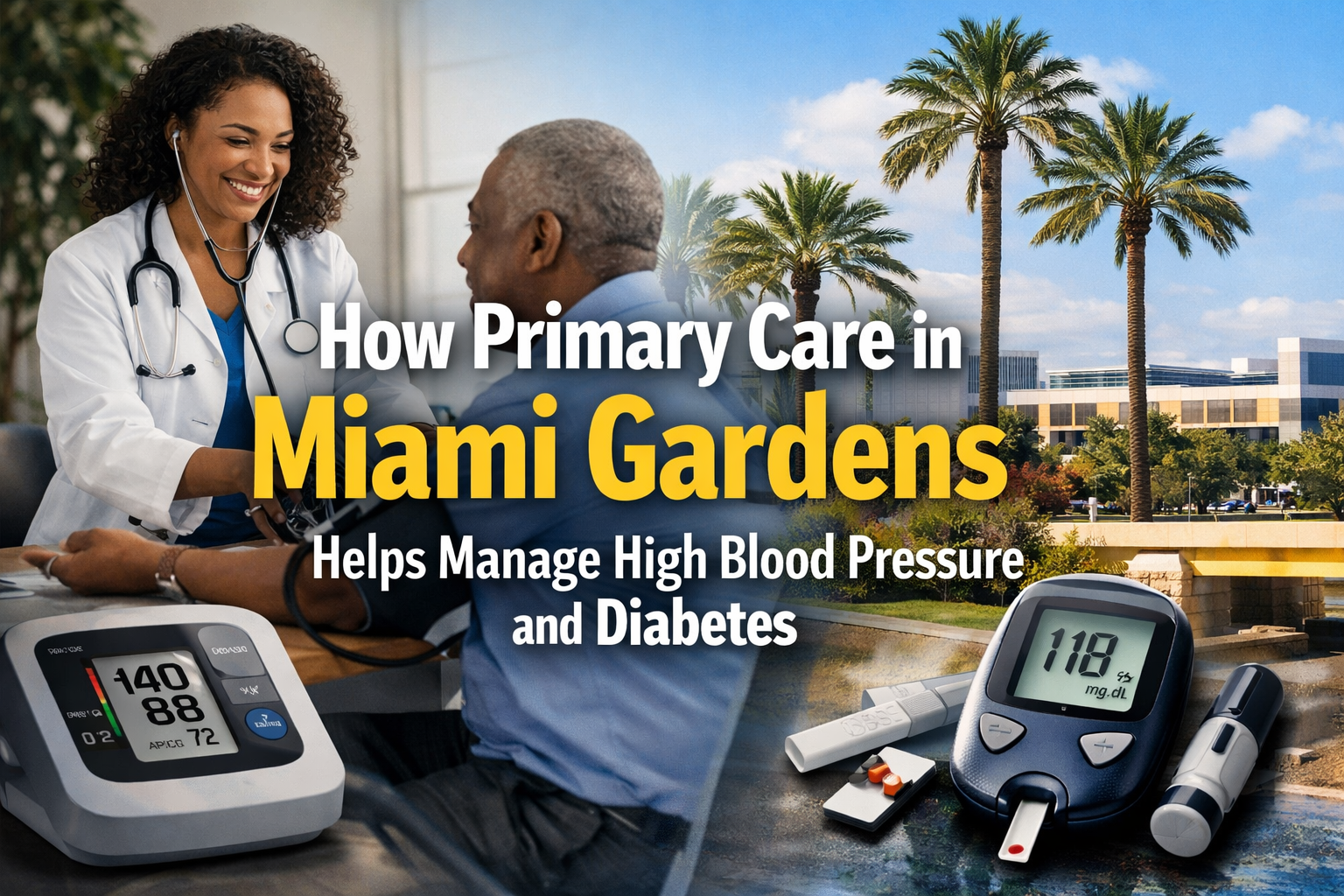
How Primary Care in Miami Gardens Helps Manage High Blood Pressure and Diabetes
Last updated: March 18, 2026
Quick Answer: A dedicated primary care clinic in Miami Gardens provides the ongoing medical supervision, lab monitoring, and lifestyle support that adults with high blood pressure or diabetes need to keep both conditions under control. For patients dealing with primary care diabetes hypertension Miami Gardens concerns, consistent clinic visits, in-house lab testing, and a bilingual care team make long-term disease management realistic and affordable — without driving across Miami-Dade County.
Key Takeaways
- High blood pressure and type 2 diabetes often occur together, and managing both requires a coordinated, ongoing care plan — not one-time urgent visits.
- A primary care provider in Miami Gardens tracks your numbers over time, adjusts medications, and orders labs before problems escalate.
- In-house laboratory testing saves time and gets results faster, so your treatment plan can be updated at the same appointment.
- Weight management and nutrition counseling are standard parts of chronic disease management — not optional add-ons.
- Telemedicine options mean you can check in with your provider between visits without taking time off work.
- Bilingual (English/Spanish) care teams reduce communication errors and improve treatment adherence for Spanish-speaking patients.
- Most major insurance plans are accepted, and self-pay options exist for patients without coverage.
- Same-day and walk-in appointments are available for urgent concerns between scheduled visits.
Why High Blood Pressure and Diabetes Are So Common in Miami Gardens
High blood pressure (hypertension) and type 2 diabetes are two of the most common chronic conditions among adults in Miami-Dade County, and they tend to appear together. According to the Centers for Disease Control and Prevention (CDC), adults with diabetes are nearly twice as likely to develop high blood pressure compared to those without diabetes. In communities like Miami Gardens, Miami Lakes, and Hialeah — where many residents work physically demanding jobs, manage household stress, and may have limited access to consistent medical care — both conditions often go undetected for years.
The problem with unmanaged hypertension and diabetes is that neither condition causes obvious pain in the early stages. A person can feel completely normal while their blood pressure reads 150/95 or their A1C climbs above 8. By the time symptoms appear — fatigue, blurry vision, chest tightness, frequent urination — the conditions have already caused measurable damage to the heart, kidneys, and blood vessels.
This is exactly why primary care matters. Regular visits with a primary care provider catch these numbers early, track changes over time, and allow for treatment adjustments before complications develop.
What Does Primary Care Actually Do for Hypertension and Diabetes?
Primary care for chronic conditions like hypertension and diabetes is not just about prescribing medication. It is a structured, ongoing process that includes monitoring, education, lifestyle support, and coordination with specialists when needed.
At a primary care clinic in Miami Gardens focused on primary care diabetes hypertension Miami Gardens management, a typical care plan includes:
For High Blood Pressure:
- Baseline blood pressure readings at every visit
- 24-hour blood pressure pattern review when needed
- Medication management (starting, adjusting, or stopping antihypertensives)
- Kidney function labs (creatinine, BMP) to monitor medication effects
- Lifestyle counseling on sodium reduction, physical activity, and stress management
- Referral to cardiology if readings remain uncontrolled
For Type 2 Diabetes:
- A1C testing every 3–6 months depending on control level
- Fasting glucose and lipid panel monitoring
- Medication management (oral agents, GLP-1 agonists, insulin if needed)
- Foot exam and eye referral coordination
- Nutrition and weight counseling integrated into every visit
- Diabetes education on carbohydrate awareness and portion control
“The goal of primary care is not just to treat a number on a chart. It is to help each patient understand their condition and build habits that protect their long-term health.”
How the Patient Intake Process Works at a Miami Gardens Primary Care Clinic
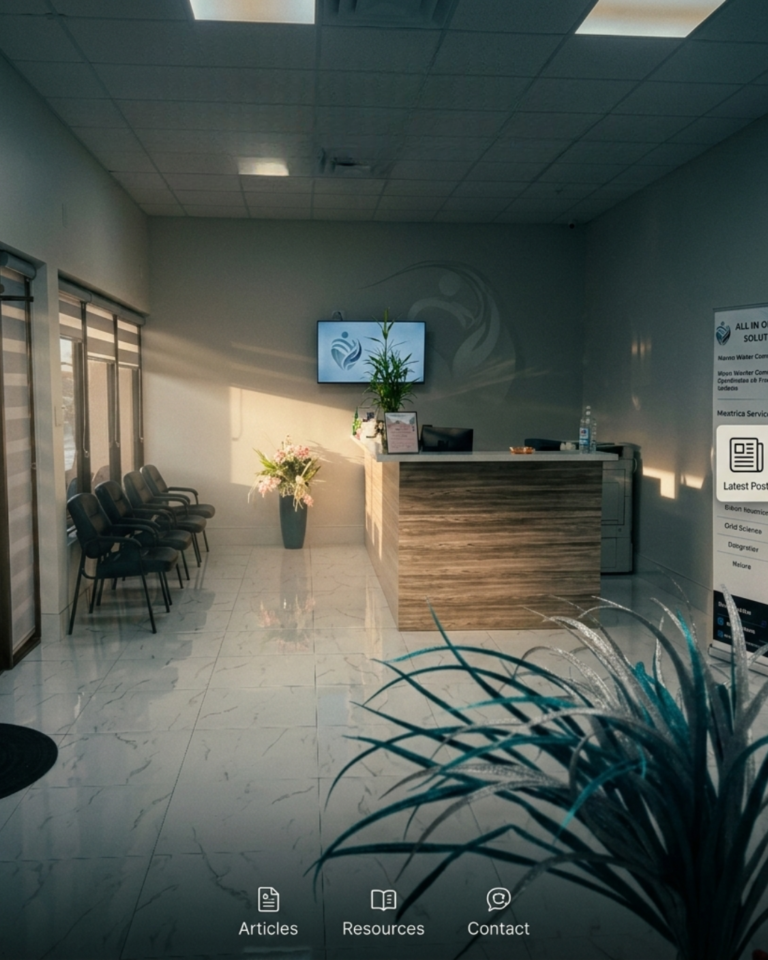
For many adults, the biggest barrier to starting care is not knowing what to expect. Here is a clear, step-by-step overview of what a new patient visit looks like at a primary care clinic like All In One Care Solutions in Miami Gardens:
Step 1 — Schedule your appointment New patients can book online, by phone, or walk in. Same-day appointments are available for urgent concerns.
Step 2 — Complete your intake forms Forms are available in English and Spanish. You will provide your medical history, current medications, allergies, and insurance information.
Step 3 — Vital signs and initial assessment A medical assistant takes your blood pressure, weight, heart rate, and oxygen level before the provider enters the room.
Step 4 — Provider consultation Your primary care provider reviews your history, discusses your current symptoms and concerns, and orders any necessary labs or screenings.
Step 5 — In-house lab testing If labs are needed, the on-site medical laboratory processes most tests the same day, so results are available quickly — often before you leave or within 24 hours.
Step 6 — Treatment plan and follow-up Your provider explains your results, starts or adjusts your treatment plan, and schedules your next visit. Everything is documented in your electronic health record.
Common mistake: Many patients wait until they feel sick to schedule a visit. For hypertension and diabetes, waiting for symptoms means waiting too long. Routine visits every 3–6 months are the standard of care for both conditions.
What Lab Tests Are Used to Monitor Blood Pressure and Diabetes?
Lab testing is the backbone of chronic disease management. Without regular labs, a provider is essentially guessing. Here is what monitoring typically looks like for patients managing both conditions:
| Test | What It Measures | Frequency |
|---|---|---|
| A1C | Average blood sugar over 3 months | Every 3–6 months |
| Fasting Glucose | Current blood sugar level | Every visit or as needed |
| Comprehensive Metabolic Panel (CMP) | Kidney and liver function, electrolytes | Every 6–12 months |
| Lipid Panel | Cholesterol and triglycerides | Annually or more often |
| Urinalysis / Urine Microalbumin | Early kidney damage from diabetes/HTN | Annually |
| CBC (Complete Blood Count) | Overall blood health | Annually |
| TSH (Thyroid) | Thyroid function (affects weight and BP) | As indicated |
Having an in-house lab at the Miami Gardens clinic means patients do not need to drive to a separate facility and wait days for results. This convenience directly improves follow-through — patients who can get labs done at the same visit are far more likely to complete them.
How Weight Management and Nutrition Fit Into the Plan
For the majority of adults with type 2 diabetes and hypertension, body weight is a direct factor in disease severity. Losing even 5–10% of body weight can meaningfully lower blood pressure and improve A1C levels, according to the American Diabetes Association.
At a primary care clinic that takes chronic disease seriously, weight management is not treated as a separate issue. It is built into the care plan from the beginning. This may include:
- Nutrition counseling focused on reducing refined carbohydrates and sodium
- Medically supervised weight loss programs, including GLP-1 medications like semaglutide or tirzepatide when appropriate
- Physical activity recommendations tailored to the patient’s current fitness level and any joint or cardiovascular limitations
- Regular weight tracking at each visit to monitor progress objectively
Choose this approach if: You have been told your blood pressure or blood sugar is high and your provider has not yet discussed your weight or eating habits. Those conversations should be part of every chronic disease visit.
Does Primary Care in Miami Gardens Accept Insurance?
Yes. Most primary care clinics in Miami Gardens, including All In One Care Solutions, accept a wide range of insurance plans. This is a common concern for patients in the Miami Gardens, Hialeah, and Miami Lakes communities, where many residents are on Medicaid, Medicare Advantage, or employer-sponsored plans.
Commonly accepted coverage types include:
- Medicare and Medicare Advantage plans
- Medicaid (Florida Medicaid)
- Preferred Care Partners and other local HMO/PPO networks
- Private insurance (Aetna, Cigna, United Healthcare, Blue Cross Blue Shield)
- Self-pay options for uninsured patients
For patients without insurance, self-pay rates for primary care visits and labs are available. Transparency about pricing matters — patients should always ask upfront what a visit will cost before committing.
Edge case: If you are unsure whether your plan is accepted, call the clinic directly or ask the front desk to verify your coverage before your appointment. Do not assume — insurance networks change frequently.
Can You Manage These Conditions Without Leaving Home? Telemedicine Options
For patients with busy schedules — essential workers, parents managing children, or adults caring for elderly family members — getting to a clinic every few months can feel impossible. Telemedicine services solve this problem for many routine follow-up needs.
What telemedicine can handle for hypertension and diabetes patients:
- Medication refill requests and adjustments
- Review of home blood pressure or glucose readings
- Discussing lab results from a recent in-person visit
- Nutrition and lifestyle check-ins
- Mental health support and referrals
What still requires an in-person visit:
- Initial diagnosis and physical exam
- Blood draws and lab testing
- Foot exams, eye referrals, and cardiovascular assessments
- Any new or worsening symptoms
Telemedicine works best as a complement to in-person care, not a replacement. The combination of quarterly in-person visits with telemedicine check-ins between appointments gives patients with chronic conditions the monitoring frequency they need without the logistical burden.
Mental Health and Chronic Disease: An Overlooked Connection
Living with high blood pressure and diabetes is not just a physical challenge. Chronic illness is consistently linked to higher rates of anxiety, depression, and emotional burnout. When mental health goes unaddressed, patients are less likely to follow treatment plans, more likely to miss appointments, and more likely to make lifestyle choices that worsen their conditions.
A comprehensive primary care approach in Miami Gardens addresses this directly. Mental health support services — including counseling referrals and behavioral health screening — are part of a complete care model for patients managing chronic conditions.
At every annual physical or chronic disease visit, providers can screen for depression and anxiety using validated tools (like the PHQ-9 and GAD-7). If a patient scores above the clinical threshold, a referral or same-clinic support can be arranged without the patient needing to navigate a separate system.
How to Choose the Right Primary Care Provider for Hypertension and Diabetes in Miami Gardens
Not every clinic is equally equipped to manage chronic conditions long-term. Here is what to look for:
Look for:
- A provider with experience in chronic disease management (not just urgent care)
- In-house lab testing capability
- Bilingual staff (English and Spanish)
- Accepts your insurance or offers transparent self-pay pricing
- Offers follow-up scheduling at 3–6 month intervals
- Integrates weight management and nutrition into the care plan
- Has telemedicine options for between-visit needs
Questions to ask at your first visit:
- How often will we check my A1C and blood pressure?
- What is your approach if my numbers are not improving with medication?
- Do you coordinate with cardiologists or endocrinologists if needed?
- Can I reach someone between appointments if I have questions?
For a deeper look at how to evaluate your options, see our guide on how to choose a primary care doctor in Miami Gardens.
Conclusion: Consistent Care Is the Most Effective Treatment
High blood pressure and diabetes are not conditions you manage once and forget. They require consistent attention — regular visits, updated labs, medication adjustments, and ongoing lifestyle support. The good news is that with the right primary care team, both conditions are highly manageable, and serious complications are largely preventable.
For adults in Miami Gardens, Miami Lakes, Hialeah, and surrounding Miami-Dade communities, All In One Care Solutions offers the bilingual, evidence-based, and accessible primary care that chronic disease management requires. From blood pressure treatment to diabetes care, the clinic is designed to meet patients where they are — with same-day appointments, in-house labs, and a team that speaks your language.
Your next step: Schedule a comprehensive medical exam to establish your baseline numbers, review your current medications, and build a care plan that works for your life. You do not need to wait until something goes wrong.
Book your appointment today — same-day availability is often open.
Frequently Asked Questions
Q: How often should I see a primary care doctor if I have both high blood pressure and diabetes? A: Most clinical guidelines recommend visits every 3 months if your conditions are not yet well-controlled, and every 6 months once your numbers are stable. Your provider will set the schedule based on your specific situation.
Q: Can a primary care doctor manage my diabetes, or do I need an endocrinologist? A: A primary care provider can manage the majority of type 2 diabetes cases, including medication management and monitoring. An endocrinologist referral is typically made when diabetes is difficult to control despite multiple medications, or when insulin management becomes complex.
Q: What is a normal blood pressure reading for an adult? A: According to the American Heart Association, a normal reading is below 120/80 mmHg. Readings between 130–139/80–89 mmHg are classified as Stage 1 hypertension. Anything at or above 140/90 mmHg is Stage 2 hypertension and requires treatment.
Q: What A1C level is considered diabetic? A: An A1C of 6.5% or higher on two separate tests confirms a diabetes diagnosis. Between 5.7% and 6.4% is classified as prediabetes. Below 5.7% is normal.
Q: Is it possible to reverse type 2 diabetes through lifestyle changes? A: Some patients achieve remission — meaning their A1C drops below 6.5% without medication — through significant weight loss and dietary changes. This is most achievable in the early stages of the disease. A primary care provider can help you determine if this is a realistic goal for your situation.
Q: Do I need a referral to see a primary care doctor in Miami Gardens? A: No referral is needed to see a primary care provider. However, if your insurance is an HMO plan, you may need to select this clinic as your primary care provider (PCP) in your plan. Call your insurance to confirm.
Q: What if I do not have health insurance? A: Self-pay options are available. Ask the clinic about current rates for new patient visits and lab panels. Many clinics offer discounted self-pay pricing that is more affordable than most patients expect.
Q: Can I get my diabetes and blood pressure medications refilled through telemedicine? A: Yes, for established patients with a documented care history, medication refills for stable chronic conditions can often be handled through a telemedicine visit. New prescriptions or significant changes typically require an in-person evaluation.
Q: Does the clinic offer nutrition counseling as part of diabetes care? A: Yes. Nutrition guidance is integrated into chronic disease management visits. For patients who need more structured support, weight management programs — including medically supervised options — are also available.
Q: Is the care team bilingual? A: Yes. The team at All In One Care Solutions in Miami Gardens provides care in both English and Spanish, which is especially important for patients who are more comfortable discussing their health in Spanish.
[lc_form id=’mclQ1MxM34FZEQZclrud’ title=’Website’ ]
References
- Centers for Disease Control and Prevention. Diabetes and Hypertension. CDC.gov. 2023. https://www.cdc.gov/diabetes/library/features/diabetes-and-heart.html
- American Diabetes Association. Standards of Medical Care in Diabetes. Diabetes Care. 2024. https://diabetesjournals.org/care/issue/47/Supplement_1
- American Heart Association. Understanding Blood Pressure Readings. Heart.org. 2023. https://www.heart.org/en/health-topics/high-blood-pressure/understanding-blood-pressure-readings
- American Heart Association. High Blood Pressure and Diabetes. Heart.org. 2022. https://www.heart.org/en/health-topics/high-blood-pressure/why-high-blood-pressure-is-a-silent-killer
- National Institute of Diabetes and Digestive and Kidney Diseases. Diabetes, High Blood Pressure, and Kidney Disease. NIDDK.gov. 2023. https://www.niddk.nih.gov/health-information/diabetes/overview/preventing-problems/high-blood-pressure-kidney-disease