How to Choose a Peptide Clinic in South Florida: 7 Questions to Ask
Last updated: June 10, 2026
Quick Answer: Choosing a peptide clinic in South Florida means verifying physician oversight, confirming FDA-compliant compounding sources, and demanding transparent pricing before you commit to any protocol. The right clinic will conduct a full medical evaluation before recommending any peptide therapy, not after. Use the 7 questions in this guide to filter out clinics that cut corners on safety or credentials.
Key Takeaways
- A licensed MD or DO must directly supervise your peptide therapy protocol, not just sign off on it from a distance.
- As of 2026, the FDA has reclassified several peptides, so confirm your clinic uses compounding pharmacies that are currently in compliance.
- Reputable clinics run bloodwork and a full medical history before recommending any peptide.
- Peptide therapy is not covered by most insurance plans; expect to pay out of pocket and ask for a full cost breakdown upfront.
- Common peptide applications include weight loss support, muscle recovery, anti-aging, and growth hormone optimization.
- Side effects are generally mild when protocols are medically supervised, but they are real and should be disclosed clearly.
- Results vary by individual, peptide type, and protocol adherence; most patients notice changes within 4 to 12 weeks.
- Telehealth options are widely available in Florida, but in-person lab work is still necessary for safe prescribing.
What Exactly Are Peptide Therapies and How Do They Work
Peptides are short chains of amino acids that act as signaling molecules in the body. They tell cells to perform specific functions, such as releasing growth hormone, reducing inflammation, or repairing tissue. Peptide therapy uses these compounds, typically administered by injection or oral capsule, to support or restore biological processes that decline with age or illness.
Common peptides used in clinical settings include:
- CJC-1295 / Ipamorelin — stimulates growth hormone release; used for body composition and recovery
- BPC-157 — supports tissue repair and gut health
- Sermorelin — a growth hormone-releasing hormone analog used in anti-aging protocols
- Semaglutide and Tirzepatide — GLP-1 receptor agonists used for medical weight loss (technically peptide-based medications)
- Thymosin Alpha-1 — supports immune function
Unlike synthetic hormones, most peptides work by stimulating the body’s own production pathways rather than replacing them directly. This is why they are often described as more physiologically “natural,” though that does not mean they are without risk or regulation.
What Medical Conditions Can Peptide Therapy Help Treat
Peptide therapy is used to address a range of conditions, though it is not a cure-all. Clinically supervised peptide protocols are most commonly applied for:
- Weight management — GLP-1 peptides like semaglutide and tirzepatide have strong clinical evidence for reducing body weight in adults with obesity or metabolic syndrome. Our Miami Gardens weight loss programs incorporate these protocols under physician supervision.
- Growth hormone deficiency — peptides like Sermorelin and CJC-1295/Ipamorelin are used when natural GH production is suboptimal
- Muscle recovery and athletic performance — BPC-157 and TB-500 are used by active adults for injury recovery
- Immune support — Thymosin Alpha-1 is used in patients with frequent illness or immune dysregulation
- Anti-aging and cellular health — NAD+ protocols, often delivered via IV, support mitochondrial function. Learn more about NAD+ IV therapy in Miami Gardens.
- Cognitive function — some peptides are being studied for neuroprotective effects, though evidence in humans is still developing
Important note: Many of these applications are considered off-label use. A credible clinic will be transparent about what has strong clinical evidence versus what is still emerging research.
Can Peptide Therapy Help With Weight Loss or Muscle Building
Yes, and this is one of the most common reasons patients in Miami seek peptide consultations. GLP-1 receptor agonist peptides (semaglutide, tirzepatide) have the strongest evidence base for weight loss in adults with obesity or type 2 diabetes. Growth hormone-releasing peptides like CJC-1295 and Ipamorelin are frequently used by adults seeking improved body composition, faster recovery, and lean muscle support.
For weight loss specifically, medically supervised programs that combine peptide therapy with nutrition guidance produce better outcomes than peptides alone. Our semaglutide weight loss program in Miami Gardens pairs pharmaceutical-grade compounded medications with ongoing physician monitoring.
For muscle building, results depend heavily on baseline hormone levels, training consistency, and diet. Peptides are a support tool, not a replacement for foundational health habits.
How Much Do Peptide Treatments Cost in South Florida
Peptide therapy in South Florida is almost entirely self-pay, and costs vary significantly by protocol. Here is a general cost range based on current market rates in the Miami area:
| Peptide Protocol | Estimated Monthly Cost |
|---|---|
| CJC-1295 / Ipamorelin | $150 – $350/month |
| BPC-157 | $100 – $250/month |
| Sermorelin | $200 – $400/month |
| Semaglutide (compounded) | $200 – $500/month |
| Tirzepatide (compounded) | $300 – $600/month |
| NAD+ IV Therapy | $150 – $400/session |
These figures are estimates based on current market pricing in South Florida and do not include the initial consultation, lab work, or follow-up visits, which may add $100 to $300 or more to your first-month total. Flexible payment plans are available at some clinics, including ours, to make medically supervised care more accessible.
Common mistake: Choosing a clinic based on the lowest advertised price. Unusually low prices often indicate lower-quality compounding sources or minimal physician involvement.
Are Peptide Clinics Covered by Insurance
Most peptide therapies are not covered by health insurance in 2026. Because many peptide protocols are off-label or use compounded medications, insurers classify them as elective wellness treatments. There are exceptions: GLP-1 medications like semaglutide may be covered when prescribed for type 2 diabetes management, depending on your plan.
What to do before your first appointment:
- Call your insurance provider and ask specifically about coverage for compounded peptide medications
- Ask the clinic if they provide superbills or documentation for HSA/FSA reimbursement
- Confirm whether the initial medical consultation is billed separately and whether it may be covered under a primary care visit
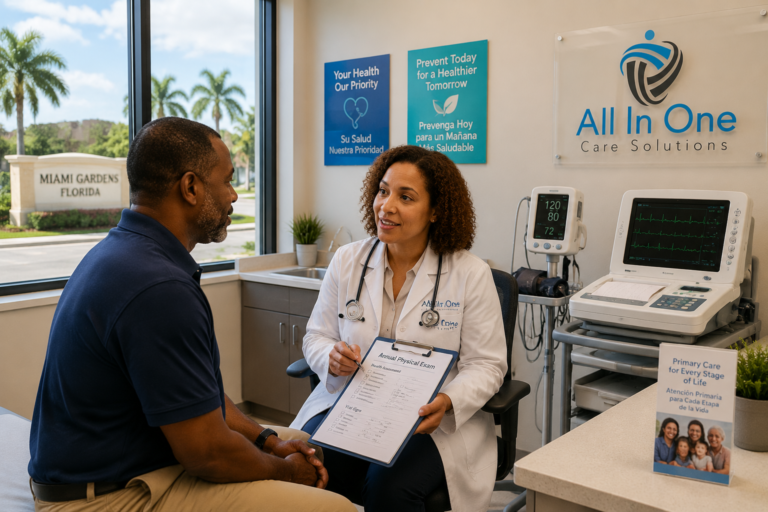
Our primary care clinic in Miami Gardens accepts several insurance plans for primary care visits, which may include the initial evaluation and lab work associated with a peptide consultation.
What Medical Certifications Should a Peptide Clinic Doctor Have
The supervising physician must hold a valid Florida medical license (MD or DO) and should be verifiable through the Florida Department of Health’s online license lookup. Beyond that, look for:
- Board certification in internal medicine, family medicine, endocrinology, or sports medicine
- Active involvement in patient care, not just a name on a letterhead
- Familiarity with current FDA compounding regulations for peptides
- A clear protocol for monitoring labs and adjusting dosages over time [1]
Red flag: If the clinic cannot tell you who the medical director is, or if that physician is not involved in your specific treatment plan, walk away. Peptide therapy requires physician-level oversight, not just a nurse practitioner signing prescriptions without backup.
At All In One Care Solutions, every patient receives care under the direct supervision of a licensed physician. You can learn more about our approach on our primary care services page.
How to Choose a Peptide Clinic in South Florida: 7 Questions to Ask Your Provider
This is the core of the decision. When you contact or visit a peptide clinic in South Florida, ask these 7 questions directly. A reputable clinic will answer all of them without hesitation.
Question 1: Is a licensed physician directly supervising my treatment?
Ask for the physician’s name, license number, and board certifications. Verify them independently through the Florida Department of Health website. The physician should be involved in your care, not just available “if needed.” [1]
Question 2: Where do your peptides come from?
Peptides should be sourced from FDA-registered compounding pharmacies that follow Current Good Manufacturing Practice (CGMP) standards. Ask for the pharmacy’s name and whether it holds 503A or 503B accreditation. [3] As of April 2026, the FDA has updated its classification of several peptides, so this question is more important than ever. [2]
Question 3: Do you conduct lab work before starting treatment?
Any clinic that skips baseline bloodwork is taking shortcuts with your health. Labs should include, at minimum, a comprehensive metabolic panel, hormone levels relevant to your protocol, and a review of your medical history. [4]
Question 4: What does the full cost of treatment include?
Ask for a written breakdown that covers the consultation, lab fees, the peptide cost, and follow-up visits. Hidden fees are common in the wellness industry. A trustworthy clinic provides clear pricing before you sign anything. [7]
Question 5: How will you monitor my progress and adjust my protocol?
Effective peptide therapy requires regular follow-up, typically every 4 to 8 weeks, with labs repeated at intervals. If a clinic offers no structured monitoring plan, the treatment is unlikely to be safe or effective. [8]
Question 6: What are the potential risks and side effects for my specific protocol?
A physician-led clinic will walk you through the known side effects of your specific peptide, not just generic disclaimers. See the section below for common side effects by category.
Question 7: Do you offer telehealth consultations, and how are prescriptions handled?
Florida’s telehealth regulations allow for virtual consultations and remote monitoring, which is convenient for patients in Miami Lakes, Hialeah, and surrounding areas. However, initial lab work must still be done in person. [5] Our telemedicine services are available for follow-up care and ongoing monitoring.
What Are the Potential Side Effects of Peptide Therapy
Side effects depend on the specific peptide, the dose, and the individual patient. When treatment is medically supervised, most side effects are mild and manageable.
Common side effects by category:
- Injection site reactions: redness, mild swelling, or irritation at the injection site; usually resolves within 24 hours
- GH-releasing peptides (CJC-1295, Ipamorelin, Sermorelin): water retention, mild joint discomfort, tingling in the hands or feet, vivid dreams
- GLP-1 peptides (semaglutide, tirzepatide): nausea, reduced appetite, constipation, occasional vomiting, especially in the first few weeks
- BPC-157: generally well-tolerated; some patients report mild dizziness or nausea
- NAD+ IV therapy: flushing, chest tightness, or nausea during infusion if administered too quickly
Risks for patients over 50: Adults over 50 should have a thorough cardiovascular and metabolic evaluation before starting growth hormone-releasing peptides. Elevated IGF-1 levels, which can result from sustained GH stimulation, may carry long-term risks that require monitoring. This is not a reason to avoid peptide therapy, but it is a reason to choose a clinic that takes baseline labs seriously.
How Do I Know If I Am a Good Candidate for Peptide Treatment
You may be a good candidate if you are an adult in generally good health who has specific, measurable goals such as improving body composition, supporting recovery, addressing growth hormone deficiency, or managing weight under medical supervision.
You may not be a good candidate if you:
- Have active cancer or a history of hormone-sensitive cancers
- Are pregnant or breastfeeding
- Have uncontrolled diabetes or severe kidney or liver disease
- Are taking medications that interact with the intended peptide protocol
The only way to know for certain is through a proper medical evaluation. Self-diagnosing based on online symptom lists is not a safe substitute for lab work and a physician consultation.
How Quickly Can I Expect Results From Peptide Treatments
Results depend on the peptide type, your baseline health, and your adherence to the protocol. General timelines:
- GLP-1 weight loss peptides: noticeable appetite reduction within 1 to 2 weeks; meaningful weight loss typically visible by weeks 4 to 8
- Growth hormone-releasing peptides: improved sleep quality and energy within 2 to 4 weeks; body composition changes typically take 3 to 6 months
- BPC-157 for tissue repair: some patients report improvement in joint or gut symptoms within 2 to 4 weeks
- NAD+ IV therapy: many patients report improved mental clarity and energy within 24 to 48 hours of infusion
No ethical clinic will promise specific outcomes. Results vary based on individual biology, lifestyle, and consistency of treatment. [4]
How Do Peptide Treatments Compare to Traditional Hormone Replacement Therapy
Peptide therapy and traditional hormone replacement therapy (HRT) are not the same, though they are sometimes used together. The key differences:
| Factor | Peptide Therapy | Traditional HRT |
|---|---|---|
| Mechanism | Stimulates body’s own production | Replaces hormones directly |
| Regulation | Compounded; off-label in many cases | FDA-approved drugs available |
| Insurance coverage | Rarely covered | Sometimes covered |
| Reversibility | Generally reversible | Depends on hormone and duration |
| Monitoring required | Yes, labs every 4-8 weeks | Yes, labs every 3-6 months |
Peptide therapy is often preferred by patients who want to support their body’s natural hormone production rather than replace it. HRT may be more appropriate for patients with confirmed hormone deficiencies that require direct supplementation. A physician can help determine which approach, or combination, is right for you.
How to Choose a Peptide Clinic in South Florida: Evaluating Clinic Reputation
A clinic’s reputation is built on consistent patient outcomes and transparent communication, not marketing language. Here is how to evaluate it practically:
- Check Google reviews for mentions of physician involvement, wait times, and follow-up quality
- Look for before-and-after documentation that includes lab results, not just photos
- Ask if the clinic has been cited by the Florida Department of Health for any violations
- Confirm the clinic’s physical address matches its online listings; NAP consistency (Name, Address, Phone) is a basic trust signal [6]
- Ask for patient references if you are considering a high-cost or long-term protocol
Clinics that are evasive about their compounding sources, physician credentials, or pricing should be avoided regardless of their marketing. [6]
FAQ
Q: Is BPC-157 legal in South Florida in 2026?
BPC-157 exists in a regulatory gray area. It is not FDA-approved as a drug, but it can be legally compounded by a licensed pharmacy for individual patient use under a physician’s prescription. Confirm your clinic uses a 503A or 503B-accredited pharmacy.
Q: Can I get peptide therapy without a prescription in Miami?
No. Any clinic offering peptide injections without a physician evaluation and prescription is operating outside of legal and ethical standards. Avoid these providers.
Q: How often do I need to come in for peptide therapy?
Most injection protocols are self-administered at home after an initial training session. You will typically return to the clinic every 4 to 8 weeks for follow-up labs and protocol adjustments.
Q: Do peptide clinics in South Florida offer Spanish-language care?
Many do, including All In One Care Solutions, which provides bilingual care in English and Spanish for patients in Miami Gardens, Miami Lakes, and Hialeah.
Q: What labs should I get before starting peptide therapy?
At minimum: comprehensive metabolic panel, CBC, IGF-1 (if using GH-releasing peptides), fasting glucose, lipid panel, and relevant hormone levels (testosterone, estradiol, thyroid panel depending on your goals).
Q: Is peptide therapy safe for women?
Yes, with proper medical supervision. Women commonly use peptide therapy for weight management, immune support, and anti-aging protocols. Hormone-sensitive individuals should discuss their full medical history with the prescribing physician.
Q: Can I combine peptide therapy with IV therapy?
Yes. Many patients combine peptide protocols with IV nutrient therapy for broader wellness support. Our IV therapy services in Miami Gardens are available as a complement to other medically supervised treatments.
Q: What happens if I stop peptide therapy?
Most peptide effects are not permanent. If you stop treatment, your body typically returns to its baseline over weeks to months. This is different from some traditional hormone therapies, which can cause withdrawal effects.
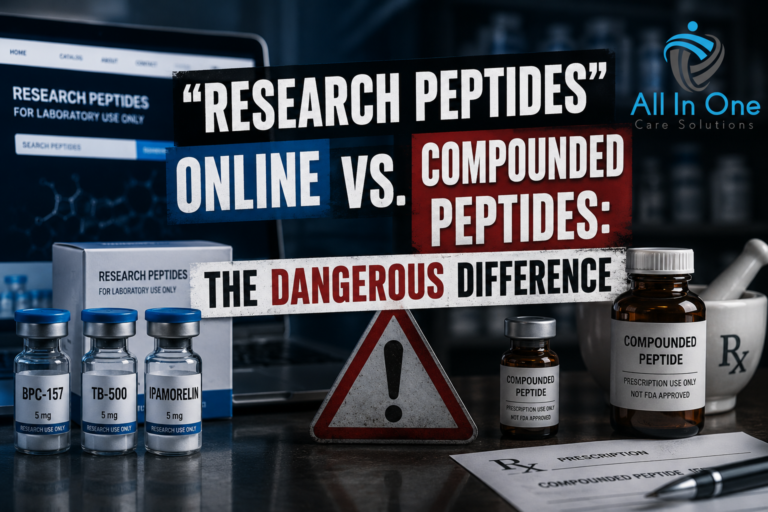
Q: Are compounded peptides the same as FDA-approved drugs?
No. Compounded medications are not FDA-approved. They are prepared by licensed pharmacies for individual patients and must meet FDA compounding standards, but they do not undergo the same clinical trial process as approved drugs. [2]
Q: How do I verify a Florida compounding pharmacy’s credentials?
Search the pharmacy name on the FDA’s registered facility database and confirm it holds 503A or 503B status. You can also check with the Florida Board of Pharmacy.
Conclusion
Choosing a peptide clinic in South Florida is a medical decision, not a wellness purchase. The 7 questions outlined in this guide give you a practical framework for evaluating any clinic before you commit. Verify physician credentials, confirm compliant compounding sources, demand baseline lab work, and get full pricing in writing.
At All In One Care Solutions, we provide physician-supervised peptide therapy consultations for patients across Miami Gardens, Miami Lakes, and Hialeah. Every protocol begins with a comprehensive medical evaluation, including lab work and a full health history review. We use pharmaceutical-grade compounded formulations from accredited pharmacies, and we provide structured follow-up care to monitor your progress.
Your next steps:
- Schedule a consultation with a licensed physician at our primary care clinic in Miami Gardens
- Bring your most recent lab results if you have them, or we will order baseline labs at your visit
- Ask every question on this list, and expect clear, direct answers
Medically supervised peptide therapy can be a valuable part of a preventive wellness plan when it is done correctly. The right clinic will make that process transparent, evidence-based, and safe.
References
[1] How To Choose Med Spa 7 Questions – https://www.medicalspalocator.com/blog/how-to-choose-med-spa-7-questions?utm_source=openai
[2] Fda Peptide Regulations 2026 Compounding Pharmacy Clinic Guide – https://peptidealliance.io/blog/fda-peptide-regulations-2026-compounding-pharmacy-clinic-guide?utm_source=openai
[3] Best Peptides Miami – https://www.perxpeptides.com/blog/best-peptides-miami?utm_source=openai
[4] Peptide Clinics In South Florida Customized Peptide Treatments For Regenerative Health Wellness Optimization And Longevity – https://www.perfectb.com/peptide-clinics-in-south-florida-customized-peptide-treatments-for-regenerative-health-wellness-optimization-and-longevity/?utm_source=openai
[5] Peptide Therapy – https://www.southfloridafaceandbody.com/wellness-treatments/peptide-therapy/?utm_source=openai
[6] How To Choose A Med Spa 7 Things To Look For – https://medspascout.com/blog/how-to-choose-a-med-spa-7-things-to-look-for?utm_source=openai
[7] Peptide Therapy Miami – https://www.perfectb.com/peptide-therapy-miami/?utm_source=openai
[8] Peptide Therapy Questions – https://www.asymmetrichealth.com/blog/peptide-therapy-questions/?utm_source=openai
Tags: peptide therapy Miami, peptide clinic South Florida, compounded peptides Miami, BPC-157 Miami, CJC-1295 Ipamorelin, medical weight loss Miami Gardens, anti-aging clinic Miami, peptide injections Miami, medically supervised peptide therapy, hormone therapy Miami Lakes, peptide consultation Miami, preventive care Miami