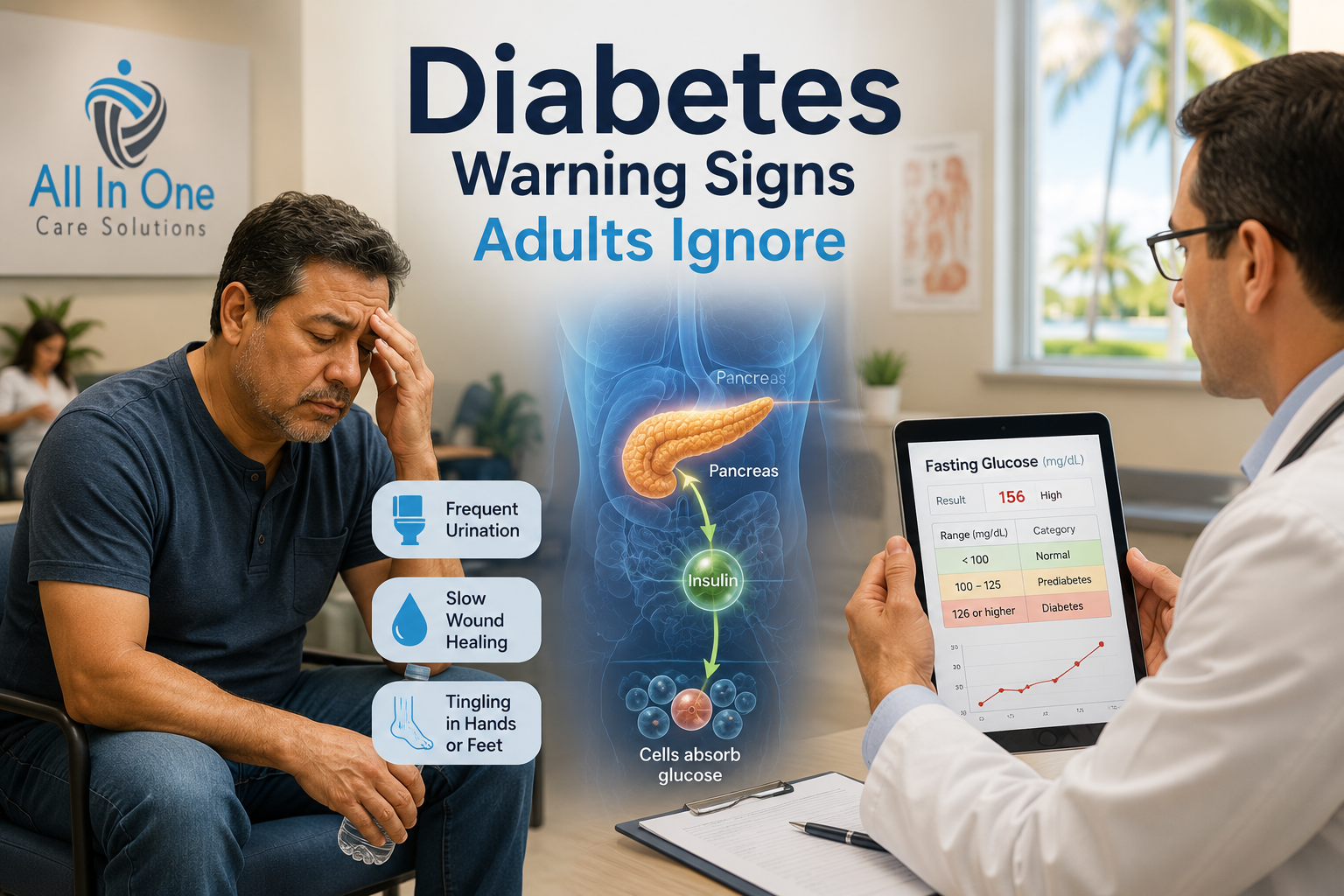
Diabetes Warning Signs Adults Ignore
Last updated: July 2, 2026
Quick Answer: More than 1 in 5 adults with diabetes in the United States do not know they have it, according to the Centers for Disease Control and Prevention (CDC). Many of the diabetes warning signs adults ignore are subtle — fatigue, increased thirst, slow-healing cuts — and are easily mistaken for normal aging or everyday stress. A simple fasting blood glucose test or HbA1c panel can confirm or rule out diabetes, and early detection dramatically improves long-term health outcomes.
Key Takeaways
- Diabetes can progress silently for years before a formal diagnosis. Many adults in Miami Gardens, Hialeah, and Miami Lakes are living with undiagnosed type 2 diabetes right now.
- The most commonly overlooked symptoms include excessive thirst, frequent urination, unexplained fatigue, blurred vision, slow wound healing, and tingling or numbness in the feet.
- Type 2 diabetes symptoms tend to develop gradually; type 1 can appear more suddenly and severely.
- Prediabetes — a blood sugar level above normal but below the diabetes threshold — affects an estimated 98 million American adults, per the CDC, and is largely reversible with lifestyle changes.
- Adults over 35, individuals with excess body weight, and those with a family history of diabetes face the highest risk.
- A fasting plasma glucose test, HbA1c test, or oral glucose tolerance test can diagnose diabetes at an annual physical exam.
- Undiagnosed diabetes over several years increases the risk of kidney disease, nerve damage, vision loss, and cardiovascular disease.
- Routine lab testing and an annual physical exam are the most effective tools for catching diabetes early.
What Are the Early Warning Signs of Diabetes Adults Most Often Ignore
The early warning signs of diabetes are frequently dismissed as minor inconveniences rather than medical signals. The most common symptoms include increased thirst, frequent urination, unexplained fatigue, blurred vision, slow-healing wounds, recurring infections, and tingling or numbness in the hands or feet.
What makes these symptoms easy to overlook is that they tend to appear gradually and feel manageable. Adults often attribute them to getting older, working long hours, or not drinking enough water. By the time symptoms become disruptive, blood sugar levels may have been elevated for months or even years.
Here is a breakdown of the diabetes warning signs adults ignore most often:
| Symptom | Why It's Ignored | What It Signals |
|---|---|---|
| Excessive thirst | "I just need to drink more water" | High blood glucose pulls fluid from cells |
| Frequent urination | "Normal with age or caffeine" | Kidneys working to filter excess glucose |
| Unexplained fatigue | "I'm just tired from work" | Cells not receiving glucose for energy |
| Blurred vision | "I need new glasses" | Fluid shifts in the lens of the eye |
| Slow-healing cuts | "It's just a small wound" | Impaired circulation and immune response |
| Tingling in feet | "Poor posture or circulation" | Early peripheral neuropathy |
| Recurring infections | "Bad luck this season" | High glucose feeds bacteria and fungi |
| Unexplained weight loss | "Stress or diet changes" | Body breaking down fat and muscle for energy |
| Darkened skin in folds | "Skin discoloration" | Acanthosis nigricans, a sign of insulin resistance |
Decision rule: If three or more of these symptoms are present at the same time, or if any single symptom has persisted for more than two to three weeks without a clear explanation, a blood glucose screening is warranted.
Why Do Adults Miss Diabetes Symptoms
Adults miss diabetes symptoms primarily because type 2 diabetes develops slowly, the symptoms overlap with common conditions, and many people avoid medical visits until something feels urgent.
Several factors contribute to delayed recognition:
- Symptom overlap: Fatigue, thirst, and blurred vision are associated with dozens of conditions, from dehydration to thyroid disorders to poor sleep.
- Normalization: Adults who have lived with mild symptoms for months begin to accept them as their baseline.
- Healthcare avoidance: Many adults in South Florida communities — particularly those without insurance or those who are self-pay — delay routine checkups due to cost concerns.
- Cultural factors: In Hispanic communities, there is sometimes a tendency to manage symptoms at home before seeking medical care, which can delay diagnosis.
- No pain: Unlike a broken bone or chest pain, early diabetes rarely causes acute discomfort. This absence of pain makes it easy to deprioritize.
The result is that many adults receive a diabetes diagnosis only after a complication — such as a foot ulcer, vision change, or abnormal lab result during a routine exam — brings them to a clinic.
Can You Have Diabetes Without Knowing It
Yes. According to the CDC, approximately 8.5 million Americans have undiagnosed diabetes as of recent national estimates. This is one of the most important diabetes warning signs adults ignore: the absence of obvious symptoms does not mean blood sugar is normal.
Type 2 diabetes, in particular, can be present for years without causing symptoms severe enough to prompt a medical visit. The pancreas continues producing insulin, but the body's cells become increasingly resistant to it. Blood sugar rises gradually, and the body adapts — until it cannot.
This is why routine screening matters. A fasting blood glucose test or HbA1c panel can detect diabetes and prediabetes before symptoms appear. For adults in Miami Gardens and surrounding communities, an annual physical exam that includes basic lab work is often the first and only opportunity to catch this condition early.
What Is the Difference Between Type 1 and Type 2 Diabetes Symptoms
The core difference is speed of onset and severity. Type 1 diabetes symptoms typically appear suddenly and intensely, while type 2 diabetes symptoms develop gradually and may go unnoticed for years.
Type 1 diabetes is an autoimmune condition in which the immune system destroys insulin-producing cells in the pancreas. Symptoms can appear over days to weeks and include:
- Rapid, unexplained weight loss
- Extreme thirst and frequent urination
- Severe fatigue
- Blurred vision
- Fruity-smelling breath (a sign of diabetic ketoacidosis, or DKA)
- Nausea and vomiting
Type 1 is most commonly diagnosed in children and young adults, though it can occur at any age.
Type 2 diabetes develops over months to years. Symptoms are milder at first and include:
- Gradual increase in thirst and urination
- Fatigue that worsens over time
- Slow-healing wounds
- Tingling in the feet
- Darkened skin patches (acanthosis nigricans)
- Frequent yeast or urinary tract infections
Common mistake: Adults who develop type 1 diabetes after age 30 are sometimes misdiagnosed with type 2 because the assumption is that late-onset diabetes is always type 2. If symptoms are severe and rapid, a physician should evaluate for type 1 or LADA (latent autoimmune diabetes in adults).
Are There Diabetes Symptoms That Feel Like Other Conditions
Yes, and this is one of the primary reasons diabetes warning signs adults ignore go unaddressed. Many diabetes symptoms mimic other common conditions.
- Fatigue resembles hypothyroidism, anemia, depression, or poor sleep quality.
- Blurred vision is commonly attributed to refractive errors, leading adults to update their glasses prescription rather than check blood sugar.
- Frequent urination overlaps with urinary tract infections, overactive bladder, or prostate issues in men.
- Tingling in the feet can suggest vitamin B12 deficiency, poor circulation, or nerve compression.
- Increased hunger may be attributed to stress, medication side effects, or a fast metabolism.
- Recurring skin infections are often treated topically without investigating an underlying metabolic cause.
This overlap makes comprehensive lab testing essential. A single blood draw that includes a fasting glucose level and HbA1c can clarify whether these symptoms have a metabolic root — or rule diabetes out entirely. Diabetes care in Miami Gardens at All In One Care Solutions includes in-house lab testing to provide answers quickly.
Who Is Most at Risk for Developing Diabetes
Adults at highest risk for type 2 diabetes include those who are overweight or obese, physically inactive, over age 35, or who have a family history of diabetes. Hispanic adults face a disproportionately higher risk.
Key risk factors include:
- Body weight: Excess fat, particularly around the abdomen, increases insulin resistance.
- Age: Risk increases after age 35 and rises significantly after 45.
- Family history: Having a parent or sibling with type 2 diabetes increases personal risk.
- Ethnicity: Hispanic, Black, Asian, and Native American adults have higher rates of type 2 diabetes than non-Hispanic white adults, according to the American Diabetes Association (ADA).
- Prediabetes: An HbA1c between 5.7% and 6.4% indicates prediabetes, which carries a high risk of progressing to type 2 diabetes without intervention.
- Gestational diabetes history: Women who had gestational diabetes have a significantly elevated lifetime risk.
- Hypertension and high cholesterol: These conditions frequently coexist with insulin resistance.
For patients in Miami Gardens, Hialeah, and Miami Lakes — communities with high proportions of Hispanic residents — diabetes risk is a genuine and immediate public health concern. Chronic disease management, including diabetes management and prevention, is a core focus at All In One Care Solutions.
How Is Diabetes Diagnosed and What Tests Are Needed
Diabetes is diagnosed through one of three blood tests: a fasting plasma glucose test, an HbA1c test, or an oral glucose tolerance test. A second confirmatory test is typically required unless symptoms are severe.
Fasting Plasma Glucose (FPG):
- Normal: below 100 mg/dL
- Prediabetes: 100–125 mg/dL
- Diabetes: 126 mg/dL or higher (confirmed on two separate occasions)
HbA1c (Glycated Hemoglobin):
- Normal: below 5.7%
- Prediabetes: 5.7%–6.4%
- Diabetes: 6.5% or higher
Oral Glucose Tolerance Test (OGTT):
- Measures blood sugar two hours after consuming a glucose solution
- Diabetes: 200 mg/dL or higher at the two-hour mark
These tests are available through in-house lab services at All In One Care Solutions. Patients do not need a specialist referral for initial screening. A primary care visit that includes a basic blood panel is sufficient to begin the diagnostic process.
What Happens If Diabetes Goes Undiagnosed for Years
Undiagnosed diabetes causes progressive damage to blood vessels and nerves throughout the body. The longer blood glucose remains elevated without treatment, the more severe and permanent the complications become.
Long-term consequences of untreated diabetes include:
- Diabetic neuropathy: Nerve damage causing pain, tingling, or numbness in the feet and hands, which can eventually lead to foot ulcers and amputation.
- Diabetic retinopathy: Damage to blood vessels in the eyes, which is a leading cause of blindness in working-age adults.
- Chronic kidney disease: High blood glucose damages the filtering units of the kidneys, potentially leading to dialysis.
- Cardiovascular disease: Adults with diabetes have two to four times the risk of heart disease and stroke compared to those without diabetes, according to the ADA.
- Increased infection risk: Poor circulation and immune function make infections harder to fight and slower to heal.
These complications are largely preventable with early detection and consistent chronic disease management. The goal of early screening is not simply to assign a diagnosis — it is to prevent these outcomes entirely.
Can Diabetes Symptoms Come On Suddenly or Is It Gradual
It depends on the type. Type 2 diabetes symptoms develop gradually over months to years, while type 1 diabetes can present suddenly and severely within days to weeks.
For type 2 diabetes, the gradual nature of symptom onset is precisely why so many adults miss the early signs. The body compensates for rising blood sugar through increased urination and thirst, but these changes are subtle at first. Most adults do not notice a meaningful shift in how they feel until blood sugar has been elevated for a significant period.
Type 1 diabetes, by contrast, can progress rapidly to diabetic ketoacidosis (DKA) — a life-threatening condition marked by high blood glucose, ketones in the urine, rapid breathing, and confusion. DKA requires emergency medical care.
Edge case: Some adults with type 2 diabetes experience a sudden worsening of symptoms during a period of physical stress, illness, or surgery. This can make it appear as though the condition came on suddenly, when in reality it had been developing undetected for years.
Which Diabetes Symptoms Should Send Me to the Emergency Room Right Away
Certain symptoms indicate a medical emergency and require immediate evaluation at an emergency room or by calling 911. Do not wait for a scheduled appointment if any of these are present.
Go to the ER immediately if you experience:
- Fruity or acetone-smelling breath combined with nausea, vomiting, or abdominal pain (possible DKA)
- Extreme confusion, difficulty speaking, or loss of consciousness
- Blood sugar reading above 300 mg/dL on a home glucometer, especially with symptoms
- Severe dehydration with inability to keep fluids down
- Rapid or labored breathing without a respiratory illness
- Sudden vision loss
- Chest pain combined with any diabetes symptom
These signs may indicate diabetic ketoacidosis (DKA) or hyperosmolar hyperglycemic state (HHS), both of which are life-threatening without prompt intervention.
For non-emergency concerns — such as a new symptom, a concerning blood sugar reading, or a desire to get screened — a same-day or next-day appointment at a primary care clinic in Miami Gardens is the appropriate first step.
How Can I Prevent Diabetes If I Am Prediabetic
Prediabetes is reversible in most cases. Adults with prediabetes who make structured lifestyle changes can reduce their risk of progressing to type 2 diabetes by up to 58%, according to the CDC's National Diabetes Prevention Program (NDPP) data.
Effective strategies include:
- Modest weight loss: Losing 5%–7% of body weight significantly improves insulin sensitivity.
- Regular physical activity: 150 minutes of moderate-intensity exercise per week (such as brisk walking) is the evidence-based target.
- Dietary changes: Reducing refined carbohydrates, added sugars, and processed foods while increasing fiber intake supports blood sugar regulation.
- Consistent sleep: Poor sleep quality is independently associated with insulin resistance.
- Medication when indicated: In some cases, metformin is prescribed to reduce progression risk, particularly in younger adults with additional risk factors.
For patients in South Florida who are overweight and prediabetic, medically supervised weight loss programs — including options like semaglutide for diabetes management — can support both weight reduction and blood sugar control under physician guidance.
How Often Should Adults Get Screened for Diabetes
The American Diabetes Association recommends that all adults age 35 and older be screened for type 2 diabetes and prediabetes, regardless of symptoms. Adults under 35 who are overweight or obese and have one or more additional risk factors should also be screened.
Screening frequency:
- Normal results: Repeat screening every three years
- Prediabetes: Rescreen annually and begin prevention interventions immediately
- High-risk individuals (multiple risk factors): Annual screening is appropriate
Screening is typically done through a fasting blood glucose test or HbA1c, both of which can be completed as part of a standard annual physical exam. At All In One Care Solutions, an annual physical exam in Miami Gardens includes a basic blood panel that covers glucose and other key metabolic markers — available for self-pay patients at $150, with no insurance required.
What Does Diabetes Testing and Treatment Cost
For patients with insurance, diabetes screening tests are typically covered as preventive care with no out-of-pocket cost. For self-pay patients, costs vary but are generally accessible.
Approximate costs without insurance (estimates, may vary by provider):
- Fasting glucose test: $10–$30
- HbA1c test: $20–$50
- Comprehensive metabolic panel: $30–$75
- Annual physical exam with basic blood panel at All In One Care Solutions: $150 (includes EKG and doctor visit)
Treatment costs depend on the type and severity of diabetes:
- Lifestyle counseling and nutrition guidance: often low-cost or included in primary care visits
- Metformin (generic): typically $4–$10/month at major pharmacies
- Newer medications (GLP-1 agonists, SGLT2 inhibitors): higher cost but may be covered by insurance or available through assistance programs
Patients without insurance in Miami Gardens, Hialeah, and Miami Lakes can access affordable screening and chronic disease management at All In One Care Solutions. The clinic accepts most major insurance plans and offers self-pay options for uninsured patients.
Frequently Asked Questions
Q: Can stress alone cause high blood sugar?
A: Yes. Physical or emotional stress triggers the release of cortisol and adrenaline, which temporarily raise blood glucose. However, chronically elevated blood sugar caused by stress alone does not typically reach diabetic levels. If blood sugar remains high after stress resolves, further evaluation is needed.
Q: Is frequent urination at night a sign of diabetes?
A: It can be. Nocturia (waking to urinate two or more times per night) is a recognized early symptom of diabetes, particularly when accompanied by increased thirst. It is also associated with other conditions, so a blood glucose test is the best way to determine the cause.
Q: Can a person with normal weight develop type 2 diabetes?
A: Yes. While excess body weight is the most common risk factor, approximately 10%–15% of people diagnosed with type 2 diabetes are at a normal weight. Genetics, physical inactivity, and diet quality all contribute independently of weight.
Q: How long does it take to get diabetes test results?
A: In-house lab testing at clinics like All In One Care Solutions can provide results the same day or within 24 hours. Standard lab orders sent to external facilities typically return results within one to three business days.
Q: Is prediabetes the same as having diabetes?
A: No. Prediabetes means blood sugar is higher than normal but not yet in the diabetic range. It is a reversible condition with the right interventions. Without action, however, prediabetes progresses to type 2 diabetes in many adults within five years.
Q: Can children and teenagers develop type 2 diabetes?
A: Yes, and rates are rising. Type 2 diabetes in young people is increasingly common, particularly in Hispanic communities. For information specific to pediatric diabetes risk, see this resource on type 2 diabetes in Hispanic youth in Hialeah.
Q: Does diabetes always require insulin injections?
A: No. Many people with type 2 diabetes manage their condition with oral medications, lifestyle changes, or newer injectable medications that are not insulin. Type 1 diabetes does require insulin therapy.
Q: What is the HbA1c test and why does it matter?
A: The HbA1c test measures the average blood glucose level over the past two to three months by assessing the percentage of hemoglobin coated with sugar. It is the most reliable single test for diagnosing and monitoring diabetes because it reflects long-term glucose control rather than a single-moment reading.
Conclusion
The diabetes warning signs adults ignore are not dramatic. They are quiet, gradual, and easy to rationalize away — until the damage they cause becomes impossible to reverse. Fatigue, thirst, slow-healing wounds, and tingling feet are not just inconveniences. They are the body's early signals that something metabolic needs attention.
In 2026, with screening tools that are fast, affordable, and widely available, there is no reason for any adult to remain undiagnosed. A single blood test at an annual physical exam can identify diabetes or prediabetes before complications develop.
Actionable next steps:
- Schedule an annual physical exam that includes a fasting glucose test and HbA1c panel.
- If you have three or more risk factors — including age over 35, excess weight, family history, or Hispanic ethnicity — request screening even if you feel well.
- If you have been told you are prediabetic, take it seriously. Work with a primary care provider to begin a structured prevention plan.
- Do not wait for symptoms to worsen. Early intervention is significantly more effective and less costly than treating complications.
All In One Care Solutions in Miami Gardens provides comprehensive diabetes care and chronic disease management for adults throughout Miami Gardens, Miami Lakes, Hialeah, and surrounding South Florida communities. The clinic offers in-house lab testing, physician-supervised care, bilingual services in English and Spanish, and affordable options for both insured and self-pay patients.
To schedule an appointment, call (786) 446-9414 or book online at allinonecaresolutions.com. The clinic is located at 16191 NW 57 Ave, Miami Gardens, FL 33014.
References
- Centers for Disease Control and Prevention. National Diabetes Statistics Report. CDC. 2024. https://www.cdc.gov/diabetes/data/statistics-report/index.html
- American Diabetes Association. Standards of Medical Care in Diabetes. Diabetes Care. 2024. https://diabetesjournals.org/care/issue/47/Supplement_1
- CDC. National Diabetes Prevention Program. 2023. https://www.cdc.gov/diabetes/prevention/index.html
- American Diabetes Association. Diabetes Risk Factors. ADA. 2023. https://diabetes.org/about-diabetes/risk-factors
Tags: diabetes warning signs, diabetes symptoms adults ignore, prediabetes signs, type 2 diabetes symptoms, undiagnosed diabetes, chronic disease management Miami, diabetes screening Miami Gardens, annual physical exam Miami, blood sugar testing, diabetes prevention, primary care Miami Gardens, family medicine Miami