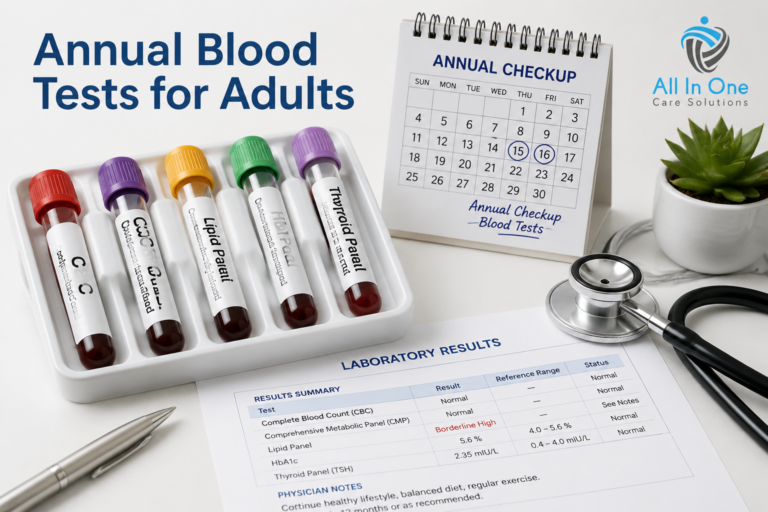

How to Read Your Blood Test Results: A Miami Gardens Guide
Last updated: March 7, 2026
Understanding your blood test results empowers you to take control of your health and make informed decisions about wellness treatments. This comprehensive guide on how to read your blood test results provides Miami Gardens residents with the knowledge to interpret lab values, recognize important markers, and understand when results indicate a need for interventions like IV therapy or vitamin supplementation.
Blood tests reveal critical information about organ function, nutrient levels, disease risk, and overall wellness. At All In One Care Solutions in Miami Gardens, patients receive detailed explanations of their lab work alongside personalized treatment recommendations. Whether preparing for an annual physical exam or monitoring chronic conditions, knowing how to read blood test results transforms numbers on paper into actionable health insights.
Key Takeaways
- Reference ranges on blood tests show normal values; results outside these ranges require medical interpretation and may indicate health concerns
- Complete Blood Count (CBC) measures red cells, white cells, and platelets to assess infection, anemia, and immune function
- Metabolic panels evaluate kidney function, liver enzymes, blood sugar, and electrolytes that affect energy and organ health
- Lipid panels measure cholesterol and triglycerides, critical markers for cardiovascular disease risk assessment
- Thyroid and hormone tests reveal metabolic function and may explain fatigue, weight changes, or mood issues
- Vitamin deficiencies (B12, D, folate) commonly show up in blood work and respond well to targeted supplementation or IV therapy
- Abnormal results don’t always mean disease; factors like hydration, recent meals, medications, and timing affect lab values
- Follow-up testing and professional interpretation are essential; never self-diagnose based solely on lab numbers
- Miami Gardens residents can access comprehensive blood work and results consultation at licensed medical facilities with same-day appointments
- Preventive care through regular blood testing catches problems early when treatment is most effective
Quick Answer

Blood test results display measured values alongside reference ranges that indicate normal levels for each marker. Values within the reference range typically suggest normal function, while results outside these ranges (flagged as high or low) may indicate health concerns requiring medical attention. The most common panels include Complete Blood Count (CBC) for blood cell health, Comprehensive Metabolic Panel (CMP) for organ function, and lipid panels for cholesterol assessment. Reading your results effectively requires understanding what each test measures, recognizing significant deviations from normal ranges, and consulting with healthcare providers for personalized interpretation based on your medical history and symptoms.
What Do Blood Test Results Actually Measure?
Blood test results measure specific components in your blood that reflect how well organs function, whether infections are present, and if nutrient levels support optimal health. Each test quantifies different substances—cells, proteins, enzymes, minerals, hormones, or waste products—that circulate in your bloodstream.
Common categories of blood tests include:
- Cellular components: Red blood cells, white blood cells, platelets that affect oxygen delivery, immunity, and clotting
- Metabolic markers: Glucose, electrolytes, kidney waste products that show how your body processes energy and eliminates toxins
- Organ enzymes: Liver enzymes (ALT, AST), cardiac markers that leak into blood when organs are damaged or stressed
- Lipids: Cholesterol fractions and triglycerides that indicate cardiovascular disease risk
- Hormones: Thyroid hormones, testosterone, cortisol that regulate metabolism, energy, and stress response
- Vitamins and minerals: B12, vitamin D, iron, calcium that support cellular function and prevent deficiency diseases
- Proteins: Albumin, total protein, antibodies that reflect nutritional status and immune function
Laboratory instruments measure these substances in standardized units (mg/dL, mmol/L, cells/μL) and compare your values to established reference ranges derived from healthy populations. Understanding what each test measures helps you recognize which body systems the results reflect.
For comprehensive health assessment, Miami Gardens residents can schedule complete medical exams that include appropriate blood work based on age, risk factors, and symptoms.
How to Read Reference Ranges on Your Blood Test Results
Reference ranges appear next to each measured value on blood test results and indicate the normal range for healthy individuals. These ranges represent the middle 95% of values found in healthy populations, meaning 5% of healthy people naturally fall outside these ranges without having disease.
Understanding reference range notation:
- Normal range format: Typically shown as “Reference Range: 12.0-16.0 g/dL” or similar
- Your value placement: Results within the range suggest normal function for that marker
- High flags: Values above the upper limit often marked with “H” or upward arrow (↑)
- Low flags: Values below the lower limit marked with “L” or downward arrow (↓)
- Critical values: Extremely abnormal results may be marked as “Critical” requiring immediate attention
- Units of measurement: Pay attention to units (mg/dL, mmol/L, IU/L) as different labs may use different units
Important considerations when interpreting ranges:
- Reference ranges vary by laboratory, testing method, and equipment used
- Age, sex, and sometimes ethnicity affect normal ranges for certain tests
- Pregnancy, medications, and recent physical activity can shift normal ranges
- Slightly outside the range doesn’t automatically indicate disease
- Trends over time matter more than single abnormal values
- Multiple abnormal values in a pattern are more significant than isolated findings
Choose your healthcare provider if you see multiple flagged values or if any result falls far outside the reference range. At All In One Care Solutions, medical professionals provide detailed interpretation of results in the context of your complete health picture.
What Does a Complete Blood Count (CBC) Show?
A Complete Blood Count (CBC) measures the cells in your blood—red blood cells, white blood cells, and platelets—providing essential information about oxygen delivery, immune function, and blood clotting ability. This foundational test detects anemia, infections, immune system disorders, and blood cancers.
Key CBC components and what they mean:
| Test Component | What It Measures | Normal Range (approximate) | What Low Values Suggest | What High Values Suggest |
|---|---|---|---|---|
| Hemoglobin (Hgb) | Oxygen-carrying protein in red cells | 12-16 g/dL (women), 14-18 g/dL (men) | Anemia, blood loss, nutritional deficiency | Dehydration, lung disease, polycythemia |
| Hematocrit (Hct) | Percentage of blood that is red cells | 36-44% (women), 41-50% (men) | Anemia, overhydration | Dehydration, chronic hypoxia |
| White Blood Cells (WBC) | Immune system cells fighting infection | 4,500-11,000 cells/μL | Weakened immunity, bone marrow problems | Infection, inflammation, leukemia |
| Platelets | Cells responsible for blood clotting | 150,000-400,000 cells/μL | Bleeding risk, bone marrow disorders | Clotting risk, inflammation, iron deficiency |
| Red Blood Cells (RBC) | Cells carrying oxygen throughout body | 4.0-5.5 million/μL (women), 4.5-6.0 million/μL (men) | Anemia, bleeding, kidney disease | Dehydration, heart or lung disease |
Additional CBC measurements:
- MCV (Mean Corpuscular Volume): Size of red blood cells; helps identify type of anemia
- MCH (Mean Corpuscular Hemoglobin): Amount of hemoglobin per red cell
- MCHC: Concentration of hemoglobin in red cells
- RDW (Red Cell Distribution Width): Variation in red cell size; elevated in nutritional deficiencies
Common mistake: Assuming mild anemia doesn’t need treatment. Even borderline-low hemoglobin can cause fatigue, weakness, and reduced exercise tolerance. B12 injections and iron supplementation effectively treat many forms of anemia when the underlying cause is nutritional.
How to Interpret Metabolic Panel Results
Metabolic panels (Basic Metabolic Panel or Comprehensive Metabolic Panel) measure chemicals in blood that reflect kidney function, liver health, electrolyte balance, and blood sugar control. These tests provide a broad snapshot of metabolic health and organ function.
Comprehensive Metabolic Panel (CMP) includes:
- Glucose: Blood sugar level; elevated values suggest diabetes or prediabetes (normal fasting: 70-99 mg/dL)
- Calcium: Mineral essential for bones, nerves, and muscles (normal: 8.5-10.5 mg/dL)
- Sodium: Primary electrolyte affecting hydration and blood pressure (normal: 135-145 mEq/L)
- Potassium: Electrolyte critical for heart rhythm and muscle function (normal: 3.5-5.0 mEq/L)
- Chloride: Electrolyte that helps maintain fluid balance (normal: 96-106 mEq/L)
- CO2 (bicarbonate): Reflects acid-base balance in blood (normal: 23-29 mEq/L)
- BUN (Blood Urea Nitrogen): Waste product filtered by kidneys (normal: 7-20 mg/dL)
- Creatinine: Muscle waste product; primary kidney function marker (normal: 0.6-1.2 mg/dL)
- Albumin: Protein made by liver; reflects nutritional status (normal: 3.5-5.5 g/dL)
- Total protein: All proteins in blood; low values suggest malnutrition or liver disease (normal: 6.0-8.3 g/dL)
- ALP (Alkaline Phosphatase): Enzyme from liver and bones (normal: 44-147 IU/L)
- ALT (Alanine Aminotransferase): Liver enzyme; elevated in liver damage (normal: 7-56 IU/L)
- AST (Aspartate Aminotransferase): Enzyme from liver and heart (normal: 10-40 IU/L)
- Bilirubin: Breakdown product of red blood cells; high levels cause jaundice (normal: 0.1-1.2 mg/dL)
Interpreting kidney function:
- BUN and creatinine together assess kidney filtering ability
- BUN/creatinine ratio helps distinguish kidney disease from dehydration
- Elevated creatinine with normal BUN may indicate muscle breakdown or certain medications
- Both elevated suggest reduced kidney function requiring medical evaluation
Interpreting liver function:
- ALT and AST elevations indicate liver cell damage from hepatitis, fatty liver, alcohol, or medications
- AST/ALT ratio helps identify cause (ratio >2 suggests alcohol-related damage)
- Elevated ALP with normal ALT/AST may indicate bile duct obstruction or bone disease
- Low albumin suggests chronic liver disease or malnutrition
Patients with diabetes require regular metabolic panel monitoring to track kidney function and blood sugar control over time.
What Do Cholesterol and Lipid Panel Results Mean?
Lipid panels measure fats in your blood—cholesterol and triglycerides—that affect cardiovascular disease risk. Understanding these values helps assess heart attack and stroke risk and guides treatment decisions about diet, exercise, and medications.
Standard lipid panel components:
- Total Cholesterol: Sum of all cholesterol types (desirable: <200 mg/dL)
- LDL Cholesterol: “Bad” cholesterol that builds up in arteries (optimal: <100 mg/dL)
- HDL Cholesterol: “Good” cholesterol that removes LDL from arteries (desirable: >60 mg/dL for women, >40 mg/dL for men)
- Triglycerides: Fat form in blood; high levels increase heart disease risk (normal: <150 mg/dL)
- VLDL Cholesterol: Very low-density lipoprotein carrying triglycerides (calculated value)
Interpreting cholesterol results:
LDL cholesterol targets depend on cardiovascular risk:
- Very high risk (prior heart attack): LDL <70 mg/dL
- High risk (diabetes, multiple risk factors): LDL <100 mg/dL
- Moderate risk: LDL <130 mg/dL
- Low risk: LDL <160 mg/dL
HDL cholesterol protection:
- HDL >60 mg/dL provides cardiovascular protection
- HDL <40 mg/dL (men) or <50 mg/dL (women) increases heart disease risk
- Exercise and healthy fats raise HDL levels
Triglyceride categories:
- Normal: <150 mg/dL
- Borderline high: 150-199 mg/dL
- High: 200-499 mg/dL
- Very high: ≥500 mg/dL (pancreatitis risk)
Common pattern: High triglycerides with low HDL often accompanies metabolic syndrome, insulin resistance, and abdominal obesity. This pattern responds well to carbohydrate reduction, weight loss, and increased physical activity.
Edge case: Some people have genetically high LDL cholesterol (familial hypercholesterolemia) requiring medication regardless of lifestyle. Family history of early heart disease should prompt lipid testing starting in young adulthood.
Regular monitoring through primary care services helps track cardiovascular risk and treatment effectiveness over time.
How to Read Thyroid Function Test Results
Thyroid function tests measure hormones that regulate metabolism, energy production, body temperature, and weight. Abnormal thyroid function causes fatigue, weight changes, mood disturbances, and numerous other symptoms that significantly impact quality of life.
Standard thyroid panel includes:
- TSH (Thyroid-Stimulating Hormone): Brain signal telling thyroid to produce hormones (normal: 0.4-4.0 mIU/L)
- Free T4 (Thyroxine): Primary hormone produced by thyroid (normal: 0.8-1.8 ng/dL)
- Free T3 (Triiodothyronine): Active thyroid hormone affecting metabolism (normal: 2.3-4.2 pg/mL)
- Thyroid antibodies: TPO and thyroglobulin antibodies indicate autoimmune thyroid disease
Interpreting thyroid patterns:
Hypothyroidism (underactive thyroid):
- High TSH with low Free T4
- Symptoms: fatigue, weight gain, cold intolerance, constipation, depression
- Common cause: Hashimoto’s thyroiditis (autoimmune)
- Treatment: thyroid hormone replacement (levothyroxine)
Hyperthyroidism (overactive thyroid):
- Low TSH with high Free T4 and/or Free T3
- Symptoms: weight loss, rapid heartbeat, anxiety, heat intolerance, tremor
- Common cause: Graves’ disease (autoimmune)
- Treatment: anti-thyroid medications, radioactive iodine, or surgery
Subclinical thyroid dysfunction:
- Subclinical hypothyroidism: High TSH with normal Free T4 (may need treatment if symptomatic)
- Subclinical hyperthyroidism: Low TSH with normal Free T4 and T3 (monitor for progression)
Important consideration: TSH alone doesn’t tell the complete story. Some people have normal TSH but low Free T3, causing persistent symptoms. Comprehensive thyroid testing including Free T3 provides better assessment.
Decision rule: Choose thyroid medication if TSH >10 mIU/L or if TSH is 4-10 mIU/L with symptoms, positive antibodies, or pregnancy. Borderline elevations without symptoms may warrant monitoring rather than immediate treatment.
Thyroid disorders often coexist with vitamin deficiencies. IV therapy with vitamin supplementation can support energy levels while thyroid function normalizes with treatment.
What Vitamin and Nutrient Levels Should You Monitor?
Vitamin and mineral deficiencies commonly cause fatigue, weakness, mood changes, and impaired immune function—symptoms often attributed to other causes. Blood tests identify specific deficiencies that respond rapidly to targeted supplementation.
Essential vitamins and minerals to monitor:
Vitamin B12 (Cobalamin):
- Normal range: 200-900 pg/mL (optimal >400 pg/mL)
- Deficiency causes: fatigue, weakness, numbness, memory problems, anemia
- Common in: vegetarians, older adults, people with digestive disorders, metformin users
- Treatment: B12 injections provide rapid correction; oral supplements work for mild deficiency
Vitamin D (25-hydroxyvitamin D):
- Normal range: 30-100 ng/mL (optimal 40-60 ng/mL)
- Deficiency causes: bone pain, muscle weakness, increased infection risk, mood disorders
- Common in: people with limited sun exposure, darker skin, obesity, older adults
- Treatment: oral vitamin D3 supplementation (1,000-5,000 IU daily) or high-dose therapy for severe deficiency
Folate (Vitamin B9):
- Normal range: >3.0 ng/mL
- Deficiency causes: anemia, fatigue, poor concentration, elevated homocysteine
- Common in: pregnancy, alcohol use, certain medications, poor diet
- Treatment: folic acid supplementation or dietary increase (leafy greens, legumes)
Iron studies (for anemia assessment):
- Serum iron: 60-170 μg/dL
- Ferritin (iron stores): 12-300 ng/mL (optimal >30 ng/mL for women)
- TIBC (Total Iron Binding Capacity): 240-450 μg/dL
- Transferrin saturation: 20-50%
- Pattern interpretation: Low ferritin indicates iron deficiency; normal ferritin with low iron may indicate inflammation
Magnesium:
- Normal range: 1.7-2.2 mg/dL
- Deficiency causes: muscle cramps, fatigue, irregular heartbeat, anxiety
- Note: Blood magnesium doesn’t reflect total body stores; deficiency is common even with normal levels
- Treatment: oral magnesium or IV supplementation for rapid correction
Common mistake: Assuming normal vitamin levels mean optimal levels. Many people function better when vitamins are in the upper half of the reference range rather than barely above deficiency thresholds.
Miami Gardens residents experiencing persistent fatigue despite normal thyroid function should request comprehensive vitamin testing. Myers’ Cocktail IV therapy delivers high-dose vitamins directly into the bloodstream for rapid symptom improvement while oral supplementation builds long-term stores.
When Do Abnormal Blood Test Results Require Immediate Action?
Most abnormal blood test results require follow-up and monitoring rather than emergency intervention, but certain critical values demand immediate medical attention. Understanding which abnormalities are urgent helps patients respond appropriately without unnecessary panic.
Critical values requiring immediate medical attention:
- Extremely high potassium (>6.0 mEq/L): Risk of dangerous heart rhythm abnormalities
- Extremely low potassium (<2.5 mEq/L): Can cause muscle paralysis and cardiac arrest
- Very high blood sugar (>400 mg/dL): Risk of diabetic ketoacidosis or hyperosmolar state
- Extremely low blood sugar (<50 mg/dL): Risk of seizures, loss of consciousness
- Severe anemia (hemoglobin <7 g/dL): May require blood transfusion
- Very high white blood cell count (>30,000 cells/μL): May indicate leukemia or severe infection
- Extremely low white blood cells (<1,000 cells/μL): Severe infection risk
- Very low platelets (<20,000 cells/μL): Serious bleeding risk
- Severely elevated creatinine (>4.0 mg/dL): Acute kidney failure
- Very high calcium (>12 mg/dL): Can cause confusion, heart problems, kidney damage
Abnormalities requiring prompt (not emergency) follow-up:
- Moderately elevated liver enzymes (2-3 times normal)
- Mildly abnormal kidney function
- Borderline blood sugar levels suggesting prediabetes
- Cholesterol significantly above target
- Thyroid dysfunction (unless severe symptoms present)
- Mild to moderate anemia
- Vitamin deficiencies
Factors that cause temporary abnormalities:
- Dehydration: Falsely elevates creatinine, BUN, hemoglobin, calcium
- Recent meal: Raises blood sugar and triglycerides (fasting tests avoid this)
- Exercise: Temporarily elevates muscle enzymes, potassium
- Medications: Many drugs affect lab values (inform provider of all medications)
- Stress: Raises white blood cell count, blood sugar, cortisol
- Menstrual cycle: Affects iron studies in women
- Alcohol consumption: Elevates liver enzymes, triglycerides
Decision rule for follow-up: Repeat abnormal tests before starting treatment if you were not fasting, were dehydrated, or had recent illness. Single abnormal values often normalize on repeat testing. However, don’t delay evaluation if symptoms are present or multiple values are abnormal.
Patients with concerning results can access same-day appointments at All In One Care Solutions for rapid assessment and treatment planning.
What’s Included in Comprehensive Blood Work Interpretation
Professional blood work interpretation goes beyond simply identifying values outside reference ranges. Comprehensive analysis considers patterns, trends, symptoms, medical history, and risk factors to develop personalized treatment plans.
Complete blood work interpretation includes:
- Pattern recognition: Identifying combinations of abnormalities that suggest specific conditions (e.g., metabolic syndrome, thyroid disorders, nutritional deficiencies)
- Trend analysis: Comparing current results to previous tests to identify worsening, improvement, or stability
- Symptom correlation: Matching lab findings to patient complaints to confirm or rule out suspected diagnoses
- Risk stratification: Assessing cardiovascular, diabetes, and other disease risks based on multiple markers
- Treatment recommendations: Suggesting lifestyle modifications, supplements, medications, or IV therapy based on findings
- Follow-up planning: Determining which tests need repeating and when to assess treatment effectiveness
- Referral coordination: Identifying when specialist consultation is needed for complex abnormalities
- Patient education: Explaining what results mean in understandable terms and answering questions
What comprehensive interpretation reveals:
✓ Whether borderline abnormalities are clinically significant or can be monitored
✓ Which lifestyle changes will have the greatest impact on improving your results
✓ Whether symptoms match lab findings or additional testing is needed
✓ How results compare to optimal ranges, not just normal ranges
✓ Whether vitamin or nutrient deficiencies explain fatigue, weakness, or other complaints
✓ Your cardiovascular disease risk based on multiple factors, not just cholesterol
✓ Whether thyroid function explains weight, energy, or mood issues
✓ How medications or supplements may be affecting lab values
How It Works: Getting and Understanding Your Blood Test Results
The process of obtaining blood work and understanding results involves several steps from initial testing through treatment implementation. Following this systematic approach ensures accurate results and effective follow-up.
Step-by-step process:
Order appropriate tests: Healthcare provider selects blood tests based on age, symptoms, risk factors, and screening guidelines; routine panels for healthy adults typically include CBC, CMP, lipid panel, and sometimes thyroid function and vitamin levels
Prepare for testing: Follow fasting instructions (typically 8-12 hours for metabolic and lipid panels); stay hydrated; avoid alcohol for 24 hours before testing; inform lab of all medications and supplements
Blood collection: Phlebotomist draws blood samples, typically 2-4 tubes for standard panels; samples are labeled and sent to laboratory for analysis; process takes 5-10 minutes
Laboratory analysis: Automated analyzers measure blood components; results are typically available within 24-48 hours for routine tests; some specialized tests take longer
Results review: Healthcare provider reviews results, identifies abnormalities, and considers clinical context; results are entered into patient portal or communicated by phone/appointment
Patient consultation: Provider explains findings, discusses significance of abnormalities, answers questions, and recommends treatment or follow-up; comprehensive discussion covers all abnormal values and overall health assessment
Treatment implementation: Based on results, provider may prescribe medications, recommend supplements, suggest IV therapy for nutrient deficiencies, order additional testing, or refer to specialists; treatment plan is tailored to specific findings and patient goals
Timeline expectations:
- Routine blood work results: 1-2 business days
- Specialized hormone or vitamin tests: 3-7 days
- Provider review and contact: 3-5 days after results available
- Follow-up appointment for discussion: within 1-2 weeks for non-urgent findings
- Repeat testing to confirm abnormalities: 2-4 weeks after initial test
At All In One Care Solutions Medical Center, patients receive comprehensive blood work interpretation during consultation appointments, with immediate access to IV therapy for identified vitamin deficiencies or wellness optimization.
Frequently Asked Questions About Reading Blood Test Results
How long does it take to get blood test results in Miami Gardens?
Most routine blood test results are available within 24-48 hours at Miami Gardens medical facilities. Your healthcare provider typically reviews results within 3-5 days and contacts you with findings. Specialized tests like hormone panels or vitamin levels may take up to one week. All In One Care Solutions provides timely results review and same-day consultation appointments for discussing findings.
Can I request my own blood tests without a doctor’s order?
While some direct-to-consumer lab services allow self-ordered testing, working with a licensed healthcare provider ensures appropriate test selection, accurate interpretation, and proper follow-up. Physicians order tests based on symptoms, risk factors, and medical history—avoiding unnecessary testing while ensuring important markers aren’t missed. Professional interpretation prevents misunderstanding results and ensures abnormalities receive appropriate treatment.
What should I do if my blood test results are slightly outside the normal range?
Slightly abnormal results often require repeat testing rather than immediate treatment, especially if you weren’t fasting, were dehydrated, or had recent illness. Contact your healthcare provider to discuss whether the abnormality is clinically significant based on your symptoms and medical history. Many borderline values normalize with lifestyle modifications like improved diet, hydration, or stress reduction. Never ignore abnormal results, but don’t panic over minor deviations from reference ranges.
How often should healthy adults get blood work done?
Healthy adults should have comprehensive blood work at least every 1-2 years as part of preventive care. Annual testing is recommended for adults over 40, those with chronic conditions like diabetes or high blood pressure, or anyone taking medications that require monitoring. Lipid panels should be checked every 4-6 years starting at age 20, or more frequently if abnormal. Thyroid function testing is recommended every 5 years after age 35, or whenever symptoms suggest thyroid dysfunction.
Why do different labs have different reference ranges?
Reference ranges vary between laboratories because they’re established based on the specific equipment, testing methods, and local population tested. Each lab analyzes samples from healthy individuals to determine the middle 95% of values, which becomes their reference range. This is why comparing results from different labs can be confusing. Always compare your value to the reference range printed on the same report, and inform your provider if you’ve had testing at different facilities.
Can dehydration affect blood test results?
Yes, dehydration significantly affects many blood test values by concentrating blood components. Dehydration falsely elevates hemoglobin, hematocrit, creatinine, BUN, calcium, and albumin levels. Conversely, overhydration dilutes these values, potentially masking abnormalities. For accurate results, maintain normal hydration (drink water as usual) before testing, but avoid excessive fluid intake immediately before blood draw. Fasting tests require no food but allow water consumption.
What blood tests show vitamin deficiencies?
Specific blood tests measure vitamin levels directly: vitamin B12 (cobalamin), vitamin D (25-hydroxyvitamin D), folate (vitamin B9), and vitamin A levels can all be measured. Iron studies (serum iron, ferritin, TIBC) assess iron status. Some vitamin deficiencies also cause characteristic changes in CBC results—B12 and folate deficiency cause large red blood cells (high MCV), while iron deficiency causes small red blood cells (low MCV). If you experience persistent fatigue, weakness, or neurological symptoms, request comprehensive vitamin testing.
How do I prepare for fasting blood work?
For fasting blood work, avoid all food and beverages except water for 8-12 hours before testing (typically overnight). Take regular medications unless instructed otherwise by your provider. Avoid alcohol for 24 hours before testing. Schedule morning appointments when possible to minimize fasting duration. You may drink plain water to stay hydrated. After blood draw, eat a normal breakfast to restore blood sugar and energy levels.
Can medications affect blood test results?
Many medications affect blood test results, either by changing the actual levels of substances in blood or by interfering with laboratory testing methods. Common examples include metformin lowering vitamin B12, statins elevating liver enzymes, diuretics affecting electrolytes, and biotin supplements interfering with thyroid tests. Always inform your healthcare provider and laboratory staff of all medications, supplements, and vitamins you take. Don’t stop medications before testing unless specifically instructed by your provider.
What does it mean if multiple blood test values are abnormal?
Multiple abnormal values often indicate a pattern suggesting specific conditions. For example, high glucose with high triglycerides and low HDL cholesterol suggests metabolic syndrome; elevated liver enzymes with high bilirubin indicates liver disease; low hemoglobin with low ferritin confirms iron-deficiency anemia. Patterns provide more diagnostic information than isolated abnormalities. Your healthcare provider analyzes these patterns alongside symptoms and medical history to identify underlying causes and develop comprehensive treatment plans.
Conclusion
Understanding how to read blood test results empowers Miami Gardens residents to take active roles in their health management. Blood tests provide objective measurements of organ function, nutrient status, disease risk, and overall wellness—transforming abstract symptoms into concrete data that guides treatment decisions.
The key to effective blood work interpretation lies in understanding reference ranges, recognizing patterns of abnormalities, correlating results with symptoms, and working with healthcare providers for personalized assessment. While values outside normal ranges require attention, context matters: single abnormalities often need confirmation through repeat testing, and borderline values may respond to lifestyle modifications without medication.
Common blood panels—CBC, metabolic panels, lipid profiles, thyroid tests, and vitamin levels—reveal the most frequent health concerns affecting adults. Nutrient deficiencies, particularly B12 and vitamin D, commonly cause fatigue and weakness that respond rapidly to supplementation or IV therapy. Metabolic markers identify diabetes risk, kidney dysfunction, and liver problems when early intervention is most effective. Lipid panels guide cardiovascular disease prevention through targeted treatment of cholesterol abnormalities.
Regular preventive blood work catches problems before symptoms develop, enabling early treatment when outcomes are best. Annual comprehensive panels for adults over 40, or those with chronic conditions, provide baseline values for tracking health trends over time. When abnormalities appear, professional interpretation ensures appropriate follow-up—distinguishing between minor fluctuations requiring monitoring and significant findings demanding immediate intervention.
For Miami Gardens residents seeking comprehensive blood work analysis and personalized wellness treatments, All In One Care Solutions provides complete laboratory services, expert results interpretation, and immediate access to IV therapy for identified deficiencies. Physician-supervised care ensures accurate diagnosis and evidence-based treatment tailored to individual health goals.
Book your session at All In One Care Solutions Medical Center — same-day appointments available.
📍 16191 NW 57 Ave, Miami Gardens, FL 33014
📞 (786) 446-9414
🌐 allinonecaresolutions.com
Hablamos Español — Bilingual care available.