Abnormal Pap Smear Results: What Happens Next?
Last updated: March 13, 2026
Quick Answer: An abnormal Pap smear result does not mean you have cancer. It means some cervical cells look different than expected and need follow-up testing. Depending on the type of abnormality found, your doctor may recommend an HPV test, a repeat Pap smear, or a procedure called a colposcopy. Most abnormal results resolve on their own or are caught early enough for simple treatment.
Key Takeaways
- Abnormal Pap smear results are common — most do not indicate cancer or a serious condition.
- The most common cause of an abnormal result is infection with human papillomavirus (HPV), a very widespread sexually transmitted infection.
- Follow-up steps depend on the type and severity of the cell changes found.
- Options include: repeat Pap smear, HPV co-test, colposcopy, or biopsy.
- Early detection through regular Pap smears dramatically improves outcomes for cervical cancer.
- Women ages 21–65 should follow established screening schedules — frequency depends on age and history.
- Most abnormal cell changes (especially low-grade) return to normal without treatment.
- A trusted primary care provider or family medicine doctor can guide follow-up care from start to finish.
- Women in Miami Gardens, Hialeah, Miami Lakes, and North Miami Beach can access Pap smear screening and follow-up care locally.
What Does an Abnormal Pap Smear Result Actually Mean?
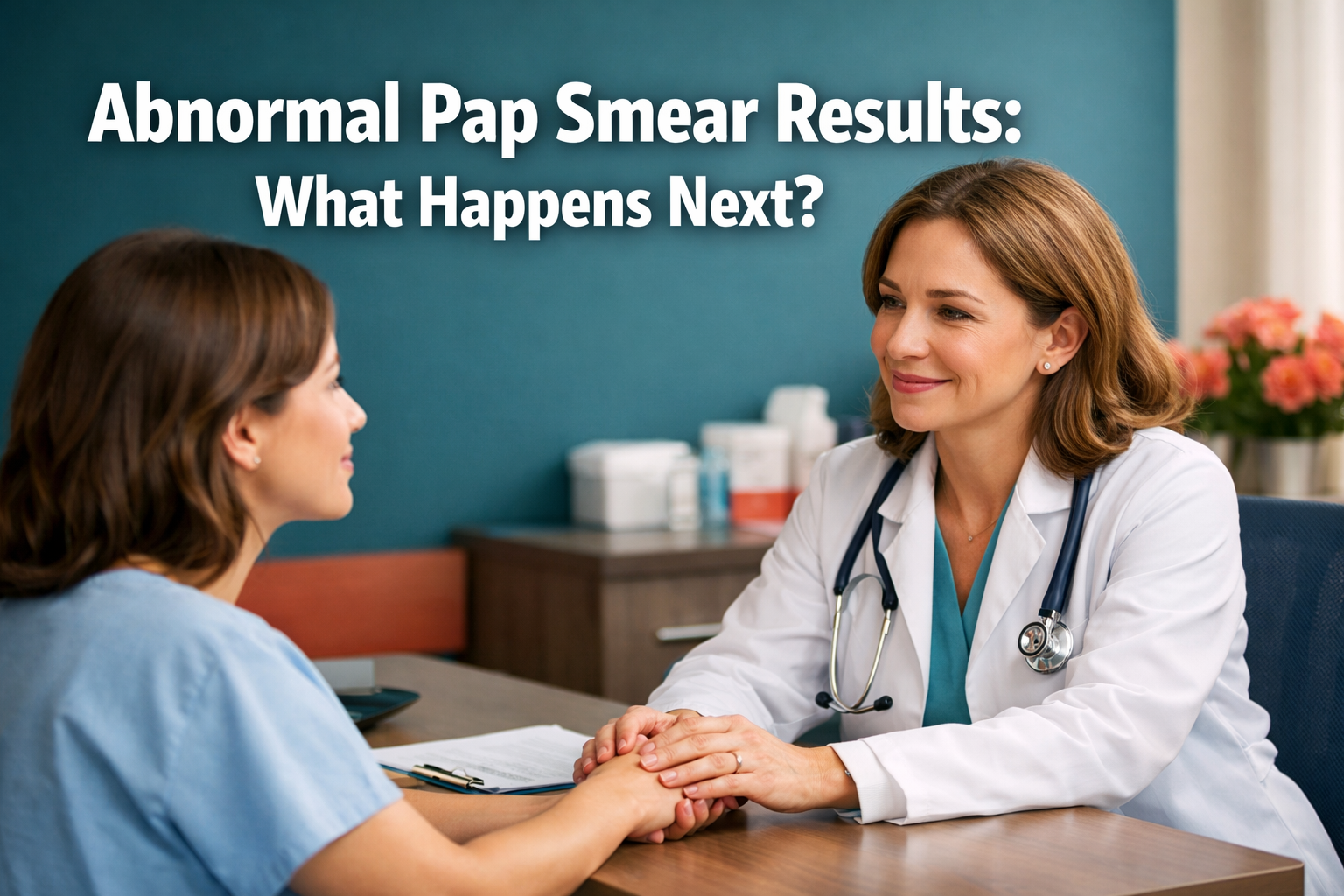
An abnormal Pap smear means the lab found cells on your cervix that look different from normal. This does not mean you have cervical cancer. It means something worth monitoring has been detected.
Pap smears collect cells from the cervix and check them under a microscope. When cells appear unusual, they are classified by type and severity. The most common classifications include:
| Result Term | What It Means |
|---|---|
| ASC-US | Atypical squamous cells of undetermined significance — mildly abnormal, often HPV-related |
| LSIL | Low-grade squamous intraepithelial lesion — minor cell changes, often clear on their own |
| HSIL | High-grade squamous intraepithelial lesion — more significant changes, closer monitoring needed |
| ASC-H | Atypical cells that may be high-grade — needs further evaluation |
| AGC | Atypical glandular cells — less common, requires prompt follow-up |
Common mistake: Many women assume “abnormal” means “cancer.” In reality, the vast majority of abnormal Pap smear results fall into low-grade categories that resolve without treatment, especially in younger women.
What Are the Most Common Causes of an Abnormal Pap Smear?
The most common cause is HPV (human papillomavirus). HPV is a group of viruses that can cause cell changes in the cervix. Most HPV infections clear on their own within one to two years, according to the Centers for Disease Control and Prevention (CDC).
Other causes of an abnormal result include:
- HPV infection (most common cause of cell changes)
- Inflammation or infection (such as bacterial vaginosis or a yeast infection)
- Hormonal changes (such as those during pregnancy or menopause)
- Recent sexual activity or douching before the test (can affect cell samples)
- Benign (non-cancerous) cell changes unrelated to HPV
💡 “An abnormal Pap smear is a signal to look closer — not a diagnosis.”
Abnormal Pap Smear Results: What Happens Next? — Your Follow-Up Options Explained
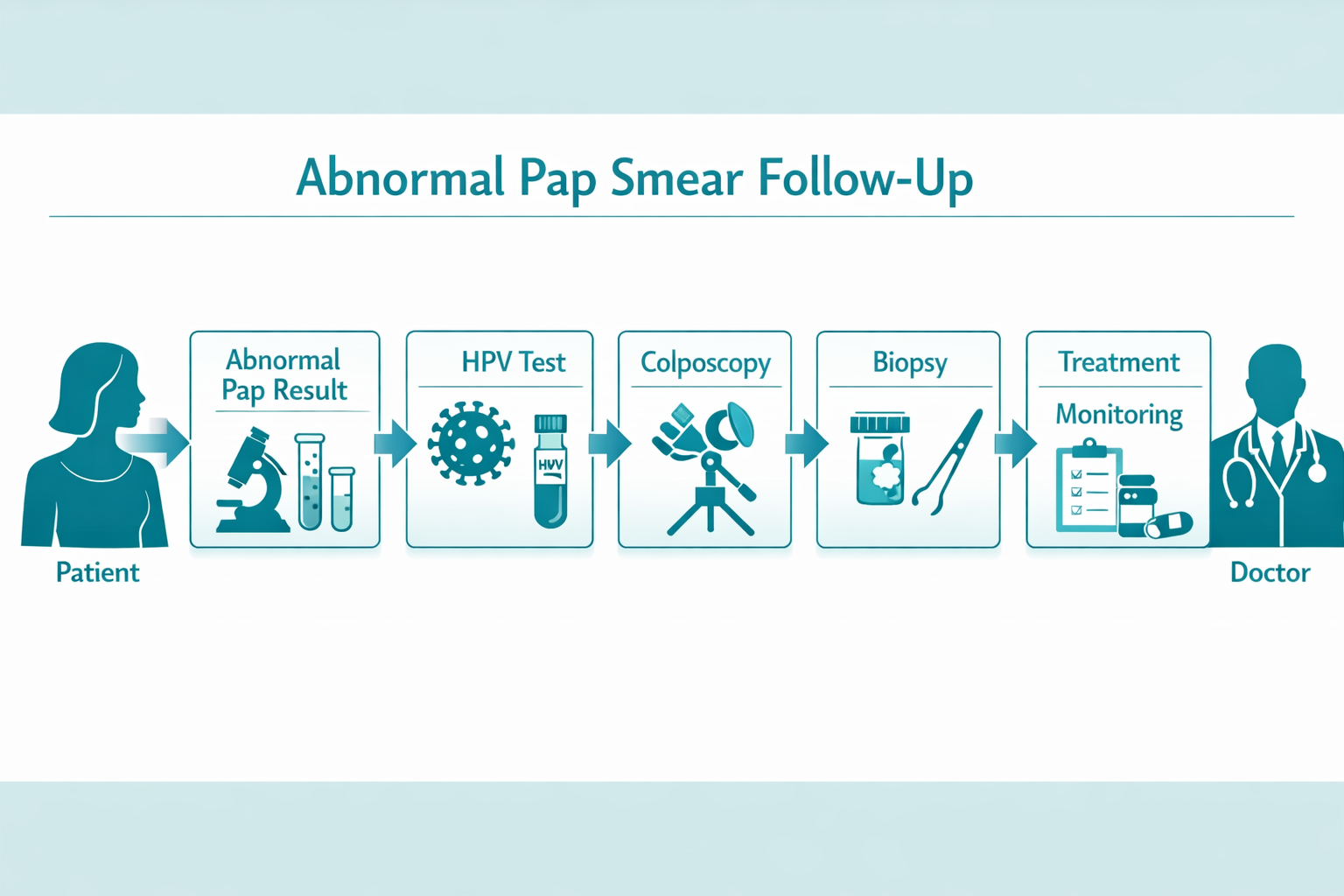
After receiving abnormal Pap smear results, the next step depends on the type of abnormality, your age, and your HPV status. Your doctor will recommend one of the following paths:
1. Repeat Pap Smear in 1–3 Years
Choose this if: Results show ASC-US and your HPV test is negative, or if you are under 25 with LSIL. Minor changes in younger women often resolve on their own.
2. HPV Co-Testing
Choose this if: Your Pap result is ASC-US and HPV status is unknown. An HPV test checks for high-risk strains of the virus that are most linked to cervical cancer.
3. Colposcopy
Choose this if: Results show HSIL, ASC-H, AGC, or persistent LSIL. A colposcopy is an in-office procedure where a doctor uses a magnifying device to examine the cervix more closely. It is not painful for most women, though some report mild discomfort.
4. Cervical Biopsy
If the colposcopy reveals areas of concern, the doctor takes a small tissue sample (biopsy) for lab analysis. This confirms whether cell changes are pre-cancerous or cancerous.
5. Treatment (if needed)
If pre-cancerous cells are confirmed, treatment options include:
- LEEP (Loop Electrosurgical Excision Procedure): Removes abnormal tissue using a thin wire loop.
- Cryotherapy: Freezes and destroys abnormal cells.
- Cone biopsy (conization): Removes a cone-shaped section of cervical tissue for analysis and treatment.
Most women with low-grade results do not need any of these procedures.
How Often Should Women Get a Pap Smear?
Screening frequency depends on age and results history. The American Cancer Society and the U.S. Preventive Services Task Force (USPSTF) recommend the following general guidelines:
| Age Group | Recommendation |
|---|---|
| Under 21 | No Pap smear needed |
| 21–29 | Pap smear every 3 years |
| 30–65 | Pap smear every 3 years, OR Pap + HPV co-test every 5 years |
| Over 65 | May stop screening if prior results have been consistently normal |
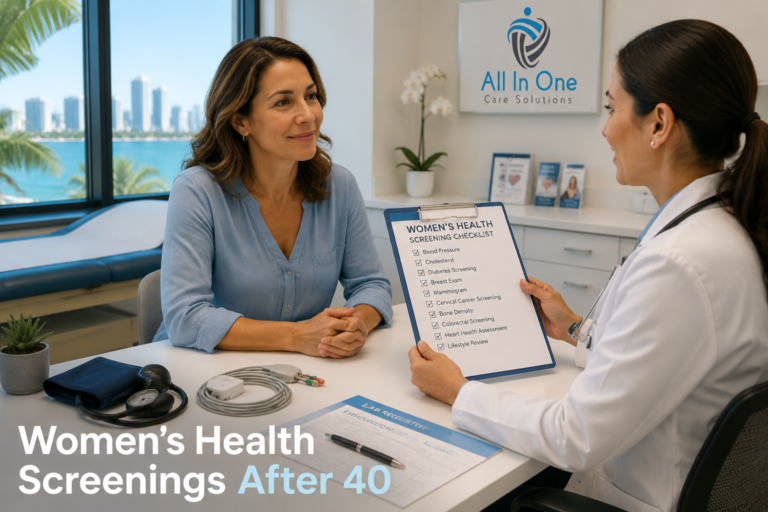
Women with a history of abnormal results, HPV, or a weakened immune system may need more frequent screening. A family medicine provider in Miami Gardens can review your personal history and recommend the right schedule for you.
What Is the Connection Between HPV and Cervical Cancer?
HPV is responsible for nearly all cases of cervical cancer, according to the CDC. However, having HPV does not mean a person will develop cancer. Most HPV infections clear on their own, and regular Pap smear screening catches cell changes before they become cancer.
High-risk HPV strains — particularly HPV 16 and HPV 18 — are most closely associated with cervical cancer. The HPV vaccine, recommended for preteens but also effective in adults up to age 26 (and in some cases up to 45), significantly reduces the risk of these strains.
Key point: Regular Pap smears and HPV co-testing together provide the strongest protection against cervical cancer developing undetected.
What Should Women in Miami Gardens and Surrounding Areas Know?
Women living in Miami Gardens, Hialeah, Miami Lakes, and North Miami Beach have access to local, bilingual preventive care that includes Pap smear screening, HPV testing, and follow-up management — all in one place.
At All In One Care Solutions Medical Center in Miami Gardens, women can receive:
- Annual well-woman exams including Pap smear screening
- HPV co-testing and lab work on-site
- Referrals for colposcopy when needed
- Bilingual care (English and Spanish)
- Appointments for both insured and self-pay patients
If you have not had a Pap smear recently, or if you received abnormal results and are unsure what to do next, a women’s health appointment at our Miami Gardens clinic is a straightforward first step.
Women who need a physical exam without insurance can also explore affordable exam options in Miami to ensure cost is not a barrier to care.
Abnormal Pap Smear Results: What Happens Next for Women Over 40?
Women over 40 face a slightly different risk picture. While younger women’s abnormal results often resolve without treatment, women over 40 — especially those approaching or past menopause — may experience cell changes related to hormonal shifts rather than HPV alone.
For women in this age group:
- Atrophic changes (thinning of cervical tissue due to lower estrogen) can cause mildly abnormal Pap results that are not related to HPV.
- A doctor may recommend a short course of vaginal estrogen before repeating the Pap smear to get a clearer sample.
- AGC (atypical glandular cell) results are more significant in women over 40 and warrant prompt follow-up, including evaluation of the uterine lining.
Edge case: Women who have had a hysterectomy may still need vaginal cuff Pap smears if the procedure was done for a pre-cancerous or cancerous condition. Ask your doctor whether ongoing screening applies to you.
Staying current with your annual physical exam in Miami is one of the most reliable ways to catch these changes early.
How to Prepare for a Pap Smear and Follow-Up Appointments
Preparation is simple but matters for result accuracy:
- Avoid scheduling during your period if possible (light spotting is usually acceptable — ask your provider).
- Do not douche, use vaginal creams, or have sexual intercourse for 48 hours before the test.
- Bring your health history — including prior Pap results, HPV vaccination status, and any symptoms.
- Ask questions — you have the right to understand every step of your care.
For follow-up appointments such as a colposcopy:
- The procedure takes about 15–20 minutes in the office.
- Mild cramping is common; over-the-counter pain relief beforehand is often recommended.
- Plan to rest afterward if a biopsy is taken.
Para Nuestras Pacientes de Habla Hispana
Si recibiste resultados anormales en tu Papanicolau (Pap smear), no entres en pánico. Un resultado anormal no significa que tengas cáncer. Significa que tus células cervicales necesitan una evaluación más detallada. En All In One Care Solutions, ofrecemos atención médica bilingüe en Miami Gardens para que puedas entender cada paso de tu cuidado de salud con confianza. Llama al (786) 446-9414 para hablar con nuestro equipo en español.
FAQ: Abnormal Pap Smear Results — Common Questions Answered
Q: Can stress cause an abnormal Pap smear result?
A: Stress itself does not directly cause abnormal cervical cells. However, chronic stress can weaken the immune system, making it harder for the body to clear HPV infections that may lead to cell changes.
Q: Can I get a Pap smear while on my period?
A: It is generally recommended to schedule your Pap smear when you are not menstruating. Heavy bleeding can interfere with the accuracy of the sample. Light spotting is usually acceptable — confirm with your provider.
Q: If my Pap smear is abnormal, does that mean I have an STI?
A: Not necessarily. The most common cause of abnormal results is HPV, which is extremely common and not always considered a traditional STI in the same category. Other causes include inflammation, infection, or benign cell changes unrelated to sexual activity.
Q: How long does it take to get Pap smear results?
A: Most results are available within 1–3 weeks. Your provider will contact you with results and next steps. If you have not heard back within two weeks, follow up with the clinic.
Q: Is a colposcopy painful?
A: Most women describe mild discomfort or pressure during a colposcopy, similar to a Pap smear. If a biopsy is taken, there may be brief cramping. The procedure is done in the office and takes about 15–20 minutes.
Q: Can abnormal Pap smear results go back to normal?
A: Yes. Many low-grade abnormalities — especially in women under 30 — resolve on their own as the immune system clears the HPV infection. Your doctor will monitor this with follow-up testing.
Conclusion: Take the Next Step With Confidence
Receiving abnormal Pap smear results can feel alarming, but it is important to remember what the result actually means: your screening worked. It detected something worth monitoring, and that is exactly the point of preventive care.
Actionable next steps:
- Contact your provider to discuss your specific result type and recommended follow-up.
- Schedule any recommended testing (HPV co-test, colposcopy) promptly — delays increase risk.
- Keep all follow-up appointments, even if you feel fine.
- Stay current with your Pap smear schedule going forward.
- Ask about the HPV vaccine if you have not received it.
Preventive care is the most powerful tool available for protecting cervical health. For women in Miami Gardens, Hialeah, Miami Lakes, and North Miami Beach, local, compassionate, bilingual care is available now.
Ready to schedule your women’s health appointment? Call All In One Care Solutions Medical Center at (786) 446-9414 or book online at allinonecaresolutions.com. We serve Miami Gardens, Hialeah, Miami Lakes, and surrounding areas.
References
- Centers for Disease Control and Prevention (CDC). Cervical Cancer: What Should I Know About Screening? 2023. https://www.cdc.gov/cancer/cervical/basic_info/screening.htm
- American Cancer Society. Cervical Cancer Early Detection, Diagnosis, and Staging. 2023. https://www.cancer.org/cancer/cervical-cancer/detection-diagnosis-staging.html
- U.S. Preventive Services Task Force. Cervical Cancer Screening Recommendation Statement. 2018. https://www.uspreventiveservicestaskforce.org/uspstf/recommendation/cervical-cancer-screening
- American College of Obstetricians and Gynecologists (ACOG). Cervical Cancer Screening. 2021. https://www.acog.org/womens-health/faqs/cervical-cancer-screening
Tags: abnormal Pap smear, cervical cancer screening, HPV and cervical cancer, Pap smear follow-up, colposcopy explained, women’s health Miami Gardens, preventive care Miami, well woman exam, Pap smear near Hialeah, cervical cell changes, women’s health screening, primary care Miami Gardens
[lc_form id=’mclQ1MxM34FZEQZclrud’ title=’Website’ ]