
What Is a Pap Smear? The Complete Plain-Language Explanation
Last updated: March 13, 2026
Quick Answer: A Pap smear (also called a Pap test) is a simple, in-office cervical cancer screening that collects a small sample of cells from the cervix and sends them to a lab for analysis. It takes about 2–3 minutes, causes minimal discomfort for most women, and is one of the most effective tools available for detecting cervical cancer early — often before symptoms appear. Most women ages 21–65 need one every 3–5 years, depending on age and health history.
Key Takeaways
- A Pap smear screens for abnormal cervical cells that could develop into cervical cancer if left untreated.
- The test is quick, performed in a clinic, and does not require surgery or sedation.
- Most women ages 21–65 should have a Pap smear every 3 years; women 30–65 may extend to every 5 years when combined with an HPV test.
- A Pap smear is not the same as a pelvic exam — both are often done together during a well-woman visit, but they serve different purposes.
- Abnormal results do not automatically mean cancer; most abnormal findings are mild and resolve on their own or with treatment.
- Women in Miami Gardens, Hialeah, Miami Lakes, and North Miami Beach can access Pap smear screening through a trusted local primary care provider.
- Preparation is simple: avoid intercourse, douching, or vaginal products 48 hours before the test.
- The test can be performed during a period, though it is generally better to schedule around it for clearest results.
What Is a Pap Smear? The Complete Plain-Language Explanation
A Pap smear is a preventive screening test for cervical cancer. During the test, a clinician uses a small brush or spatula to gently collect cells from the surface of the cervix — the lower part of the uterus that connects to the vagina. Those cells are sent to a laboratory, where a pathologist examines them under a microscope for any changes that look abnormal.
The test was developed by Dr. George Papanicolaou in the 1940s, which is where the name “Pap” comes from. Since its widespread adoption, cervical cancer death rates in the United States have dropped significantly, according to the American Cancer Society. That is a direct result of routine screening catching problems early, before they become life-threatening.
Who performs it: A primary care physician, family medicine provider, OB-GYN, or nurse practitioner can perform a Pap smear during a routine women’s health appointment. At All In One Care Solutions, Pap smear screening is part of comprehensive women’s preventive care for patients in Miami Gardens and surrounding communities.
Why Is a Pap Smear Important? Understanding Cervical Cancer Risk
Cervical cancer is almost entirely preventable when caught early. The Pap smear is the main tool that makes early detection possible.
Most cervical cancers are caused by the human papillomavirus (HPV), a common sexually transmitted infection. HPV itself often causes no symptoms, which means many women carry it without knowing. Over time, certain strains of HPV can cause changes in cervical cells — changes a Pap smear is specifically designed to detect.
Key facts about cervical cancer and Pap smears:
- HPV is responsible for approximately 99% of cervical cancer cases, according to the World Health Organization (2023).
- Early-stage cervical cell changes (called dysplasia or cervical intraepithelial neoplasia) are highly treatable.
- Without screening, abnormal cells can progress to cancer over months or years without any noticeable symptoms.
- Regular Pap smears, combined with HPV co-testing when appropriate, give clinicians the best chance to catch problems at the most treatable stage.
Women who skip routine screenings are at significantly higher risk of a late-stage diagnosis. This is why preventive care — not just care when something feels wrong — is so critical.
How Often Should Women Get a Pap Smear?
Screening frequency depends on age, health history, and whether HPV co-testing is included. The following guidelines reflect recommendations from the U.S. Preventive Services Task Force (USPSTF, 2018), which remain the standard of care in 2026:
| Age Group | Recommended Frequency | Test Type |
|---|---|---|
| Under 21 | Not recommended | — |
| 21–29 | Every 3 years | Pap smear alone |
| 30–65 | Every 3 years OR every 5 years | Pap alone OR Pap + HPV co-test |
| Over 65 | May stop if prior results were consistently normal | Discuss with provider |
| Post-hysterectomy | May stop if cervix was removed and no cancer history | Discuss with provider |
Edge case: Women with a history of abnormal Pap results, HIV, a weakened immune system, or prior cervical cancer treatment may need more frequent testing. Always follow your provider’s personalized recommendation.
What Happens During a Pap Smear? Step-by-Step
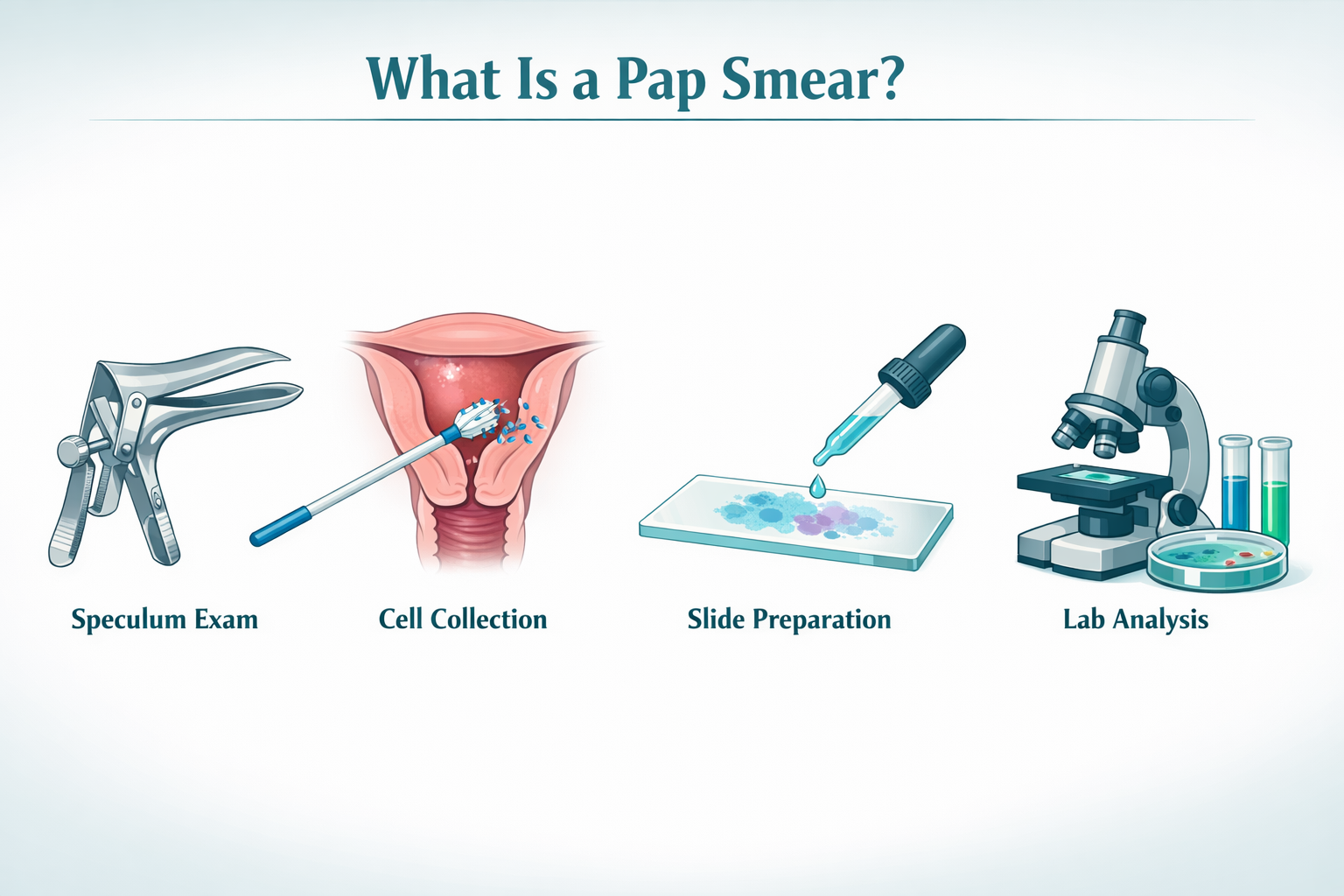
Understanding the process helps reduce anxiety. Here is exactly what to expect:
- Check-in and history review. The provider will ask about your last period, any symptoms, and your screening history.
- Positioning. You lie on an exam table with your feet in stirrups, similar to a standard pelvic exam.
- Speculum insertion. A small plastic or metal speculum is gently inserted into the vagina to hold the walls open so the cervix is visible.
- Cell collection. A small brush or spatula is used to gently swab the surface of the cervix. This takes about 10–20 seconds. Some women feel mild pressure or a brief cramp — most describe it as minor.
- Sample processing. The collected cells are placed in a liquid solution (liquid-based cytology) or on a glass slide and sent to a lab.
- Results. Most results are returned within 1–2 weeks. Your provider will contact you with findings and next steps.
The entire appointment, including the exam, typically takes 15–30 minutes. The Pap smear itself takes only a few minutes.
Pap Smear vs. Pelvic Exam: What Is the Difference?
These two terms are often confused, but they are not the same procedure.
- Pelvic exam: A physical examination where the provider checks the uterus, ovaries, and vagina for size, shape, and any abnormalities. It involves both an external and internal manual check. No cells are collected for lab analysis.
- Pap smear: A cell collection procedure specifically targeting the cervix for cancer screening. Lab analysis is required.
Both are often performed during the same appointment — a well-woman exam or annual checkup — but they serve different diagnostic purposes. A pelvic exam does not replace a Pap smear, and a Pap smear does not replace a pelvic exam.
Women in the Miami area can schedule a comprehensive women’s health visit that includes both components as part of a single preventive care appointment.
How to Prepare for a Pap Smear
Preparation is straightforward. Following these steps helps ensure the most accurate results:
Do this in the 48 hours before your appointment:
- Avoid sexual intercourse
- Avoid douching
- Avoid vaginal creams, lubricants, or suppositories
- Avoid tampons
Scheduling tip: Try to schedule your Pap smear when you are not on your period. While a Pap smear can be performed during menstruation, blood can sometimes interfere with the lab’s ability to read the sample clearly. If your period arrives unexpectedly, call your provider — they will advise whether to reschedule.
What to bring: Your insurance card, a list of any medications you take, and the date of your last Pap smear if you remember it.
What Do Pap Smear Results Mean?
Results fall into two main categories: normal (negative) or abnormal (positive). An abnormal result is not a cancer diagnosis.
Normal result: No abnormal cells were found. Follow your provider’s recommended schedule for the next screening.
Abnormal result categories:
- ASC-US (Atypical Squamous Cells of Undetermined Significance): The most common abnormal finding. Often caused by HPV or minor inflammation. Usually resolves on its own. The provider may recommend a repeat Pap in 1 year or an HPV co-test.
- LSIL (Low-Grade Squamous Intraepithelial Lesion): Mild cell changes, often linked to HPV. Frequently resolves without treatment. Monitoring is the usual approach.
- HSIL (High-Grade Squamous Intraepithelial Lesion): More significant cell changes that carry a higher risk of progressing to cancer. A colposcopy (a closer examination of the cervix) is typically recommended.
- Unsatisfactory: The sample did not contain enough cells to read accurately. The test will need to be repeated — this is not an abnormal finding.
Common mistake: Many women panic after receiving an abnormal result. In most cases, abnormal findings are mild, are not cancer, and are fully manageable with appropriate follow-up care.
Does a Well-Woman Exam Include a Breast Exam?
Yes, a complete well-woman exam typically includes a clinical breast exam in addition to a Pap smear and pelvic exam. During a breast exam, the provider manually checks breast tissue for lumps, changes in texture, or other irregularities.
Women over 40 should also discuss mammography screening with their provider. The American Cancer Society recommends annual mammograms starting at age 45 for average-risk women, with the option to begin at 40.
A well-woman visit may also include:
- Blood pressure measurement
- Blood glucose and cholesterol screening
- STI screening (if indicated)
- Immunization review
- Mental health check-in
- Discussion of contraception or menopause management
For women in Miami Gardens, Hialeah, and Miami Lakes, the women’s health clinic at All In One Care Solutions provides all of these services under one roof. Patients can also explore primary care services in Miami Gardens for a full list of available screenings.
Para Nuestras Pacientes Hispanohablantes
Si habla español y tiene preguntas sobre el Papanicolaou (prueba de Pap), no está sola. En All In One Care Solutions, ofrecemos atención médica bilingüe para mujeres en Miami Gardens, Hialeah, Miami Lakes y North Miami Beach. Nuestro equipo puede explicarle el procedimiento en español, responder todas sus preguntas, y ayudarle a programar su examen preventivo de manera cómoda y confidencial. Llame hoy al (786) 446-9414 para hablar con alguien de nuestro equipo.
Frequently Asked Questions
Q: Does a Pap smear hurt?
Most women feel mild pressure or a brief cramp during cell collection. Significant pain is uncommon. If you experience discomfort, let your provider know — they can adjust technique or take a short pause.
Q: Can I get a Pap smear while on my period?
It is possible, but not ideal. Blood can interfere with sample quality. If your period is light, the test can often still be performed. Call your clinic to decide whether to reschedule.
Q: Is a Pap smear the same as an HPV test?
No. A Pap smear looks for abnormal cells. An HPV test looks for the virus itself. Both can be done at the same time using the same cell sample — this is called co-testing, and it is recommended for women ages 30–65.
Q: What happens if my Pap smear comes back abnormal?
Your provider will recommend next steps based on the specific result — this may include a repeat Pap in 6–12 months, an HPV test, or a colposcopy. Most abnormal results do not mean cancer.
Q: How do I find a Pap smear provider near Miami Gardens?
All In One Care Solutions offers Pap smear screening and full well-woman exams for patients in Miami Gardens, Hialeah, Miami Lakes, and North Miami Beach. You can book online or call (786) 446-9414.
Q: Does insurance cover a Pap smear?
Most insurance plans, including Medicare and Medicaid, cover Pap smears as a preventive service at no cost to the patient. Uninsured patients can ask about self-pay rates. Flexible payment options are also available.
Conclusion
Understanding what a Pap smear is — and why it matters — is the first step toward protecting long-term health. This complete plain-language explanation covers the what, why, when, and how of Pap smear screening so that women in Miami Gardens, Hialeah, Miami Lakes, and North Miami Beach can make informed decisions about their preventive care.
A Pap smear takes minutes. Cervical cancer, when caught late, can take far more. Routine screening is one of the most straightforward and impactful choices a woman can make for her health.
Actionable next steps:
- Check when your last Pap smear was performed.
- If it has been 3 or more years (or you have never had one), schedule an appointment.
- Ask your provider whether an HPV co-test is appropriate for your age and history.
- Use your annual well-woman visit to address all preventive screenings at once.
For more on women’s preventive health, visit the All In One Care Solutions blog or explore family practice services available in Miami Gardens.
Ready to schedule your women’s health appointment? Call All In One Care Solutions Medical Center at (786) 446-9414 or book online at allinonecaresolutions.com. We serve Miami Gardens, Hialeah, Miami Lakes, and surrounding areas.
References
- U.S. Preventive Services Task Force. Cervical Cancer Screening Recommendation Statement. 2018. https://www.uspreventiveservicestaskforce.org
- World Health Organization. Cervical Cancer Fact Sheet. 2023. https://www.who.int/news-room/fact-sheets/detail/cervical-cancer
- American Cancer Society. Cervical Cancer Early Detection, Diagnosis, and Staging. 2023. https://www.cancer.org/cancer/cervical-cancer/detection-diagnosis-staging.html
- American Cancer Society. American Cancer Society Recommendations for the Early Detection of Breast Cancer. 2023. https://www.cancer.org
Tags: Pap smear, cervical cancer screening, women’s health Miami Gardens, well-woman exam, HPV test, preventive care Miami, Pap smear explained, abnormal Pap results, women’s annual checkup, primary care Miami Gardens, cervical health, gynecology screening