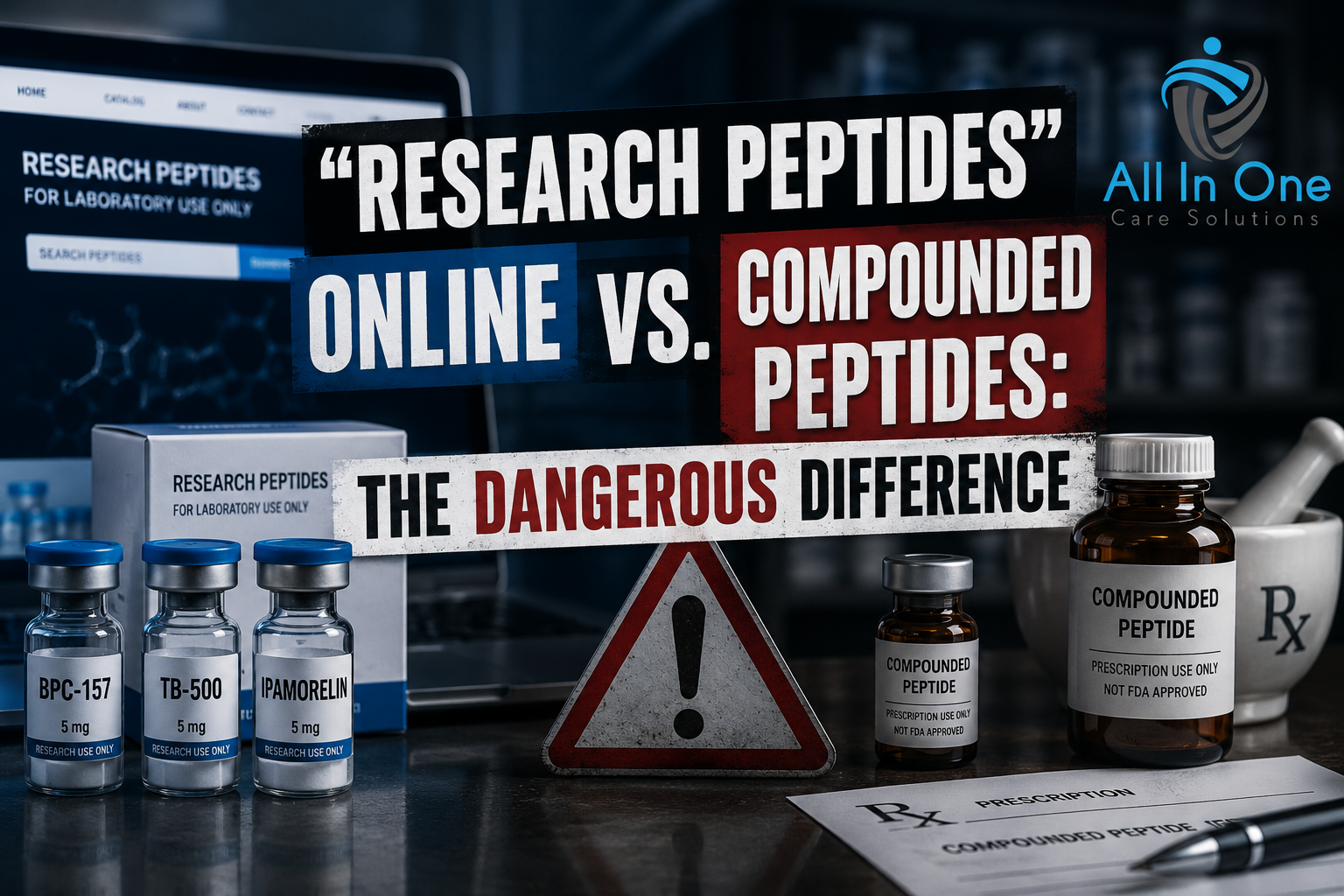
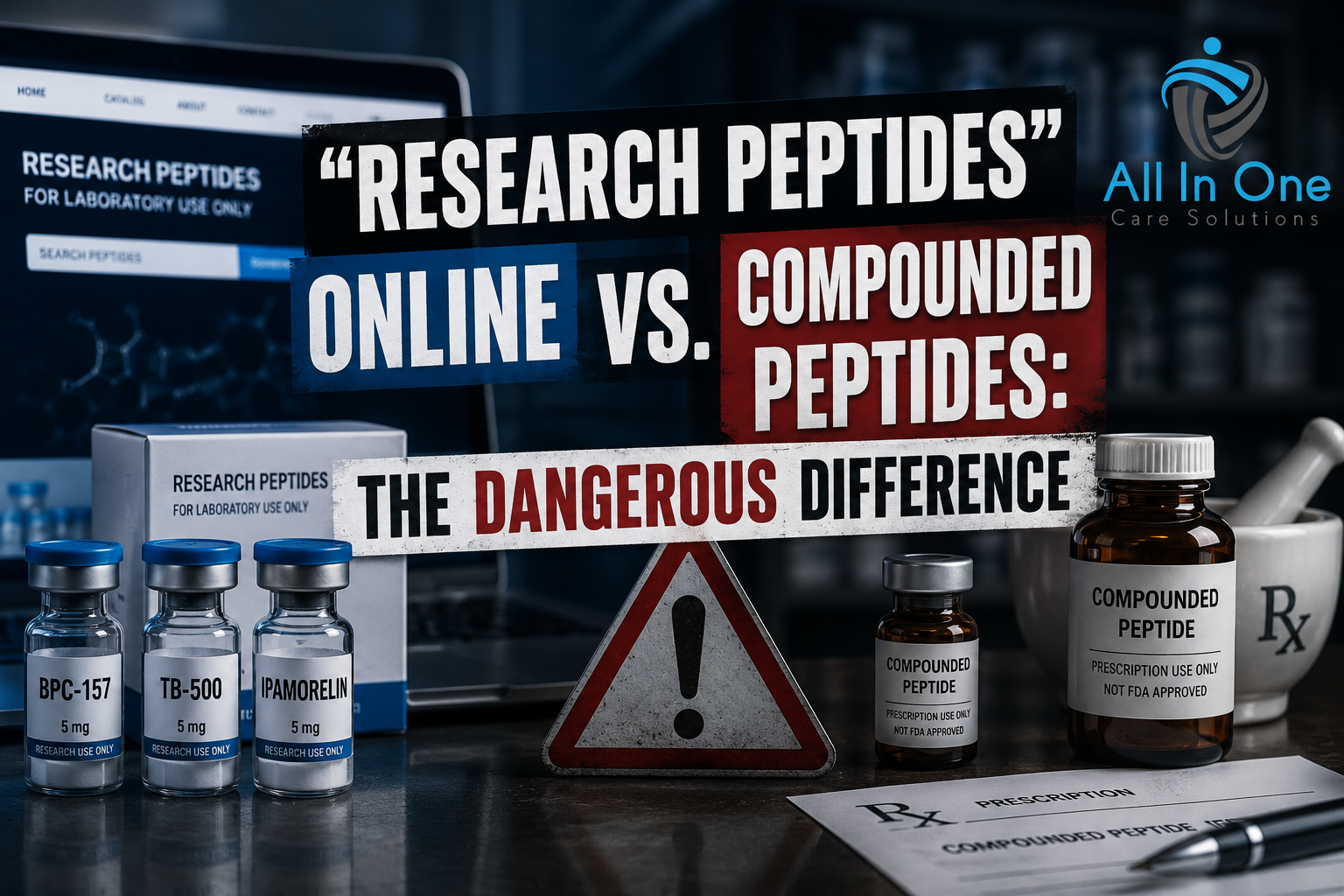
“Research Peptides” Online vs. Compounded Peptides: The Dangerous Difference
Last updated: June 10, 2026
Quick Answer
“Research peptides” sold online are unregulated chemical compounds marketed to avoid FDA oversight, labeled “not for human use” to sidestep legal liability. Compounded peptides, by contrast, are prepared by licensed pharmacies under medical supervision for specific patients. The gap between these two categories is not a matter of preference — it is a matter of patient safety.
Key Takeaways
- “Research peptides” are sold legally by labeling them as laboratory chemicals, not human medications, which means no quality, purity, or dosing standards apply.
- Compounded peptides are prepared by state-licensed, PCAB-accredited compounding pharmacies under a valid physician prescription.
- Independent lab testing of online peptide products has found contamination, incorrect concentrations, and undisclosed additives in a significant share of samples tested.
- Purchasing research peptides for personal use carries real legal risk, including potential violations of the Federal Analog Act and FDA import regulations.
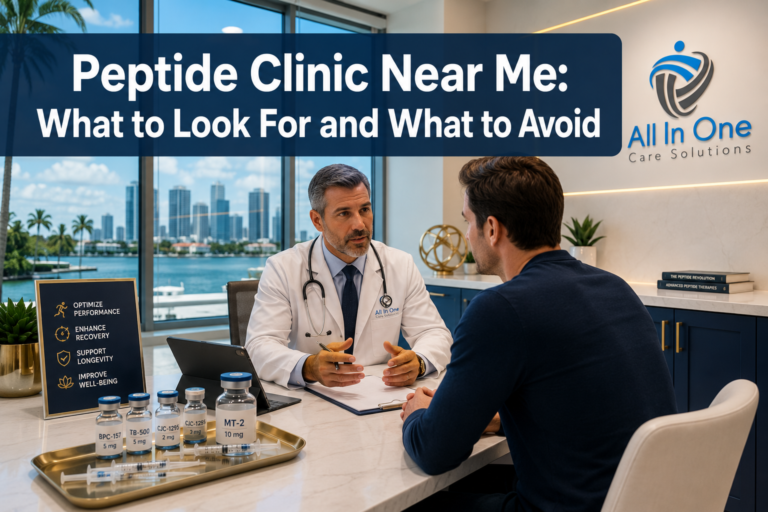
- The most commonly sought peptides — including BPC-157, CJC-1295, Ipamorelin, and Sermorelin — are available through legitimate compounding channels with a physician’s order.
- Side effects from unregulated peptide use range from injection-site reactions to systemic infections and hormonal disruption.
- Anyone in Miami seeking peptide therapy should work with a licensed medical provider who prescribes through an accredited compounding pharmacy.
- Cost differences between research and compounded peptides exist, but the risk-adjusted value strongly favors the medically supervised route.
What Exactly Are Research Peptides and How Are They Different from Medical Peptides
“Research peptides” are synthetic amino acid chains sold by online chemical suppliers under the legal fiction that they are intended for laboratory use only. Because they are not marketed as drugs for human consumption, they fall outside the FDA’s drug approval pathway — at least in the way sellers present them.
Medical peptides, by contrast, follow one of two legitimate pathways:
- FDA-approved drugs: A small number of peptides, such as Sermorelin (approved for pediatric growth hormone deficiency) and certain insulin analogs, have gone through full clinical trials and received FDA approval.
- Compounded peptides: Prepared by a licensed compounding pharmacy based on a physician’s prescription for a specific patient. These are not FDA-approved as finished drug products, but they are prepared under state pharmacy board oversight and, in many cases, USP standards.
The critical difference is accountability. A compounded peptide has a prescribing physician, a licensed pharmacist, a documented patient, and a traceable supply chain. A “research peptide” from an online vendor has none of those safeguards.
Are Online Peptides Safe to Purchase for Research
For actual laboratory research conducted by credentialed scientists in licensed facilities, sourcing peptides from specialty chemical suppliers may be appropriate — with proper institutional oversight. For individuals seeking personal health benefits, the answer is no, they are not safe to purchase this way.
Here is why:
- No sterility guarantee: Injectable peptides require sterile manufacturing conditions. Online vendors are not required to meet pharmaceutical sterility standards.
- No certificate of analysis from a licensed lab: Some vendors provide COAs, but these are often self-generated or from unaccredited labs with no regulatory standing.
- Unknown concentration accuracy: A vial labeled “5 mg” may contain significantly more or less than stated, creating unpredictable dosing.
- No medical oversight: Without a physician evaluating your health status, contraindications, and goals, self-administering any injectable compound carries serious risk.
A 2018 study published in JAMA Internal Medicine found that compounded drug products from non-accredited sources had failure rates exceeding 30% for potency and sterility. While that study focused on a broader compounding category, the principle applies directly to unregulated peptide suppliers.
What Risks Are Involved in Buying Peptides from Unregulated Websites
Buying peptides from unregulated online sources exposes you to several categories of harm. This is the core of the “research peptides” online vs. compounded peptides danger that physicians in Miami and across the country are increasingly warning patients about.
Physical risks:
- Bacterial contamination leading to local abscess or systemic infection (sepsis)
- Heavy metal contamination from uncontrolled synthesis
- Incorrect peptide sequence causing unexpected biological effects
- Allergic or anaphylactic reactions from undisclosed excipients
Dosing risks:
- Overdose from higher-than-labeled concentration
- Underdose leading patients to increase frequency, compounding exposure
- Hormonal disruption from growth hormone secretagogues used without baseline lab work
Practical risk:
If something goes wrong after using an unregulated product, emergency providers have no information about what was actually in the vial. That creates a dangerous diagnostic gap.
For patients in Miami managing chronic conditions, this risk is amplified. If you are already working with a provider for chronic disease management in Miami or blood pressure care, introducing an unverified injectable compound without your doctor’s knowledge can interfere with your treatment plan in ways that are difficult to reverse.
How Much Do Research Peptides Cost Compared to Pharmaceutical Grade
Research peptides are typically cheaper upfront. A 5 mg vial of BPC-157 from an online vendor may cost $30 to $60. A compounded BPC-157 prescription through a licensed pharmacy, prescribed by a physician, may cost $150 to $300 per month depending on protocol and dosage.
That price gap looks significant until you account for what you are actually getting:
| Factor | Research Peptide (Online) | Compounded Peptide (Rx) |
|---|---|---|
| Sterility verified | No | Yes (USP standards) |
| Potency tested by accredited lab | Rarely | Required |
| Physician oversight | None | Required |
| Legal for human use | No | Yes (with Rx) |
| Traceable supply chain | No | Yes |
| Insurance or FSA eligible | No | Potentially |
The true cost of an unregulated peptide includes the risk of a medical complication, an ER visit, or a lost work week from an infection. Compounded peptides through a physician-supervised program represent a higher upfront cost with substantially lower risk.
Which Peptides Are Most Commonly Used in Scientific Research and Clinical Practice
Several peptides appear frequently in both research literature and clinical compounding practice. Understanding which ones are legitimate candidates for medically supervised therapy helps patients ask the right questions.
Commonly studied and clinically used peptides:
- BPC-157 (Body Protection Compound): Studied for tissue repair, gut health, and musculoskeletal recovery
- CJC-1295 / Ipamorelin: Growth hormone releasing peptides studied for body composition and sleep quality
- Sermorelin: FDA-approved in a prior formulation; used in compounded form for growth hormone support in adults
- Thymosin Alpha-1: Studied for immune modulation
- PT-141 (Bremelanotide): FDA-approved as Vyleesi; compounded versions also used for sexual health
- NAD+ precursor peptides: Related to cellular energy metabolism
If you are exploring NAD+ therapy as part of a broader wellness protocol, our NAD+ IV therapy in Miami Gardens is administered under medical supervision with pharmaceutical-grade formulations — a meaningful distinction from anything purchased online.
Can Research Peptides Be Used for Human Performance Enhancement
This is where the “research peptides” online vs. compounded peptides distinction becomes most clinically relevant. Many people purchasing research peptides are doing so specifically for performance enhancement — muscle gain, fat loss, faster recovery, or anti-aging effects. That is a human use, regardless of what the label says.
Using a compound labeled “not for human use” for human use does not make it safer. It simply means the seller has disclaimed liability. The compound still enters your body, and your body does not care what the label says.
For patients interested in performance and wellness optimization, the medically appropriate path is:
- Schedule a consultation with a licensed physician
- Complete baseline lab testing to assess hormone levels, metabolic markers, and contraindications
- Receive a prescription for a compounded peptide from an accredited pharmacy if clinically appropriate
- Follow a monitored protocol with follow-up labs
Our primary care services in Miami Gardens include wellness consultations that can evaluate whether peptide therapy is appropriate for your specific health profile.
What Legal Restrictions Exist Around Purchasing Peptide Research Chemicals
The legal landscape around research peptides in 2026 is not as permissive as many online vendors imply. Here is the practical legal picture:
- FDA status: The FDA considers peptides sold for human use to be unapproved drugs. Selling them as “research chemicals” is a legal workaround that the FDA has increasingly challenged.
- Federal Analog Act: Peptides that are structurally similar to controlled substances may fall under this act, making possession for human use a federal offense.
- Import regulations: Ordering peptides from overseas vendors (common for lower prices) may violate FDA import rules, and packages can be seized at customs.
- State pharmacy laws: Compounding peptides without a valid prescription violates state pharmacy practice acts in Florida and most other states.
In 2021, the FDA issued guidance restricting several peptides — including BPC-157 and CJC-1295 — from being used in compounded preparations, citing insufficient evidence of safety. This has created a complex regulatory environment. Working with a knowledgeable physician and a compliant compounding pharmacy is the only way to navigate this legally and safely.
How Do I Know If a Peptide Supplier Is Legitimate
A legitimate peptide source in the clinical context is a licensed compounding pharmacy operating under a physician’s prescription. For research purposes, a legitimate supplier serves institutional buyers with documented research protocols.
Red flags that indicate an illegitimate or high-risk source:
- The website sells directly to consumers without requiring a prescription
- Products are labeled “not for human use” but marketed with before/after photos or dosing guides for physique goals
- No verifiable physical address or state pharmacy license number
- COAs are provided but from unaccredited or unverifiable testing labs
- Payment is accepted only in cryptocurrency or through non-standard payment processors
- No licensed pharmacist contact information is available
Green flags for a legitimate compounding pharmacy:
- PCAB (Pharmacy Compounding Accreditation Board) accreditation
- Verifiable state pharmacy license
- Requires a valid prescription from a licensed provider
- Provides COAs from third-party, ISO-accredited labs
- Has a licensed pharmacist available for consultation
What Are the Common Side Effects of Unregulated Peptide Use
Side effects from unregulated peptide use fall into two categories: effects from the peptide itself and effects from contaminants or manufacturing errors.
Peptide-related side effects (even from legitimate compounds):
- Water retention and joint discomfort (growth hormone secretagogues)
- Increased hunger (Ghrelin-related peptides)
- Flushing, nausea, or elevated blood pressure (PT-141)
- Fatigue or mood changes during adaptation phases
Contamination-related side effects (specific to unregulated sources):
- Injection-site redness, swelling, or abscess
- Fever and chills indicating systemic infection
- Unexpected hormonal shifts from mislabeled compounds
- Liver enzyme elevation from undisclosed additives
Patients in Miami who are already managing metabolic conditions should be especially cautious. If you are in a medical weight loss program in Miami Gardens or receiving GLP-1 therapy, adding an unverified peptide without physician knowledge can create compounding interactions that are difficult to diagnose and treat.
Who Should and Should Not Consider Working with Peptides
Medically supervised peptide therapy may be appropriate for adults who:
- Have documented hormone deficiencies confirmed by lab work
- Are working with a physician on a structured recovery or anti-aging protocol
- Have no contraindications such as active cancer, uncontrolled autoimmune disease, or pregnancy
- Understand that compounded peptides are not FDA-approved finished drug products and that results vary
Peptide therapy is not appropriate for:
- Individuals who want to self-administer without medical oversight
- Anyone purchasing from unregulated online sources
- Patients with certain cancers or hormone-sensitive conditions
- Minors
If you are unsure whether you are a candidate, an annual physical exam in Miami that includes comprehensive lab testing is the right starting point. Baseline bloodwork gives your physician the data needed to make a safe, evidence-based recommendation.
What Lab Testing Standards Matter When Selecting Peptide Sources
For compounded peptides, the following testing standards indicate a high-quality pharmacy:
- Sterility testing: Confirms no microbial contamination (required for all injectables)
- Potency testing: Confirms the active peptide is present at the labeled concentration (within USP tolerance, typically plus or minus 10%)
- Endotoxin testing: Confirms absence of bacterial endotoxins that cause fever and inflammation
- Identity testing: Confirms the correct peptide sequence using mass spectrometry or HPLC
Ask your compounding pharmacy for a current COA that includes all four of these test categories. If they cannot provide one, that is a significant concern.
For patients receiving IV therapy or injectable wellness treatments at our clinic, all formulations come from pharmacies that meet these standards. You can learn more about our approach to medically supervised injectable therapies through our Miami Gardens IV therapy services.
What Happens If You Use Low-Quality or Contaminated Peptides
The consequences range from mild to life-threatening, depending on the type and degree of contamination.
Mild outcomes: Injection-site irritation, temporary flu-like symptoms, mild hormonal fluctuation that resolves after stopping use.
Moderate outcomes: Abscess requiring drainage, persistent infection requiring oral or IV antibiotics, hormonal imbalance requiring medical intervention.
Severe outcomes: Sepsis from gram-negative bacterial contamination, anaphylaxis from undisclosed excipients, or long-term endocrine disruption from mislabeled growth hormone secretagogues.
Emergency providers treating a patient who used an unregulated research peptide face a diagnostic challenge: they do not know what was actually in the vial, what the actual dose was, or what other compounds may have been present. This lack of information delays treatment and increases risk.
The “research peptides” online vs. compounded peptides difference is not theoretical. It has real consequences for real patients, and the medical community in Miami and nationally is seeing more cases related to unregulated peptide use as these products become more widely marketed.
FAQ
Q: Is it illegal to buy research peptides online in the United States?
It depends on the peptide and intended use. Purchasing peptides labeled “not for human use” for personal injection is a legal gray area that the FDA has increasingly moved to restrict. Some peptides may violate the Federal Analog Act. The safest and clearest legal path is through a physician’s prescription.
Q: Can I get BPC-157 or CJC-1295 through a doctor in Miami?
Some compounding pharmacies continue to prepare these peptides under physician prescription, though FDA guidance has restricted their use in compounded preparations. A physician consultation will clarify what is currently available and legally appropriate in 2026.
Q: How do compounded peptides differ from FDA-approved peptides?
FDA-approved peptides have undergone clinical trials for a specific indication. Compounded peptides are prepared for individual patients by licensed pharmacies but are not FDA-approved as finished drug products. Both require a prescription; neither should be self-administered without medical oversight.
Q: What is a PCAB-accredited pharmacy?
PCAB stands for Pharmacy Compounding Accreditation Board. Accreditation indicates the pharmacy meets rigorous quality, safety, and testing standards beyond basic state licensure. It is one of the strongest indicators of a trustworthy compounding source.
Q: Are peptides the same as steroids?
No. Peptides are short chains of amino acids that signal biological processes. Anabolic steroids are synthetic hormones derived from testosterone. They have different mechanisms, legal statuses, and risk profiles, though both are misused in performance enhancement contexts.
Q: Can peptide therapy help with weight loss?
Certain peptides, particularly growth hormone secretagogues, may support body composition changes as part of a comprehensive program. However, for medically supervised weight loss, GLP-1 medications like semaglutide and tirzepatide have a much stronger evidence base. See our tirzepatide weight loss program in Miami Gardens for a supervised, evidence-based alternative.
Q: How do I start a medically supervised peptide consultation in Miami?
Contact a licensed primary care or wellness clinic that offers peptide therapy consultations. You will need a medical history review, baseline lab work, and a physician evaluation before any prescription is written.
Q: What should I bring to a peptide consultation?
Bring a list of current medications and supplements, recent lab results if available, and a clear description of your health goals. Your physician will order any additional labs needed before recommending a protocol.
Conclusion
The difference between “research peptides” purchased online and compounded peptides prescribed by a physician is not a matter of branding or price. It is a matter of safety, legality, and medical accountability. Online research peptides carry real risks: contamination, incorrect dosing, legal exposure, and zero medical oversight if something goes wrong. Compounded peptides, when prescribed by a licensed physician and prepared by an accredited pharmacy, offer a traceable, tested, and medically supervised alternative.
If you are in Miami and considering peptide therapy, the right first step is a consultation with a qualified physician who can evaluate your health status, order appropriate lab work, and determine whether a compounded peptide protocol is clinically appropriate for you.
At All In One Care Solutions in Miami Gardens, we provide medically supervised wellness consultations for patients across Miami Lakes, Hialeah, and surrounding communities. Our team can evaluate your candidacy for peptide therapy, hormone support, IV therapy, and medical weight loss programs — all under licensed physician oversight with pharmaceutical-grade formulations from accredited compounding pharmacies.
To schedule your consultation, contact our primary care clinic in Miami Gardens today. Same-week appointments are available. Compounded medications are not FDA-approved drugs; results vary by individual.
References
- Gudeman J, Jozwiakowski M, Chollet J, Randell M. “Potential Risks of Pharmacy Compounding.” Drugs in R&D. 2013. https://doi.org/10.1007/s40268-013-0029-y
- U.S. Food and Drug Administration. “Compounding and the FDA: Questions and Answers.” FDA.gov. 2018. https://www.fda.gov/drugs/human-drug-compounding/compounding-and-fda-questions-and-answers
- U.S. Food and Drug Administration. “Bulk Drug Substances That May Be Used in Compounding Under Section 503A of the Federal Food, Drug, and Cosmetic Act.” FDA.gov. 2021. https://www.fda.gov/drugs/human-drug-compounding/bulk-drug-substances-may-be-used-compounding-under-section-503a-federal-food-drug-and-cosmetic-act
- Pharmacy Compounding Accreditation Board (PCAB). “PCAB Accreditation Standards.” PCAB.org. 2022. https://www.pcab.org
- Brennan Z. “FDA Crackdown on Compounded Peptides.” Regulatory Focus. 2021. https://www.raps.org
Tags: research peptides, compounded peptides Miami, peptide therapy Miami, BPC-157 Miami, CJC-1295 Ipamorelin, unregulated peptides risks, peptide clinic Miami Gardens, medically supervised peptide therapy, online peptide safety, compounding pharmacy standards, peptide injections Miami, preventive care Miami