Peptide Clinic Near Me: What to Look For and What to Avoid
Last updated: June 10, 2026
Quick Answer: Not every clinic offering peptide therapy in Miami operates under the same medical standards. When searching for a peptide clinic near me, the most important factors are physician oversight, pharmaceutical-grade sourcing from accredited compounding pharmacies, and a full medical evaluation before any treatment begins. Skipping these steps puts your health and your money at risk.
Key Takeaways
- A legitimate peptide clinic requires a licensed prescriber (MD, DO, or NP) to evaluate you before any treatment is ordered.
- Baseline lab work is not optional. It is a clinical requirement for safe, effective peptide therapy.
- Compounded peptides must come from a licensed 503A or 503B pharmacy. “Research grade” peptides are not for human use.
- Most peptide treatments are not covered by insurance and are paid out of pocket, typically ranging from $150 to $600 or more per month depending on the protocol.
- Red flags include clinics that prescribe without labs, sell peptides as supplements, or cannot name their pharmacy source.
- Peptide therapy is not appropriate for everyone. Certain health conditions and medications can make it unsafe.
- In-person evaluations at a supervised medical clinic in Miami provide a level of safety that online-only platforms cannot fully replicate.
- Effects from peptide protocols typically take four to twelve weeks to become noticeable, and maintenance is often required.
Are Peptide Clinics Legit or Just a Trend?
Peptide therapy is a legitimate branch of medicine with a growing body of clinical research behind it, but the market is not uniformly regulated, which means quality varies widely between providers. Peptides are short chains of amino acids that act as signaling molecules in the body, influencing everything from growth hormone release to tissue repair and immune function [2].
The challenge is that the growing demand for peptide therapy in Miami and across the country has attracted providers who operate outside appropriate medical standards. Some sell peptides as “supplements” to avoid prescription requirements. Others operate as anti-aging spas with minimal clinical oversight. A genuine peptide clinic functions as a medical practice, not a wellness boutique.
What makes a clinic legitimate:
- A licensed medical prescriber reviews your full health history
- Lab work is ordered before any protocol is started
- Peptides are sourced from a licensed compounding pharmacy
- Follow-up monitoring is built into the treatment plan
What Medical Conditions Can Peptide Therapy Help With
Peptide therapy is used to support a range of health goals, but it is not a cure-all. The most evidence-supported applications include growth hormone optimization, tissue repair, metabolic support, and immune modulation [5].
Common clinical applications include:
- Growth hormone support: Peptides such as CJC-1295 and Ipamorelin stimulate the pituitary gland to increase natural growth hormone production, which may support muscle recovery, fat metabolism, and sleep quality.
- Tissue and joint repair: BPC-157 (Body Protection Compound) has been studied for its potential role in healing tendons, ligaments, and gut tissue.
- Metabolic and weight management: Certain peptides are used alongside medical weight loss programs to support fat loss and lean muscle preservation. For patients already considering medically supervised weight loss in Miami, peptide protocols can complement treatments like semaglutide or tirzepatide.
- Immune function: Some peptides are studied for their role in modulating immune response.
- Anti-aging and cellular energy: NAD+ precursors and related peptides are used to support mitochondrial function and cellular repair.
Important clinical note: Many peptide applications are still in research phases. A responsible prescriber will be transparent about what has strong clinical evidence and what is still being studied [5].
How Do I Know If a Peptide Clinic Is Reputable
A reputable peptide clinic near you will prioritize your medical safety over a quick sale. The clearest sign of a trustworthy provider is a structured intake process that begins with a medical consultation and lab testing, not a product recommendation [3][4].
Checklist for evaluating a peptide clinic:
- The clinic employs or is supervised by a licensed MD, DO, or NP
- They require baseline bloodwork before prescribing (hormone panels, metabolic panels, CBC)
- They can name their compounding pharmacy and confirm it holds 503A or 503B accreditation
- They provide a written treatment plan with dosing, duration, and monitoring schedule
- They have a clear process for follow-up and adjusting your protocol
- The clinic is a registered medical practice, not a supplement retailer
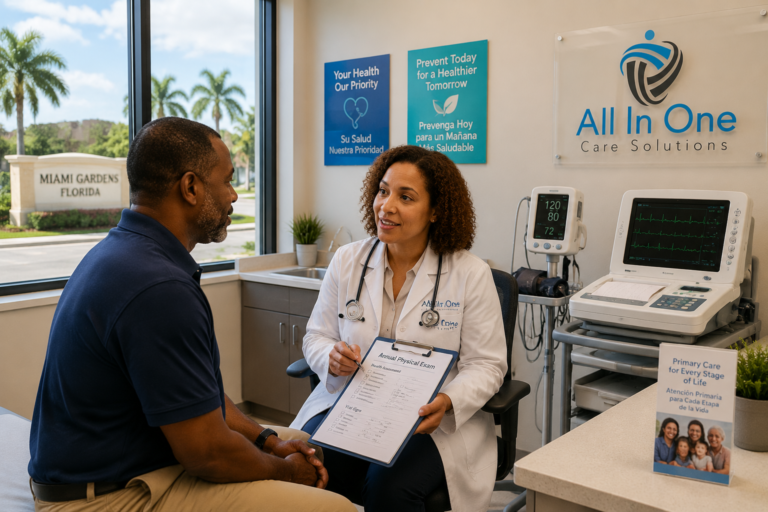
At All In One Care Solutions, every peptide consultation begins with a full medical evaluation. Lab work is conducted in-house through our clinical laboratory services, so your baseline data informs every treatment decision from day one.
Red Flags to Watch Out For in a Peptide Clinic
Several warning signs indicate that a clinic is operating below acceptable medical standards. Recognizing these red flags before you pay or begin treatment can protect your health and your finances [6][10].
Red flags to avoid:
- No medical evaluation required. Any clinic that will ship or administer peptides without a consultation and lab review is not operating safely.
- Peptides sold as supplements. Injectable peptides are not supplements. If a provider calls them that to avoid prescription requirements, walk away.
- No named pharmacy source. A legitimate clinic can tell you exactly which licensed compounding pharmacy supplies their peptides.
- Guaranteed results. Peptide therapy outcomes vary based on individual biology, lifestyle, and protocol adherence. No ethical provider guarantees specific results.
- Pressure to buy large packages upfront. A medically supervised program adjusts over time. Locking you into a six-month supply before your first follow-up is a sales tactic, not a clinical practice.
- No follow-up protocol. Peptide therapy requires monitoring. A clinic that has no plan for checking in on your progress is not providing medical care.
- “Research grade” peptides. This label means the peptides are not intended for human use. They are not held to the same purity and sterility standards as pharmaceutical compounded medications [5].
What Qualifications Should a Peptide Doctor Have
The physician or prescriber overseeing your peptide therapy should hold a valid state medical license and have documented training or clinical experience in hormone therapy, regenerative medicine, or functional medicine [4].
Minimum qualifications to confirm:
- Active MD, DO, or NP license in the state of Florida
- Experience prescribing compounded medications
- Familiarity with hormone and metabolic lab interpretation
- Willingness to coordinate with your primary care doctor if needed
A board certification in internal medicine, family medicine, or endocrinology adds credibility, but is not the only measure of competence. What matters most is that the provider takes a thorough, individualized approach to your care.
At our primary care clinic in Miami Gardens, our licensed medical team integrates peptide consultations into a broader framework of preventive care Miami residents can rely on year-round.
Risks and Side Effects of Peptide Treatments
Peptide therapy carries real risks, and any clinic that downplays them is not being honest with you. Side effects vary depending on the specific peptide, dosage, administration method, and the patient’s individual health profile [5].
Common side effects reported include:
- Injection site reactions (redness, swelling, mild pain)
- Water retention, particularly with growth hormone-stimulating peptides
- Fatigue or changes in sleep during the adjustment period
- Headaches, especially in the first weeks of treatment
- Nausea with some peptide types
More serious risks include:
- Hormonal imbalances if protocols are not properly monitored
- Interactions with existing medications or conditions
- Contamination risk from non-pharmaceutical-grade sources
- Potential for misuse or inappropriate dosing without clinical supervision
This is precisely why baseline labs and ongoing monitoring are non-negotiable in a responsible peptide program. The American Medical Association has noted that the lack of standardized oversight in some peptide markets creates meaningful risk for patients who pursue treatment outside of supervised clinical settings [5].
Who Should Not Get Peptide Therapy
Peptide therapy is not appropriate for everyone. Certain health conditions, medications, and life stages make peptide use inadvisable without very careful medical review, and some contraindicate it entirely [2][6].
Peptide therapy is generally not recommended for:
- Individuals with active cancer or a history of hormone-sensitive cancers
- Pregnant or breastfeeding women
- Patients with uncontrolled diabetes or severe metabolic disorders
- Those with active autoimmune conditions (depending on the peptide type)
- Individuals taking anticoagulants or certain immunosuppressants without specialist clearance
This is not an exhaustive list. A full medical history review is the only way to determine whether peptide therapy is safe for a specific individual. If you have a chronic condition being managed through a chronic disease management program in Miami, your provider should be part of the decision-making process before any peptide protocol begins.
Difference Between Peptide Clinics and Anti-Aging Centers
These two types of practices overlap, but they are not the same. A true peptide clinic operates as a medical practice with licensed prescribers, lab infrastructure, and pharmaceutical sourcing. Many anti-aging centers are medically supervised, but some function primarily as aesthetic or wellness spas with limited clinical depth [3][8].
| Feature | Peptide Clinic (Medical) | Anti-Aging Center (Spa Model) |
|---|---|---|
| Licensed prescriber on staff | Required | Varies |
| Baseline labs required | Yes | Often optional |
| Pharmaceutical-grade sourcing | 503A/503B pharmacy | May use supplement-grade |
| Follow-up monitoring | Structured | Inconsistent |
| Prescription documentation | Provided | May be absent |
| Insurance coordination | Possible for labs | Rarely offered |
When evaluating any provider in Miami, ask directly: “Are you a licensed medical practice?” and “Who is the prescribing physician?” The answers will tell you a great deal about the level of care you will receive.
How Much Do Peptide Treatments Typically Cost
Most peptide therapy programs are not covered by insurance and are paid out of pocket. Costs vary based on the specific peptide protocol, dosage, and the clinic’s pricing structure [1][9].
General cost ranges (estimates, not guarantees):
- Initial consultation and lab work: $150 to $350
- Monthly peptide protocol (single peptide): $150 to $400 per month
- Combination protocols (e.g., CJC-1295 + Ipamorelin): $300 to $600 per month
- BPC-157 protocols: $200 to $450 per month
- Follow-up monitoring labs: $75 to $200 per panel
Some clinics offer membership models that bundle consultations, labs, and peptides at a reduced monthly rate. This can be cost-effective for patients committed to a long-term protocol.
Be cautious of pricing that seems unusually low. Pharmaceutical-grade compounded peptides have real production costs. A price that seems too good to be true often reflects a compromise in sourcing quality.
Can My Insurance Cover Peptide Treatments
In most cases, insurance does not cover compounded peptide therapy because these medications are not FDA-approved drugs. However, some components of your care, such as the initial consultation and lab work, may be billable through your health plan depending on your coverage [2][6].
What may be covered:
- Office visit with a primary care or specialist physician
- Diagnostic lab panels (hormone levels, metabolic panels, CBC)
- Management of underlying conditions identified during evaluation
What is typically not covered:
- Compounded peptide medications
- Peptide administration fees
- Wellness-focused protocols without a specific diagnosis code
If you carry insurance through a plan accepted at our primary care and urgent clinic in Miami Gardens, we can help you understand what portions of your care may be eligible for coverage before you commit to a program.
Are Online Peptide Consultations as Good as In-Person
Online consultations can be a starting point for discussion, but they are not equivalent to an in-person medical evaluation for peptide therapy. A physical exam, in-house lab work, and direct provider-patient interaction provide clinical data that a video call cannot replicate [4][10].
Where online consultations fall short:
- Cannot perform a physical examination
- Rely on patient self-reporting for health history
- Lab kits mailed to patients vary in quality and handling
- Less accountability for follow-up and dose adjustment
Where in-person care adds value:
- Immediate access to in-house lab testing
- Direct physical assessment of injection sites and overall health status
- Stronger provider-patient relationship and continuity of care
- Better integration with your existing primary care records
For Miami residents, choosing a local clinic for peptide therapy means you can access same-week appointments, in-house labs, and a care team that knows your full medical history. Our walk-in clinic in Miami Gardens offers accessible entry points for patients who want to start the conversation without a long wait.
How Long Do Peptide Treatment Effects Usually Last
Peptide therapy is not a one-time intervention. Most patients begin to notice effects between four and twelve weeks into a protocol, and sustained results typically require continued use and lifestyle support [6][8].
General timeline expectations:
- Weeks 1 to 4: Subtle changes in sleep, energy, or recovery may begin
- Weeks 4 to 8: More noticeable improvements in body composition, mood, or joint comfort
- Weeks 8 to 12: Peak initial effects for most growth hormone-stimulating protocols
- Beyond 12 weeks: Maintenance dosing or cycling protocols are typically introduced
Results are not permanent after stopping therapy. Patients who discontinue peptides without addressing underlying lifestyle factors often see a gradual return to baseline. This is why peptide therapy works best as part of a broader preventive care plan, not as a standalone solution.
Most Common Mistakes People Make With Peptide Therapy
Even patients who choose a reputable clinic sometimes make decisions that reduce the effectiveness or safety of their treatment. These are the most common errors to avoid [3][4][9].
Mistakes to avoid:
- Skipping labs to save money. Baseline labs are how your provider sets the right protocol for your biology. Skipping them is guessing.
- Sourcing peptides independently online. “Research grade” peptides purchased outside of a clinical setting are not held to pharmaceutical standards and carry contamination risks.
- Stopping treatment too early. Many patients quit before the four-to-eight-week window when effects become measurable. Impatience leads to abandoning a protocol that was working.
- Not disclosing all medications. Peptides can interact with other treatments. Full disclosure to your prescriber is essential.
- Choosing a clinic based on price alone. The lowest price often reflects the lowest standard of sourcing or oversight.
- Ignoring follow-up appointments. Peptide protocols need adjustment based on how your body responds. Skipping follow-ups means your dose may be wrong for months.
FAQ
What is the difference between compounded peptides and FDA-approved peptides?
FDA-approved peptides have gone through the full drug approval process for specific indications. Compounded peptides are prepared by licensed pharmacies for individual patient prescriptions. Compounded peptides are not FDA-approved drugs, but they are legal when prescribed by a licensed provider and sourced from an accredited 503A or 503B pharmacy.
Is BPC-157 legal in Miami in 2026?
BPC-157 is not FDA-approved and is not legal for commercial sale as a supplement or drug. However, it can be legally compounded and prescribed by a licensed physician in Florida for individual patient use through a licensed compounding pharmacy.
How do I find a peptide doctor near me in Miami?
Look for a licensed medical clinic, not a spa or supplement retailer. Confirm that a physician or nurse practitioner is on staff, that they require lab work before prescribing, and that they source from a named compounding pharmacy.
Can peptide therapy help with weight loss?
Some peptides support metabolic function and lean muscle preservation, which can complement a structured weight loss program. They are not a replacement for medically supervised weight loss treatments. For dedicated weight loss support, programs using tirzepatide in Miami Gardens or semaglutide may be more appropriate as primary interventions.
How is peptide therapy different from hormone replacement therapy (HRT)?
Peptides typically work by stimulating your body’s own hormone production rather than replacing hormones directly. HRT introduces exogenous hormones. Both require medical supervision, but the mechanisms and risk profiles differ.
Do I need a referral to see a peptide specialist in Miami?
In most cases, no. You can schedule a direct consultation at a primary care clinic that offers peptide services. If your care requires specialist coordination, your provider will guide that process.
What should I bring to my first peptide consultation?
Bring a list of all current medications and supplements, any recent lab results you have, a summary of your health history, and your health insurance card in case any portion of the visit is billable.
Are peptides safe for women?
Yes, with appropriate medical evaluation. Certain peptides are commonly used by women for recovery, metabolic support, and hormonal balance. Women with hormone-sensitive conditions or who are pregnant or breastfeeding require additional caution and specialist input. Our women’s health primary care services in Miami Gardens can help guide that evaluation.
How often do I need to inject peptides?
Frequency depends on the specific protocol. Some peptides are injected daily, others several times per week. Your prescriber will provide a written dosing schedule based on your labs and goals.
Can peptide therapy be combined with IV therapy?
Yes, many patients combine peptide protocols with IV therapy for complementary support. For example, NAD+ IV therapy supports cellular energy and is often paired with peptide protocols focused on recovery or anti-aging. Learn more about IV therapy services in Miami Gardens.
Conclusion
Finding a trustworthy peptide clinic near you in Miami requires more than a Google search and a good price. The difference between a safe, effective treatment and a costly, potentially harmful experience comes down to three things: physician oversight, pharmaceutical-grade sourcing, and structured medical monitoring.
Actionable next steps:
- Schedule a consultation at a licensed medical clinic, not a wellness spa or supplement store.
- Ask directly about the prescribing physician’s credentials and the name of the compounding pharmacy used.
- Insist on baseline lab work before any peptide is prescribed.
- Review your current medications and health history with your provider before starting any protocol.
- Set realistic expectations. Peptide therapy takes weeks to show results and works best as part of a broader preventive care plan.
At All In One Care Solutions in Miami Gardens, we provide medically supervised peptide consultations with in-house lab testing, licensed prescribers, and pharmaceutical-grade compounded formulations from accredited pharmacies. We serve patients throughout Miami Gardens, Miami Lakes, and Hialeah with bilingual care in English and Spanish.
Compounded peptides are not FDA-approved drugs. Results vary by individual. Every treatment plan at our clinic begins with a personalized medical evaluation.
To schedule your peptide consultation or learn more about our primary care services in Miami Gardens, contact our clinic today. Same-week appointments are available.
References
[1] Best Peptide Therapy Provider Comparison 2026 – https://meto.co/blog/best-peptide-therapy-provider-comparison-2026
[2] Peptide Therapy Near Me Guide – https://www.seekpeptides.com/blog/articles/peptide-therapy-near-me-guide
[3] How To Choose The Right Peptide Therapy Clinic A Complete Guide – https://timelapsemagazine.com/how-to-choose-the-right-peptide-therapy-clinic-a-complete-guide/
[4] How To Choose Peptide Therapy Clinic – https://regenesismd.com/blog/how-to-choose-peptide-therapy-clinic
[5] What Doctors Want Patients Know About Injectable Peptides – https://www.ama-assn.org/public-health/prevention-wellness/what-doctors-want-patients-know-about-injectable-peptides
[6] Peptide Therapy Near Me – https://peptidedossier.com/guides/peptide-therapy-near-me/
[8] Best Peptide Therapy Texas Guide – https://injectco.com/best-peptide-therapy-texas-guide/
[9] Peptide Clinics Near Me Directory 2026 – https://buypeptidesonline.com/articles/peptide-clinics-near-me-directory-2026
[10] Peptide Therapy Clinic – https://purepeptideclinic.com/guides/peptide-therapy-clinic/
Tags: peptide therapy Miami, peptide clinic near me, compounded peptides Miami, BPC-157 Miami, CJC-1295 Ipamorelin, medically supervised peptide therapy, anti-aging clinic Miami Gardens, peptide injections Miami, medical weight loss Miami Gardens, preventive care Miami, primary care Miami Gardens, wellness injections Hialeah