
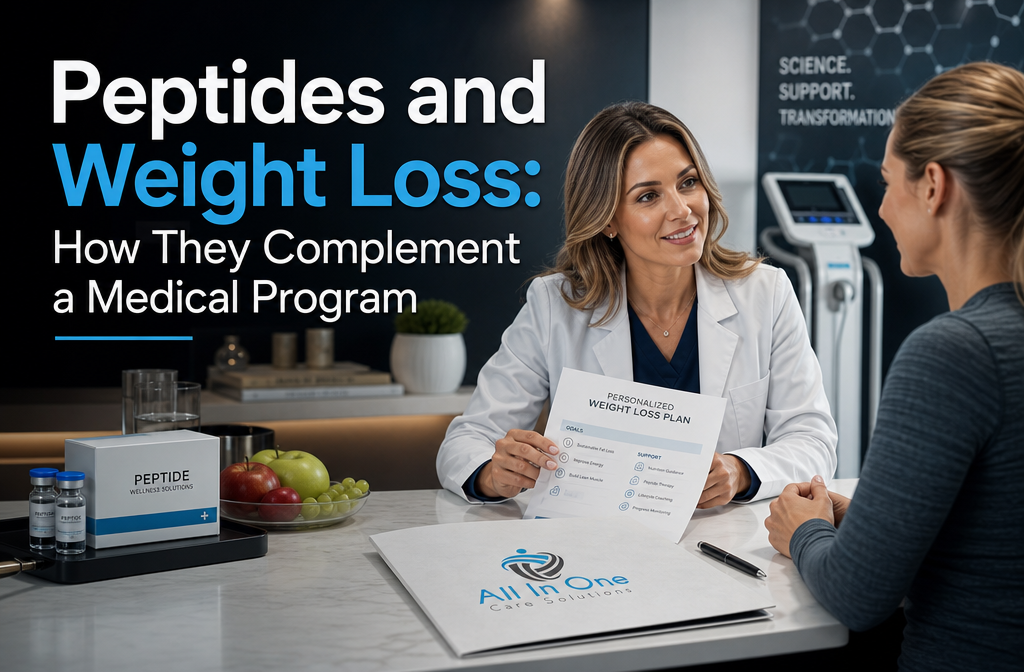
Peptides and Weight Loss: How They Complement a Medical Program
Last updated: June 10, 2026
Quick Answer: Peptides are short chains of amino acids that signal the body to regulate hunger, metabolism, and fat storage. When used as part of a medically supervised weight loss program, peptides such as semaglutide and tirzepatide can meaningfully support fat loss in people who have struggled with conventional diet and exercise alone. They are not a standalone cure, but they work best when combined with clinical oversight, lab testing, and lifestyle adjustments.
Key Takeaways
- Peptides are biologically active compounds that work by mimicking or influencing the body’s own hormonal signals related to hunger and metabolism.
- GLP-1 receptor agonists like semaglutide and tirzepatide are the most clinically studied peptides for weight loss in 2026.
- Medical supervision is required for safe and effective peptide therapy — self-administering without a physician evaluation carries real risks.
- Most peptide weight loss programs are not covered by standard insurance, but flexible payment options are available at clinics like All In One Care Solutions.
- Results vary by individual, but many patients begin noticing appetite changes within the first two to four weeks of treatment.
- Peptides work best alongside dietary changes, physical activity, and ongoing lab monitoring — not as a replacement for those habits.
- Certain medical conditions, including active cancers, thyroid tumors, and pregnancy, may disqualify a patient from peptide therapy.
- A thorough intake evaluation — including bloodwork and medical history — is standard before any physician prescribes peptide treatment.
What Exactly Are Peptides and How Do They Help With Weight Loss
Peptides are short chains of amino acids, which are the building blocks of proteins. The body naturally produces many peptides that act as chemical messengers, telling organs and tissues what to do. In the context of weight loss, certain peptides interact directly with receptors that control appetite, insulin secretion, gastric emptying, and fat metabolism.
The most clinically relevant peptides for weight loss in 2026 are GLP-1 receptor agonists. GLP-1 (glucagon-like peptide-1) is a hormone the gut releases after eating. It signals the brain to reduce hunger, slows digestion so you feel full longer, and prompts the pancreas to release insulin in response to meals. Pharmaceutical peptides mimic this signal at a much higher intensity and duration than the body produces on its own.
Other peptides used in wellness programs include:
- Sermorelin and CJC-1295/Ipamorelin: These stimulate growth hormone release, which can support fat metabolism and lean muscle preservation.
- BPC-157: Primarily studied for tissue repair and inflammation, sometimes included in combination protocols.
- AOD-9604: A fragment of human growth hormone studied for its effect on fat cells.
Clinics providing comprehensive medical oversight, such as those offering physician-directed metabolic programs, combine these compounds with individualized dosing and ongoing monitoring to match the right peptide to each patient’s physiology [3][4].
For residents in the Miami area exploring these options, our medical weight loss programs in Miami Gardens provide a structured starting point under physician supervision.
How Peptides and Weight Loss Complement a Medical Program
Peptides do not replace a medical weight loss program — they amplify it. A physician-supervised program addresses the full picture: metabolic health, hormonal balance, nutrition, and behavioral patterns. Peptides fit into this structure by targeting the biological mechanisms that make weight loss difficult for many people, particularly those with insulin resistance or hormonal imbalances.
Here is how peptide therapy integrates with a clinical program:
- Initial evaluation: A physician reviews your medical history, current medications, and metabolic labs before recommending any peptide protocol.
- Personalized dosing: Dosing is adjusted based on your response, tolerability, and weight loss progress over time.
- Nutritional guidance: Peptides reduce appetite, but a registered dietitian or physician still provides dietary structure to ensure adequate protein and micronutrient intake.
- Lab monitoring: Blood glucose, lipid panels, thyroid markers, and kidney function are checked at intervals to confirm safety.
- Progress tracking: Body composition, weight, and metabolic markers are reviewed regularly to determine whether the protocol is working or needs adjustment.
Programs that include comprehensive labs and 3D body composition scans offer the clearest picture of actual fat loss versus muscle loss, which matters for long-term health outcomes [10].
What Is the Difference Between Semaglutide and Other Weight Loss Peptides
Semaglutide is currently the most widely prescribed GLP-1 receptor agonist for weight loss, marketed under brand names Ozempic and Wegovy. It works by activating GLP-1 receptors in the brain and gut, reducing appetite and slowing gastric emptying. Clinical trial data published by the manufacturer shows significant average weight reductions in participants with obesity, though individual results vary.
Tirzepatide is a dual agonist — it activates both GLP-1 and GIP (glucose-dependent insulinotropic polypeptide) receptors. This dual mechanism appears to produce greater average weight loss than semaglutide alone in head-to-head studies, though it also carries a similar side effect profile. You can read more about how tirzepatide works in our tirzepatide weight loss program overview for Miami Gardens.
Retatrutide is a newer triple agonist (GLP-1, GIP, and glucagon) that is still in advanced clinical trials as of 2026. Some structured clinical programs are beginning to include it for patients who did not respond adequately to semaglutide or tirzepatide [4].
| Peptide | Receptor Targets | Primary Use | Availability |
|---|---|---|---|
| Semaglutide | GLP-1 | Weight loss, type 2 diabetes | FDA-approved; also compounded |
| Tirzepatide | GLP-1 + GIP | Weight loss, type 2 diabetes | FDA-approved; also compounded |
| Retatrutide | GLP-1 + GIP + Glucagon | Weight loss (trial phase) | Clinical trials / select programs |
| Sermorelin / CJC-1295 | GHRH receptor | Growth hormone support | Compounded, physician-prescribed |
| BPC-157 | Multiple pathways | Tissue repair, inflammation | Compounded, research use |
Choose semaglutide if: you are new to GLP-1 therapy and want the most documented safety record.
Choose tirzepatide if: you have not responded well to semaglutide or your physician recommends a stronger dual-action approach.
Can Peptides Work If You Have Tried Other Weight Loss Methods Before
Yes — and this is one of the most common reasons patients in Miami seek peptide therapy. Many people have tried calorie restriction, exercise programs, meal replacement plans, and over-the-counter supplements without sustained success. Peptides address a different layer of the problem: the hormonal and neurological signals that drive hunger and fat storage.
For individuals with insulin resistance, leptin resistance, or metabolic syndrome, the body actively resists weight loss through compensatory hunger signals. GLP-1 peptides interrupt this cycle by directly reducing appetite signaling in the brain, making calorie reduction feel less like deprivation and more manageable [5].
That said, peptides are not a reset button. Patients who have tried and stopped multiple programs often need a more complete evaluation — including lab testing for thyroid function, cortisol, and sex hormones — before starting peptide therapy. Our comprehensive medical exams in Miami Gardens include the lab panel needed to identify these underlying factors before treatment begins.
What Side Effects Should You Watch Out For With Weight Loss Peptides
The most common side effects of GLP-1 peptides are gastrointestinal. These include:
- Nausea (most common, especially in the first few weeks)
- Vomiting
- Diarrhea or constipation
- Reduced appetite (expected, but can become excessive)
- Mild fatigue
These effects are typically dose-dependent and tend to improve as the body adjusts. Physicians manage them by starting at a low dose and increasing gradually over several weeks [8].
Less common but more serious side effects to discuss with your physician include:
- Pancreatitis (inflammation of the pancreas)
- Gallbladder issues, including gallstones
- Rapid heart rate
- Injection site reactions (for injectable peptides)
Important: There is a theoretical risk of thyroid C-cell tumors based on animal studies with GLP-1 agonists. This is why a personal or family history of medullary thyroid carcinoma or Multiple Endocrine Neoplasia syndrome type 2 (MEN2) is a contraindication for these medications.
Compounded peptides carry an additional consideration: their purity and dosing accuracy depend on the quality of the compounding pharmacy. Physician-supervised programs that source from accredited, licensed pharmacies significantly reduce this risk [6].
How Quickly Can You Expect to See Weight Loss Results With Peptides
Most patients notice appetite suppression within the first one to two weeks of starting a GLP-1 peptide. Measurable weight loss typically begins within the first four to eight weeks, with more significant changes visible at the three-month mark when therapeutic dosing is reached.
Realistic expectations for a medically supervised program:
- Weeks 1–4: Reduced hunger, possible nausea, early weight changes of 2–5 lbs (varies by individual)
- Months 1–3: Gradual dose escalation, more consistent appetite control, 5–10% body weight reduction is a reasonable clinical target for many patients
- Months 3–6: Plateau management, dietary adjustments, continued monitoring
- 6+ months: Maintenance planning, gradual dose tapering in some cases
These are estimates. Results depend on starting weight, adherence to dietary guidance, activity level, and individual metabolic response. Programs that include structured behavior change alongside GLP-1 therapy show better long-term outcomes than medication alone [5].
Are Peptide Treatments Covered by Insurance
Most peptide weight loss treatments are not covered by standard health insurance plans, particularly compounded formulations. FDA-approved brand-name versions of semaglutide (Wegovy) and tirzepatide (Zepbound) may have partial coverage under some plans when prescribed for obesity, but prior authorization requirements are common and denials are frequent.
For patients without coverage, self-pay programs at medical clinics in Miami offer transparent pricing. All In One Care Solutions provides flexible medical payment plans to make supervised peptide therapy accessible without requiring insurance approval.
Telehealth-based peptide programs, which operate on a direct-pay model, are also an option for patients who prefer remote consultations [2]. However, in-person programs allow for physical exams and on-site lab testing, which adds a layer of safety that telehealth alone cannot replicate.
What Lifestyle Changes Are Required While Using Peptides
Peptides reduce appetite, but they do not make poor dietary choices irrelevant. The most effective programs pair peptide therapy with specific lifestyle adjustments:
Nutrition:
- Prioritize protein at every meal to preserve muscle mass during weight loss (a common clinical recommendation is 0.7–1g of protein per pound of goal body weight, though your physician will guide this based on your labs)
- Reduce ultra-processed foods, which can blunt the appetite-suppressing effects of GLP-1 peptides
- Stay hydrated — nausea from peptides is often worsened by dehydration
Physical activity:
- Resistance training two to three times per week helps preserve lean muscle, which is at risk during rapid weight loss
- Low-impact cardio (walking, cycling) supports cardiovascular health without excessive caloric burn that could trigger compensatory hunger
Medical follow-up:
- Attend scheduled check-ins for dose adjustments and lab reviews
- Report any new symptoms promptly — early identification of side effects prevents complications
Behavior change programs that address emotional eating and food relationships alongside GLP-1 therapy show the strongest long-term results [5]. Chronic disease management Miami clinics that offer nutritional counseling alongside peptide prescriptions provide the most complete support structure.
What Medical Conditions Might Prevent You From Using Weight Loss Peptides
Not everyone is a candidate for peptide therapy. A physician will screen for the following contraindications before prescribing:
Absolute contraindications (generally disqualifying):
- Personal or family history of medullary thyroid carcinoma
- Multiple Endocrine Neoplasia syndrome type 2 (MEN2)
- Active or recent pancreatitis
- Pregnancy or breastfeeding
- Severe gastrointestinal disease (e.g., gastroparesis)
Relative contraindications (require careful evaluation):
- Type 1 diabetes
- Severe kidney or liver disease
- History of eating disorders
- Certain heart conditions
What doctors look for before prescribing peptide weight loss treatments includes a full review of current medications (some drugs interact with GLP-1 agonists), a metabolic lab panel, and a physical exam. Clinics offering lab testing Miami services can complete this workup in a single visit, streamlining the path to treatment for eligible patients [7].
Can Peptides Help With Stubborn Belly Fat Specifically
GLP-1 peptides reduce overall body fat, and clinical evidence suggests they have a meaningful effect on visceral fat — the metabolically active fat stored around the abdominal organs. Visceral fat is more strongly linked to cardiovascular disease, type 2 diabetes, and metabolic syndrome than subcutaneous fat (the fat just under the skin).
Peptides do not selectively target the belly. Fat loss occurs throughout the body based on genetics and individual physiology. However, because visceral fat is metabolically active and responds to insulin signaling, GLP-1 therapy — which improves insulin sensitivity — tends to reduce it proportionally more than subcutaneous fat in many patients.
For patients in Miami interested in tracking body composition changes during treatment, programs that include body composition analysis provide objective data beyond the scale. Combining peptide therapy with resistance training is the most evidence-supported approach for reducing belly fat while preserving muscle.
How Do Peptides Compare to Traditional Weight Loss Medications
Traditional weight loss medications approved before the GLP-1 era include phentermine (an appetite suppressant), orlistat (a fat absorption blocker), and bupropion/naltrexone combinations. These medications work through different mechanisms and generally produce more modest average weight loss than GLP-1 peptides in clinical comparisons.
| Approach | Average Weight Loss | Mechanism | Key Limitation |
|---|---|---|---|
| Phentermine | 5–7% of body weight | Stimulates norepinephrine | Short-term use only; cardiovascular risks |
| Orlistat | 3–5% of body weight | Blocks fat absorption | GI side effects; requires low-fat diet |
| Bupropion/Naltrexone | 5–8% of body weight | Affects dopamine/opioid pathways | Mood-related side effects |
| Semaglutide (GLP-1) | 10–15%+ of body weight | Mimics GLP-1 hormone | Cost; GI side effects; requires monitoring |
| Tirzepatide (GLP-1+GIP) | 15–20%+ of body weight | Dual hormone mimicry | Cost; newer; GI side effects |
These figures are estimates based on published clinical trial populations and will vary in real-world practice. Your physician will discuss which option fits your health profile, not just the average numbers.
For patients in Miami Lakes and Hialeah, our Miami Lakes weight loss programs featuring semaglutide and tirzepatide provide access to both GLP-1 options under physician supervision.
How the Understanding of Peptides and Weight Loss Continues to Evolve
The science behind peptides and weight loss is advancing quickly. Programs in 2026 are beginning to incorporate genetic profiling to predict which patients will respond best to specific peptides, reducing the trial-and-error period that frustrates many patients [1]. Personalized protocols that combine GLP-1 therapy with hormone optimization, nutritional guidance, and lab-based monitoring represent the current standard of care in medically supervised weight management [7].
For Miami residents seeking peptide therapy near them, the most important factor is choosing a clinic that provides physician oversight, pharmaceutical-grade compounded formulations from accredited pharmacies, and ongoing monitoring — not just a prescription and a shipping address.
Frequently Asked Questions
Q: Is peptide therapy the same as taking a weight loss pill?
A: No. Most weight loss peptides are administered by injection, either self-administered subcutaneously at home or in-clinic. They are not oral pills. Some peptide formulations are available as sublingual (under-the-tongue) preparations, but injectable forms have the most clinical evidence.
Q: How long do I need to stay on peptides to maintain my weight loss?
A: This varies by individual. Many patients require ongoing low-dose maintenance therapy to prevent weight regain, because the hormonal signals that drive hunger return when the medication is stopped. Your physician will discuss a tapering plan based on your progress.
Q: Can I get peptide therapy through telehealth in Miami?
A: Yes. Telehealth peptide consultations are available, including through semaglutide telehealth services in Miami. However, in-person programs that include physical exams and on-site labs provide a more complete safety evaluation.
Q: Are compounded peptides the same as brand-name versions?
A: Compounded peptides contain the same active ingredient but are prepared by a licensed compounding pharmacy rather than a pharmaceutical manufacturer. They are not FDA-approved as finished drugs, but they are legally prescribed by physicians when sourced from accredited facilities. Quality varies by pharmacy, which is why physician oversight matters.
Q: What is the typical cost of a peptide weight loss program in Miami?
A: Costs vary widely. Compounded semaglutide programs typically range from $200 to $400 per month depending on dose and clinic. Tirzepatide programs may cost more. Some clinics bundle lab work and consultations into a monthly fee. Flexible payment plans can make these programs more accessible.
Q: Do I need a referral to start a peptide weight loss program?
A: No referral is typically required. You can schedule a consultation directly with a primary care or weight loss clinic that offers peptide therapy. A medical evaluation is required before any prescription is written.
Q: Can men and women both use peptide therapy for weight loss?
A: Yes. GLP-1 peptides are prescribed to both men and women. Dosing protocols may differ based on body weight, metabolic labs, and individual response, but there is no sex-based restriction on eligibility.
Q: What happens if I stop taking peptides suddenly?
A: Stopping GLP-1 peptides abruptly typically leads to the return of appetite and gradual weight regain. A physician-supervised tapering plan reduces this risk and helps transition patients to maintenance strategies.
Conclusion
Peptides and weight loss work best together when the foundation is a structured medical program — not a shortcut. For adults in Miami Gardens, Hialeah, Miami Lakes, and surrounding communities who have struggled with conventional approaches, GLP-1 peptides like semaglutide and tirzepatide offer a clinically supported option that addresses the hormonal root causes of weight gain.
The key is medical oversight. A physician-supervised program that includes a thorough intake evaluation, lab testing, personalized dosing, and regular follow-up gives you the safest and most effective path forward.
Your next steps:
- Schedule a consultation with a physician who specializes in medical weight loss and can evaluate your full health picture.
- Complete a baseline lab panel to identify any metabolic, hormonal, or thyroid factors that may affect your treatment.
- Review your payment and coverage options — flexible plans are available for self-pay patients.
- Commit to the lifestyle adjustments that make peptide therapy most effective: protein-focused nutrition, resistance training, and consistent follow-up.
At All In One Care Solutions, our team provides medically supervised peptide therapy and comprehensive medical weight loss programs for patients across Miami-Dade. We offer bilingual care in English and Spanish, in-house lab testing, and same-week appointments. Contact us today to schedule your consultation and take the first step toward a medically guided weight loss plan that fits your life.
References
[1] PlexusDx – https://plexusdx.com/?utm_source=openai
[2] TelePeptide – https://telepeptide.org/?utm_source=openai
[3] Sneed Weight Loss Clinic – https://www.sneedmedispa.com/sneed-weight-loss-clinic/?utm_source=openai
[4] Elevation Health – https://elevationhealth.co/about?utm_source=openai
[5] The Peptide Company – https://www.the-peptide-company.com/?utm_source=openai
[6] Irvine Health – https://irvine.health/?utm_source=openai
[7] PRIME Medical Group Weight Management – https://primemedicalhrt.com/weight-management/?utm_source=openai
[8] Peptup – https://letsgetpeptup.com/?utm_source=openai
[10] MetroMed Health Peptide Kits – https://www.metromedhealth.com/peptidekits?utm_source=openai
Tags: peptide therapy Miami, medical weight loss Miami Gardens, semaglutide Miami, tirzepatide weight loss, GLP-1 peptides, peptide injections Miami, weight loss program Hialeah, peptide clinic near me, compounded peptides Miami, preventive care Miami, chronic disease management Miami, medical weight loss program