Best Time to Schedule Your Annual Physical
Last updated: July 2, 2026
Quick Answer: The best time to schedule your annual physical is during the first quarter of the year (January through March) or at least 30 days before your health insurance renews. However, the most important factor is consistency — choosing a time you can repeat each year matters more than the specific month. Adults with chronic conditions such as diabetes, hypertension, or high cholesterol should not wait for a “perfect” window. Schedule as soon as possible and maintain that same timeframe annually.
Key Takeaways
- Schedule your annual physical early in the year or aligned with your insurance renewal date to maximize benefits and availability.
- Adults 30 and older, Medicare patients, and those managing chronic conditions should prioritize annual physicals without delay.
- A standard annual physical exam typically includes a medical history review, physical examination, EKG, and basic blood panel.
- Fasting 8 to 12 hours before your appointment is generally recommended if lab work is included.
- Most annual physicals take 45 to 90 minutes depending on your age, health history, and any additional screenings needed.
- Self-pay patients in Miami can access a complete annual physical exam, EKG, and basic blood panel for as little as $150 at clinics like All In One Care Solutions.
- If you have not had a physical in several years, schedule one now rather than waiting for the “right” time.
- Bring your insurance card, medication list, and any recent lab results to your appointment.
- Lab work, including metabolic panels, cholesterol, and blood sugar testing, can be completed during the same visit at clinics with in-house laboratory services.
When Should You Schedule Your Annual Physical Exam
The best time to schedule your annual physical is as early in the calendar year as possible, ideally between January and March. This timing aligns with insurance benefit resets, avoids the scheduling rush that typically occurs in the fall, and gives your physician time to order follow-up testing or referrals before the year ends.
That said, the “best” time is ultimately whenever you will actually follow through. A physical in July is far more valuable than one you keep postponing until December.
Practical scheduling guidelines by situation:
- Healthy adults 30 to 49: Schedule once per year, same month each year, to build a consistent health baseline.
- Adults 50 and older: Annual physicals become more critical. Many age-related screenings (colonoscopy, bone density, cardiac risk panels) are triggered at specific ages.
- Medicare patients: Medicare covers an Annual Wellness Visit (AWV) at no cost once per year. Schedule it within the first 60 days after your plan year begins.
- Patients with diabetes, hypertension, or high cholesterol: Your physician may recommend visits every 3 to 6 months in addition to an annual comprehensive exam. Do not substitute a follow-up visit for a full physical.
- Patients without insurance: Scheduling flexibility is greater. Choose a time that works with your schedule and budget. Self-pay annual physical exams in Miami start at $150 at All In One Care Solutions.
What Is the Best Time of Year to Get a Physical
January through March is generally the best time of year to get a physical for most adults. Insurance deductibles reset, appointment slots are more available, and starting the year with a clear picture of your health sets a strong foundation for any lifestyle or treatment goals.
The second-best window is September through October, before the holiday season creates scheduling conflicts and before clinics fill up with flu season visits.
Times to avoid if possible:
- Late November and December: Clinics are heavily booked, and many patients delay follow-up care until the new year.
- August: Back-to-school season creates high demand for pediatric and family physicals, which can limit adult appointment availability.
If your schedule does not allow for those windows, do not wait. A physical in any month is better than skipping a year.
How Often Should You Get an Annual Physical
Most adults should get a comprehensive physical exam once per year. This is the standard recommendation from primary care guidelines for adults 18 and older, though the specific components of the exam may vary by age and health status.
Frequency by patient profile:
| Patient Profile | Recommended Frequency |
|---|---|
| Healthy adult, age 18-39 | Once per year |
| Adult 40-49 | Once per year with expanded screenings |
| Adult 50 and older | Once per year, additional screenings as indicated |
| Medicare beneficiary | Annual Wellness Visit covered once per year |
| Chronic condition (diabetes, hypertension) | Annual physical plus 2-4 follow-up visits per year |
| Post-surgical or high-risk patients | As directed by physician |
For patients managing conditions like high blood pressure or type 2 diabetes, the annual physical is a baseline visit, not a replacement for ongoing chronic disease management. At All In One Care Solutions, chronic disease management in Miami is integrated into primary care so patients receive coordinated, continuous support between annual visits.
What Happens During an Annual Physical Exam
A standard annual physical exam includes a review of your medical history, a head-to-toe physical examination, vital signs measurement, and in most cases, laboratory blood work. At clinics offering comprehensive care, an EKG (electrocardiogram) is also included to assess heart rhythm and electrical activity.
Typical components of a complete annual physical:
- Medical history review: Current medications, family history, lifestyle factors (smoking, alcohol, exercise, diet)
- Vital signs: Blood pressure, heart rate, respiratory rate, temperature, oxygen saturation, height, and weight (BMI)
- Physical examination: Head, neck, chest, abdomen, skin, musculoskeletal, and neurological assessment
- EKG: Electrical tracing of heart activity, especially important for patients over 40 or those with cardiac risk factors
- Basic blood panel: Complete blood count (CBC), metabolic panel, fasting glucose, lipid panel (cholesterol), and thyroid screening as indicated
- Preventive screenings: Cancer screenings, immunization review, and referrals as appropriate for age and gender
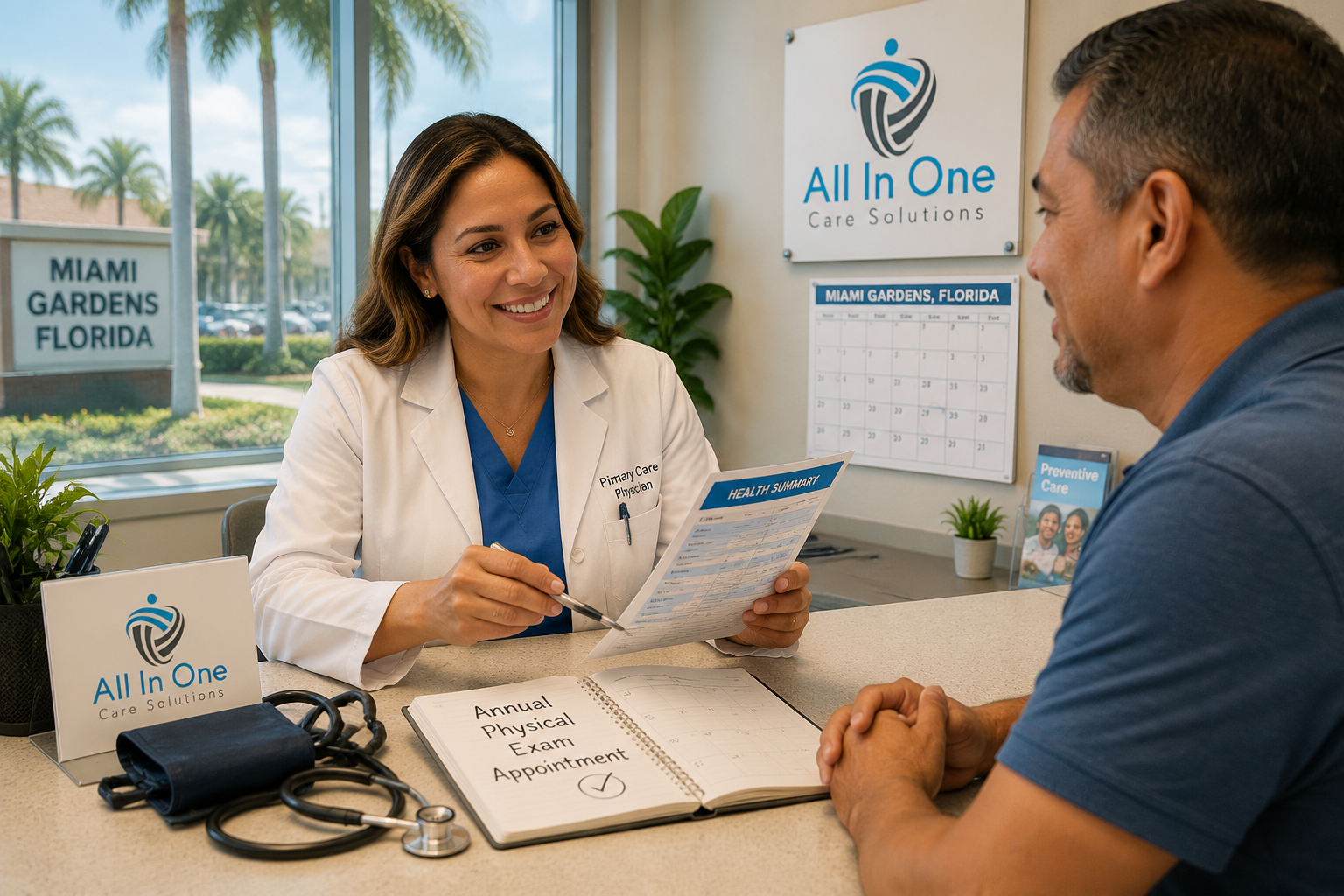
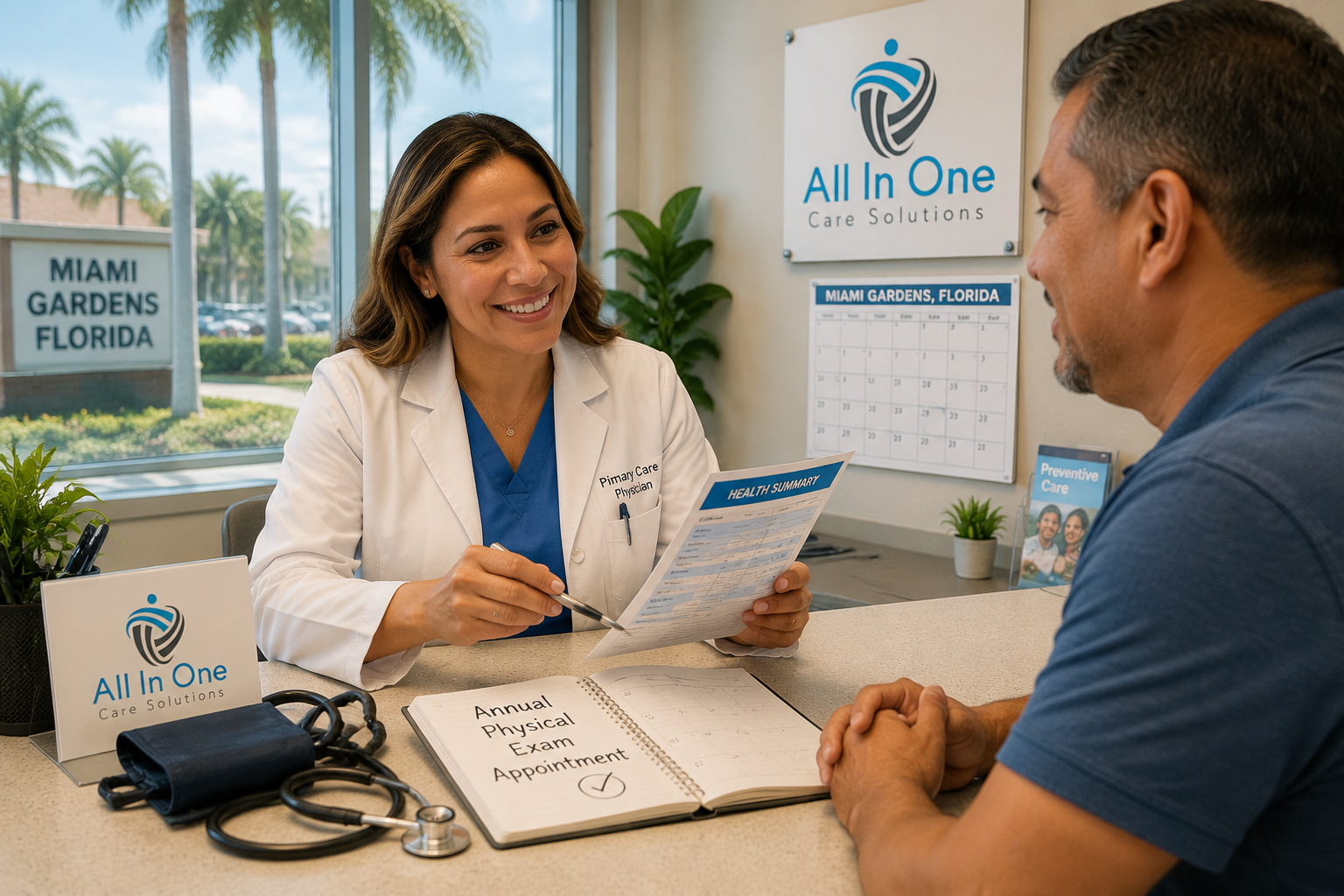
At All In One Care Solutions in Miami Gardens, the annual physical exam includes a physician visit, EKG, and basic blood panel for $150 cash pay, with no insurance required.
Do You Need to Fast Before an Annual Physical
Yes, fasting for 8 to 12 hours before your annual physical is generally recommended if your exam includes blood work, particularly a lipid panel (cholesterol) or fasting glucose test. Eating before these tests can produce inaccurate results.
Fasting guidelines:
- Water: Plain water is allowed and encouraged during the fasting period.
- Medications: Take your regular medications with a small sip of water unless your doctor instructs otherwise.
- Coffee and tea: Avoid these during the fasting window, as they can affect certain lab values.
- Diabetic patients: Consult your physician before fasting. Your doctor may adjust your morning insulin or medication timing.
If you forget to fast, let the front desk know when you arrive. Your physician may still complete the physical exam and reschedule the fasting blood draw for another day, or they may proceed with non-fasting labs and note the limitation.
How Long Does an Annual Physical Take
A standard annual physical appointment takes 45 to 90 minutes. The actual duration depends on your age, health history, the number of concerns you bring to the visit, and whether additional screenings or procedures are performed.
Estimated time breakdown:
- Check-in and intake paperwork: 10 to 15 minutes (less if forms are completed online in advance)
- Nursing intake (vitals, medication review): 10 to 15 minutes
- Physician examination: 20 to 30 minutes
- EKG (if included): 5 to 10 minutes
- Blood draw (if in-house lab): 5 to 10 minutes
Patients with multiple chronic conditions or those who have not had a physical in several years should plan for a longer visit. Bringing a written list of questions and concerns helps the physician use the time efficiently.
What Should You Bring to Your Annual Physical
Bring your insurance card, a current list of all medications (including supplements and over-the-counter drugs), any recent lab results or imaging reports, and a written list of health concerns or questions.
Complete preparation checklist:
- Government-issued photo ID
- Insurance card (or Medicare card)
- List of all current medications with dosages
- List of known allergies
- Recent lab results, specialist notes, or imaging reports
- Family medical history (if not already on file)
- Written list of symptoms or concerns to discuss
- Contact information for any specialists you currently see
For a more detailed preparation guide, see the complete annual physical exam checklist for Miami Gardens patients.
What to Prepare Before Your Annual Physical Appointment
Preparation starts at least 24 hours before your visit. Review your health over the past year, note any new symptoms, changes in weight, sleep disturbances, or concerns about blood pressure or blood sugar. If you are managing a condition like diabetes or hypertension, bring your home monitoring logs.
24-hour pre-appointment checklist:
- Confirm your fasting window (stop eating 8 to 12 hours before the appointment)
- Gather all medications, supplements, and vitamins in their original containers or write them down
- Complete any online intake forms sent by the clinic
- Write down questions you want to ask your doctor
- Get 7 to 8 hours of sleep the night before (fatigue can affect blood pressure readings)
- Avoid strenuous exercise the morning of the visit if a blood draw is included
Can You Get Labs Done During Your Annual Physical
Yes. Most comprehensive annual physical exams include in-house laboratory testing performed during the same visit. This includes a basic metabolic panel, complete blood count, fasting glucose, lipid panel, and thyroid screening as clinically indicated.
At All In One Care Solutions, in-house laboratory services in Miami Gardens provide same-day results for most standard panels, eliminating the need for a separate lab visit. This is particularly convenient for patients managing diabetes, high cholesterol, or hypertension who need current lab values to guide their treatment plan.
Additional lab tests that can be ordered during your annual physical include:
- Hemoglobin A1C (for diabetes screening and management)
- STD/STI panel
- Hormone panels (testosterone, estrogen, thyroid)
- Vitamin D and B12 levels
- Urinalysis
Annual Physical vs. Regular Checkup: What Is the Difference
An annual physical is a comprehensive, scheduled preventive exam that reviews your overall health, includes lab work, and establishes a baseline for monitoring changes over time. A regular checkup or sick visit is typically focused on a specific complaint or condition and does not include the same breadth of screening.
Key differences:
| Feature | Annual Physical | Sick Visit / Checkup |
|---|---|---|
| Purpose | Preventive, comprehensive | Treat a specific issue |
| Lab work included | Yes (typically) | Only if relevant to complaint |
| EKG | Often included | Not standard |
| Insurance billing | Preventive code (often covered at 100%) | Diagnostic code (subject to copay/deductible) |
| Duration | 45 to 90 minutes | 15 to 30 minutes |
| Frequency | Once per year | As needed |
For women, there is also a distinction between an annual physical and a well-woman exam. To understand the difference, see this detailed comparison of annual physical exams vs. well-woman exams in Miami Gardens.
How Much Does an Annual Physical Cost Without Insurance
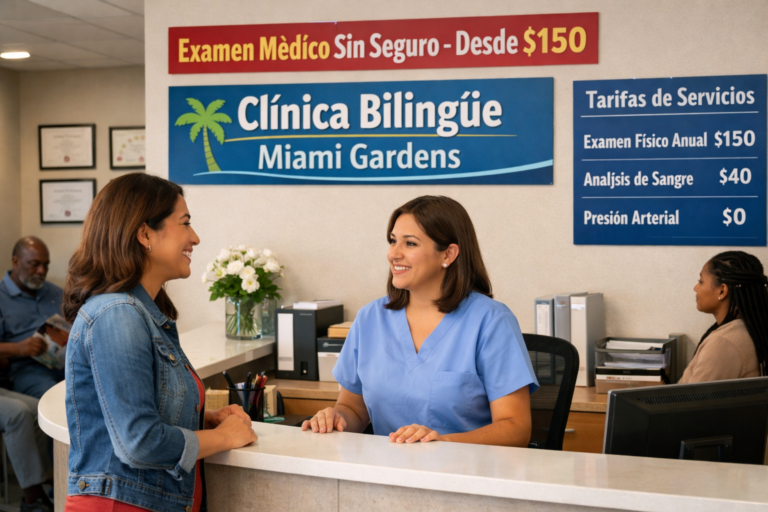
For self-pay patients, an annual physical exam in Miami typically costs between $100 and $300 depending on the clinic and what is included. At All In One Care Solutions in Miami Gardens, a complete annual physical, EKG, and basic blood panel is available for $150 cash pay, with no insurance required.
Cost breakdown for self-pay patients:
- Basic physical exam only: $75 to $150 at most primary care clinics
- Physical exam with EKG: $100 to $200
- Physical exam, EKG, and basic blood panel: $150 to $300
- All In One Care Solutions self-pay package: $150 (includes all three)
For patients who need additional lab work beyond the basic panel, individual tests are priced separately. Payment plan options are available through CareCredit and Cherry financing for patients who need to spread out costs.
For a detailed breakdown of affordable options in South Florida, see best self-pay physical exam options in Miami.
What If You Have Not Had a Physical in Years
Schedule one now. There is no benefit to waiting, and the longer the gap, the more important it becomes to establish a current health baseline. Conditions like high blood pressure, prediabetes, and elevated cholesterol often develop without noticeable symptoms, meaning they are only detected through routine screening.
What to expect if it has been more than 3 years:
- Your physician will spend additional time reviewing your medical history and any changes in health status.
- More extensive lab work may be ordered to establish current baselines.
- Age-appropriate screenings you may have missed will be addressed (colonoscopy, mammogram, bone density, etc.).
- Any medications or supplements you are taking will be reviewed and updated in your chart.
There is no penalty for a long gap. Primary care physicians are trained to meet patients where they are, not where they should have been. The goal is to move forward with a clear, current picture of your health.
Should You Schedule Your Physical Before or After Vacation
Schedule your annual physical before a major trip, not after. Pre-travel physicals allow your physician to update vaccinations, review any medications you may need abroad, assess fitness for travel activities, and address any concerns before you are away from your regular healthcare provider.
If you return from travel with new symptoms, a sick visit is appropriate before your next scheduled annual physical.
Can You Schedule a Physical If You Are Sick
A routine annual physical should generally not be scheduled when you are acutely ill. If you have a fever, active infection, or significant symptoms, the physical examination findings may be skewed, and your physician’s focus will shift to treating your current illness rather than completing a comprehensive preventive review.
What to do instead:
- Schedule a same-day sick visit to address your acute illness.
- Reschedule your annual physical for 2 to 4 weeks after you have recovered.
- If you have a mild cold without fever, call the clinic to confirm whether to proceed or reschedule.
All In One Care Solutions offers same-day appointments in Miami Gardens for patients who need prompt attention for acute illness without disrupting their scheduled preventive care.
Frequently Asked Questions
Q: Is the best time to schedule your annual physical really in January?
A: January through March is often the most practical window because insurance benefits reset and appointment availability is higher. However, the best time is whichever month you will consistently keep year after year.
Q: Does Medicare cover an annual physical exam?
A: Medicare does not cover a traditional annual physical, but it does cover an Annual Wellness Visit (AWV) at no cost once per year. The AWV focuses on preventive planning and health risk assessment rather than a full physical examination. Speak with your provider to understand what is covered under your specific Medicare plan.
Q: Can I use my annual physical to get a referral to a specialist?
A: Yes. One of the core purposes of an annual physical is to identify health concerns that require specialist evaluation. Your primary care physician can generate referrals during or after your visit.
Q: What blood tests are typically included in an annual physical?
A: A standard panel includes a complete blood count (CBC), comprehensive metabolic panel (CMP), fasting lipid panel (cholesterol), and fasting glucose. Your physician may add thyroid function, hemoglobin A1C, vitamin D, or hormone panels based on your age, symptoms, and risk factors.
Q: How early in advance should I book my annual physical?
A: Book 2 to 4 weeks in advance for most primary care clinics. If you prefer a specific physician or a morning appointment, 4 to 6 weeks is safer. Clinics with same-day availability can often accommodate sooner.
Q: Can I combine my annual physical with a weight loss consultation?
A: Yes. At All In One Care Solutions, patients can address weight management as part of their primary care visit. The physical exam results, including BMI, blood sugar, and cholesterol, directly inform medically supervised weight loss programs using semaglutide or tirzepatide.
Q: What if my blood work comes back abnormal?
A: Your physician will contact you to review the results and recommend next steps, which may include follow-up testing, a referral, or a medication adjustment. Abnormal results are not uncommon and are exactly why annual physicals are valuable.
Q: Do I need a physical if I feel completely healthy?
A: Yes. Many serious conditions, including hypertension, prediabetes, and high cholesterol, produce no symptoms in their early stages. A physical exam and blood work are the only reliable way to detect these conditions before they cause complications.
Q: Is an annual physical the same as a wellness visit?
A: Not exactly. A wellness visit (such as Medicare’s Annual Wellness Visit) focuses on health risk assessment and preventive planning. A full annual physical includes a hands-on physical examination and lab work. Both are valuable, but they serve slightly different purposes.
Q: Can children or teens get an annual physical at the same clinic as adults?
A: At All In One Care Solutions, primary care services are available for adults. Families seeking pediatric care should confirm age-specific service availability by calling (786) 446-9414.
Conclusion
Knowing the best time to schedule your annual physical is the first step, but taking action is what protects your health. Whether you are a healthy adult in your 30s building a preventive care routine, a Medicare patient due for your Annual Wellness Visit, or someone managing diabetes or hypertension in Miami Gardens or Miami Lakes, a yearly physical exam is one of the most direct investments you can make in your long-term health.
The evidence is consistent: early detection through routine screening reduces the severity and cost of treating chronic disease. An annual physical gives your physician the data needed to catch problems early, adjust treatment plans, and guide you toward better outcomes.
At All In One Care Solutions, located at 16191 NW 57 Ave in Miami Gardens, the annual physical exam includes a physician visit, EKG, and basic blood panel for $150 cash pay. The clinic accepts most major insurance plans and offers bilingual services in English and Spanish for the South Florida community.
Next steps:
- Call (786) 446-9414 to schedule your annual physical exam in Miami Gardens.
- Book online at allinonecaresolutions.com.
- If you have not had a physical in several years, do not wait for the perfect moment. Schedule today.
Medical Disclaimer: The information in this article is for educational purposes only and does not constitute medical advice. Always consult a qualified healthcare provider for guidance specific to your health needs.
Tags: annual physical exam, preventive care Miami, best time for annual physical, annual physical exam Miami Gardens, primary care Miami, family medicine Miami Gardens, lab testing Miami, self-pay physical exam, chronic disease management Miami, Medicare wellness visit, annual checkup tips, preventive care Miami Gardens