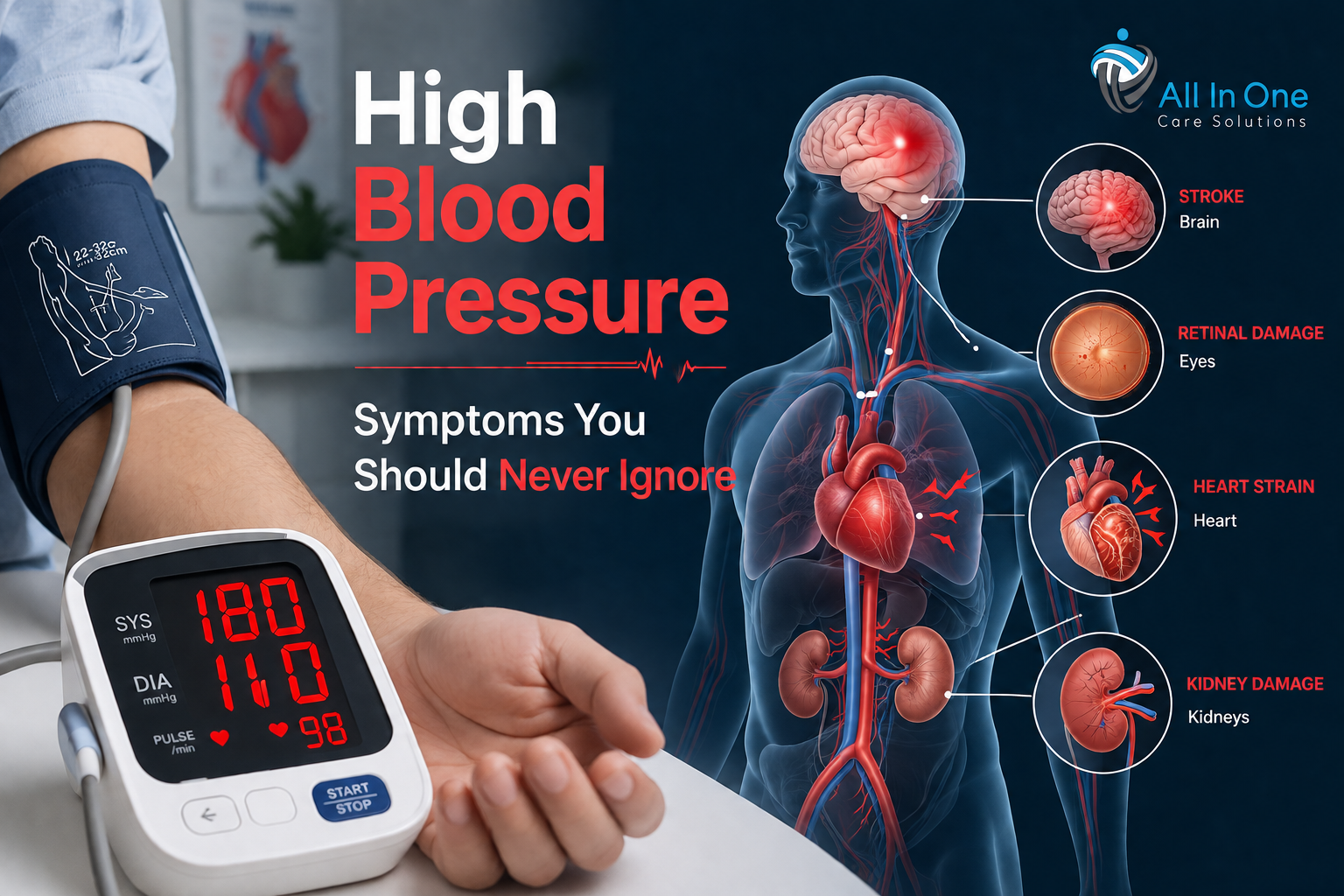
High Blood Pressure Symptoms You Should Never Ignore
Last updated: July 2, 2026
Quick Answer: Nearly half of American adults have high blood pressure, yet most experience no obvious symptoms until serious organ damage has already begun. The high blood pressure symptoms you should never ignore include severe headaches, chest pain, sudden vision changes, shortness of breath, and confusion — any of which may signal a hypertensive crisis requiring immediate emergency care. Regular blood pressure monitoring and routine primary care visits remain the most reliable way to catch this condition before it becomes life-threatening.
Key Takeaways
- High blood pressure is called the “silent killer” because it typically produces no symptoms until it reaches dangerous levels.
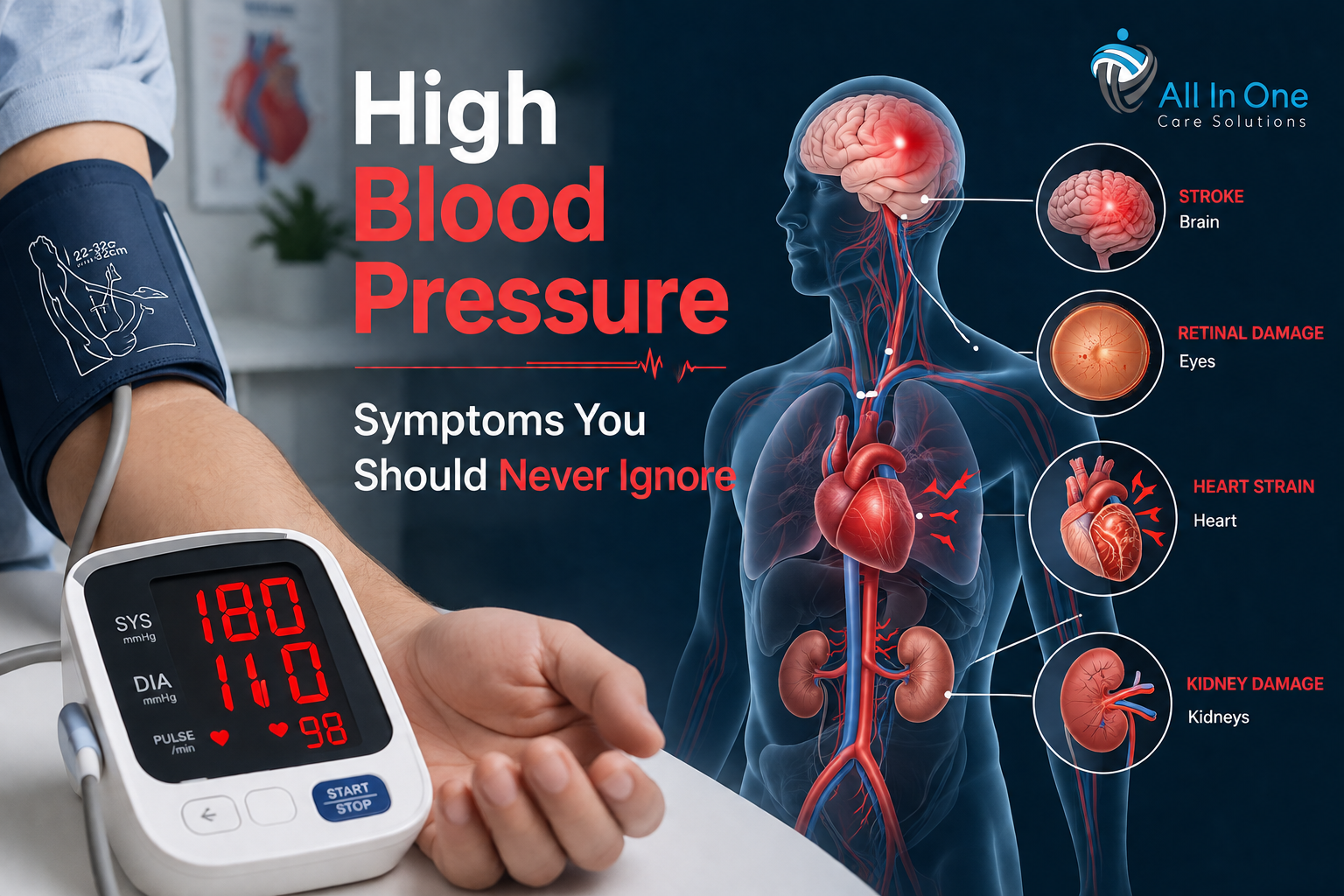
- A blood pressure reading at or above 180/120 mmHg is a hypertensive crisis — call 911 or go to an emergency room immediately.
- Warning signs that demand urgent attention include sudden severe headache, chest pain, blurred vision, difficulty breathing, and neurological changes such as slurred speech or facial drooping.
- Uncontrolled hypertension can begin damaging the heart, kidneys, brain, and eyes within months, not years.
- Patients with diabetes, obesity, or high cholesterol face compounded risk for severe hypertension complications.
- Many people in Miami Gardens, Hialeah, and Miami Lakes communities go years without a blood pressure check — a routine annual physical exam can detect the problem early.
- Lifestyle changes combined with physician-supervised medication can effectively control blood pressure in most patients.
- Never attempt to self-treat a hypertensive crisis at home; always seek emergency medical care first.
Can You Have High Blood Pressure Without Any Symptoms
Yes. The majority of people with hypertension feel completely normal, even when their blood pressure is significantly elevated. This is precisely why physicians refer to it as the “silent killer.”
High blood pressure develops gradually over years. The cardiovascular system adapts, and the body does not send obvious pain signals the way it does with an injury or infection. According to the Centers for Disease Control and Prevention (CDC), approximately 1 in 5 adults with hypertension does not know they have it.
This is especially relevant for communities in South Florida. Many adults in Miami Gardens, Hialeah, and surrounding areas do not have a regular primary care physician, which means blood pressure goes unchecked for years. By the time symptoms appear, end-organ damage — to the heart, kidneys, or brain — may already be underway.
The practical takeaway: Do not wait for symptoms to get your blood pressure checked. A blood pressure evaluation and chronic disease management visit with a primary care provider is the only reliable way to know your numbers.
What Are the Warning Signs of Dangerously High Blood Pressure
Dangerously high blood pressure — generally defined as readings at or above 180/120 mmHg — can produce a distinct cluster of symptoms that should never be dismissed as ordinary stress or fatigue.
The most clinically significant warning signs include:
- Severe, sudden-onset headache — often described as the “worst headache of my life,” particularly at the back of the head
- Chest pain or pressure — may feel like tightening, heaviness, or burning
- Shortness of breath — even at rest or with minimal exertion
- Blurred or double vision — or sudden loss of vision in one or both eyes
- Nausea or vomiting without a clear gastrointestinal cause
- Confusion, difficulty speaking, or sudden memory problems
- Nosebleeds that are heavy, frequent, or difficult to stop
- Pounding sensation in the chest, neck, or ears
- Facial flushing or redness, particularly combined with other symptoms
- Numbness or weakness on one side of the body
Any combination of these symptoms alongside a known or suspected high blood pressure reading warrants immediate emergency evaluation. Do not drive yourself — call 911.
What Is the Difference Between High Blood Pressure and a Hypertensive Crisis
High blood pressure (hypertension) is a chronic condition defined by consistently elevated readings — typically 130/80 mmHg or above according to American Heart Association guidelines. A hypertensive crisis is an acute, life-threatening event.
There are two categories of hypertensive crisis:
| Category | Blood Pressure | Organ Damage | Action Required |
|---|---|---|---|
| Hypertensive Urgency | 180/120 mmHg or higher | No confirmed organ damage | Urgent medical evaluation (same day) |
| Hypertensive Emergency | 180/120 mmHg or higher | Active organ damage confirmed | Call 911 / Emergency Room immediately |
A hypertensive emergency involves evidence that the elevated pressure is actively injuring organs — for example, a heart attack in progress, a stroke, acute kidney failure, or fluid in the lungs. This is a true medical emergency with a narrow treatment window.
Hypertensive urgency, while less immediately catastrophic, still requires same-day evaluation by a physician. Attempting to manage either condition at home without medical supervision is dangerous.
Patients managing chronic hypertension through primary care in Miami Gardens can significantly reduce the risk of ever reaching crisis-level readings through consistent monitoring and medication management.
What Does It Feel Like When Your Blood Pressure Is Too High
Most people with elevated blood pressure feel nothing at all. When symptoms do occur, they are often nonspecific and easy to attribute to other causes — which is part of what makes hypertension so dangerous.
When blood pressure climbs into the crisis range, patients commonly describe:
- A throbbing or pulsating headache, often worse in the morning or upon waking
- A sense of pressure or fullness behind the eyes
- Ringing in the ears (tinnitus)
- Feeling flushed, hot, or unusually warm in the face
- Heart palpitations — a fluttering or racing heartbeat
- Generalized anxiety or a feeling that “something is wrong”
- Dizziness or lightheadedness, especially when standing
These sensations are not diagnostic on their own. A person experiencing them should measure their blood pressure immediately if a monitor is available, and seek medical care regardless of the reading if symptoms are severe or sudden.
How Do I Know If My Headache Is From High Blood Pressure
Most headaches are not caused by high blood pressure. However, a headache that accompanies a blood pressure reading above 180/120 mmHg is a red flag that requires emergency evaluation.
Characteristics that distinguish a hypertension-related headache from a typical tension or migraine headache:
- Located at the back of the head (occipital region), often bilateral
- Described as pounding, throbbing, or pressure-like
- Present upon waking in the morning
- Accompanied by other symptoms such as visual disturbances, nausea, or confusion
- Does not respond to standard over-the-counter pain relievers
- Worsens with physical activity or bending forward
A standard migraine or tension headache, by contrast, is usually not accompanied by blood pressure readings above 180/120 mmHg, and the pain pattern tends to be more predictable.
Decision rule: If you have a severe headache and your blood pressure reads 180/120 mmHg or higher, treat it as a medical emergency. If you do not have a blood pressure monitor and your headache is sudden and severe, go to the emergency room.
Can High Blood Pressure Cause a Stroke or Heart Attack
Yes. Uncontrolled hypertension is one of the leading modifiable risk factors for both stroke and heart attack. Elevated pressure forces the heart to work harder, damages arterial walls over time, and accelerates the buildup of plaque inside blood vessels.
Stroke: High blood pressure can cause a hemorrhagic stroke (a blood vessel bursts in the brain) or an ischemic stroke (a clot blocks blood flow to the brain). The American Stroke Association identifies hypertension as the single most important controllable risk factor for stroke.
Heart attack: Sustained high blood pressure thickens and stiffens the heart muscle (left ventricular hypertrophy) and accelerates coronary artery disease, both of which increase heart attack risk.
Kidney failure: The kidneys filter blood through tiny vessels that are highly sensitive to pressure damage. Chronic hypertension is a leading cause of chronic kidney disease and end-stage renal failure.
The connection between hypertension and these outcomes is not theoretical — it is well-established across decades of clinical research. Patients with diabetes or high cholesterol face compounded risk because these conditions damage blood vessels through separate but overlapping mechanisms.
What Are the Silent Killer Symptoms of Hypertension
The term “silent killer” refers to the fact that hypertension can cause progressive, irreversible organ damage without producing any noticeable symptoms for years.
The silent damage includes:
- Arterial stiffening — blood vessels lose elasticity, increasing the risk of rupture
- Left ventricular hypertrophy — the heart muscle thickens from overwork, reducing pumping efficiency
- Retinal damage — tiny blood vessels in the eyes are damaged, which can be detected during an eye exam before vision symptoms appear
- Microalbuminuria — protein leaks into the urine as kidneys begin to lose filtering capacity
- White matter lesions in the brain — associated with cognitive decline and increased stroke risk
None of these changes produce pain or obvious symptoms in early stages. They are detected through routine lab work, EKG, urinalysis, and physical examination — all components of a comprehensive annual physical exam in Miami Gardens.
This is why preventive care Miami providers consistently emphasize annual wellness visits. Catching these markers early changes outcomes dramatically.
Can Vision Problems Mean My Blood Pressure Is Dangerously High
Yes. Sudden or progressive vision changes can be a direct sign of hypertensive retinopathy or, in acute cases, a hypertensive emergency affecting the eyes and brain.
Vision symptoms associated with dangerously high blood pressure include:
- Blurred or hazy vision
- Double vision
- Sudden loss of vision in one or both eyes
- Seeing flashing lights or floaters
- A “curtain” or shadow moving across the field of vision
Hypertensive retinopathy occurs when elevated pressure damages the small blood vessels supplying the retina. In severe cases, the optic nerve swells (papilledema), which is a sign of hypertensive emergency requiring immediate hospitalization.
Sudden vision loss is always a medical emergency, regardless of blood pressure. When it occurs alongside other hypertension symptoms, the urgency is compounded.
How Quickly Can High Blood Pressure Damage Your Organs
Organ damage from hypertension occurs on two timelines: chronic and acute.
Chronic damage develops over months to years of uncontrolled elevated pressure. The kidneys, heart, and brain sustain gradual structural changes that may not produce symptoms until significant function is lost.
Acute damage during a hypertensive emergency can occur within minutes to hours. A blood pressure reading of 220/130 mmHg, for example, can cause:
- Acute pulmonary edema (fluid in the lungs) within hours
- Hypertensive encephalopathy (brain swelling) within hours
- Aortic dissection (tearing of the main artery) within minutes
This is why the treatment window for hypertensive emergencies is measured in hours, not days. Rapid blood pressure reduction under physician supervision in an emergency setting is the standard of care.
For patients managing chronic hypertension, consistent monitoring and medication adherence are the primary tools for preventing this trajectory. A primary care physician in Miami Gardens can establish a personalized management plan that includes target blood pressure goals, medication review, and regular lab testing.
When Should I Go to the Emergency Room for High Blood Pressure
Go to the emergency room immediately — or call 911 — if you have a blood pressure reading at or above 180/120 mmHg combined with any of the following:
- Chest pain or pressure
- Shortness of breath
- Sudden severe headache
- Confusion, slurred speech, or difficulty understanding others
- Sudden weakness or numbness in the face, arm, or leg (especially one-sided)
- Sudden vision loss or changes
- Back pain that is severe and tearing in quality (possible aortic dissection)
- Unresponsiveness or seizure
If your blood pressure reads 180/120 mmHg or higher but you have no accompanying symptoms, this is a hypertensive urgency. Do not ignore it. Contact your primary care provider for a same-day evaluation. Do not take extra doses of blood pressure medication on your own without physician guidance.
Patients in Miami Gardens and Miami Lakes can access same-day primary care appointments for urgent blood pressure concerns that do not require an emergency room visit.
How Do I Lower My Blood Pressure Fast in an Emergency
This question requires an important clarification: lowering blood pressure too rapidly outside of a controlled medical setting can itself cause harm, including stroke. Home management is not appropriate for a hypertensive emergency.
What to do in a suspected hypertensive emergency:
- Call 911 or have someone drive you to the nearest emergency room.
- Sit quietly and remain calm — physical exertion raises pressure further.
- Do not take extra doses of your blood pressure medication unless specifically instructed by your physician.
- Do not eat or drink anything in case emergency procedures are needed.
- Bring your medication list to the ER.
For hypertensive urgency (high reading, no symptoms):
- Contact your primary care provider immediately.
- Sit in a calm, quiet environment.
- Avoid caffeine, tobacco, and strenuous activity.
- Take your prescribed medication as directed — do not double-dose.
In a hospital setting, physicians use intravenous medications to reduce blood pressure in a controlled, monitored manner over a specific timeframe. This is not something that can be safely replicated at home.
Who Is Most at Risk for Severe High Blood Pressure Complications
Certain patients face a significantly higher risk of developing hypertensive crises and their complications. Understanding these risk factors supports earlier intervention.
High-risk groups include:
- Adults over 55, particularly men and postmenopausal women
- Patients with diabetes — high blood sugar compounds vascular damage
- Patients with chronic kidney disease
- Individuals with obesity or metabolic syndrome
- Those with a family history of heart disease, stroke, or hypertension
- Patients with untreated or undertreated hypertension
- Individuals who smoke or use tobacco products
- Patients with high cholesterol (hyperlipidemia)
- Adults who are sedentary or have high-sodium diets
- Patients who have stopped taking prescribed blood pressure medications
In South Florida, Hispanic and Black adults have higher rates of hypertension and are more likely to experience complications, partly due to healthcare access barriers. Bilingual, affordable primary care in Miami Gardens — including for uninsured patients — is an important part of closing this gap.
Patients with multiple risk factors benefit most from chronic disease management that coordinates blood pressure control alongside diabetes management, cholesterol treatment, and weight management.
What Medications Work Fastest for Emergency High Blood Pressure
In a hospital setting, physicians use intravenous antihypertensive medications to treat hypertensive emergencies. These are administered only under continuous monitoring.
Commonly used IV medications for hypertensive emergencies include:
- Labetalol — a combined alpha and beta blocker that reduces pressure within minutes
- Nicardipine — a calcium channel blocker delivered by continuous IV infusion
- Clevidipine — a short-acting calcium channel blocker with rapid onset
- Hydralazine — used in specific situations, including hypertension in pregnancy
- Sodium nitroprusside — used for the most severe cases requiring precise titration
The goal in a hypertensive emergency is not to normalize blood pressure immediately. Physicians typically aim to reduce mean arterial pressure by no more than 25% in the first hour, then gradually over the following 24 to 48 hours. Dropping blood pressure too fast can cause ischemia (inadequate blood flow) to the brain, heart, or kidneys.
For outpatient management of chronic hypertension, oral medications — including ACE inhibitors, ARBs, calcium channel blockers, and diuretics — are the standard. The right choice depends on the patient’s full medical history, which is why individualized chronic disease management Miami is essential rather than a one-size-fits-all approach.
Frequently Asked Questions
What blood pressure number is considered a medical emergency? A reading of 180/120 mmHg or higher is classified as a hypertensive crisis. If accompanied by symptoms such as chest pain, vision changes, or neurological signs, it is a hypertensive emergency requiring immediate 911 contact or emergency room evaluation.
Can stress alone cause dangerously high blood pressure? Acute stress can temporarily raise blood pressure, but it is unlikely to cause a sustained hypertensive crisis in otherwise healthy individuals. Chronic stress, however, contributes to long-term hypertension through hormonal and behavioral pathways. Stress is a risk factor, not a direct cause of hypertensive emergency.
Is a nosebleed a sign of high blood pressure? A nosebleed alone is rarely caused by high blood pressure. However, a nosebleed that occurs alongside a reading above 180/120 mmHg and other symptoms should be evaluated as part of a potential hypertensive crisis.
Can young adults have dangerously high blood pressure? Yes. While hypertension is more common in adults over 55, secondary hypertension (caused by kidney disease, hormonal disorders, or medication) can produce dangerously high readings in younger adults. Anyone with persistent elevated readings should be evaluated regardless of age.
How often should I check my blood pressure at home? For patients with diagnosed hypertension, most physicians recommend checking once or twice daily, at the same time each day, and logging the results. For patients without a diagnosis, checking at least once during an annual physical exam is the minimum standard.
Can I have a stroke with only mildly elevated blood pressure? Mild to moderate hypertension (130–159/80–99 mmHg) does not typically cause an acute stroke on its own, but it significantly increases lifetime stroke risk. The relationship between blood pressure and stroke risk is continuous — there is no completely “safe” level of elevation above normal.
Does high blood pressure always require medication? Not always. Stage 1 hypertension in low-risk patients is often managed initially with lifestyle changes — dietary sodium reduction, regular aerobic exercise, weight loss, and alcohol moderation. Stage 2 hypertension and higher typically requires medication in addition to lifestyle changes.
What is the best diet for lowering blood pressure? The DASH diet (Dietary Approaches to Stop Hypertension) is the most evidence-supported dietary approach. It emphasizes fruits, vegetables, whole grains, lean protein, and low-fat dairy while limiting sodium, saturated fat, and added sugars.
Can high blood pressure affect my kidneys? Yes. The kidneys are among the organs most vulnerable to hypertensive damage. Chronic high blood pressure is one of the two leading causes of chronic kidney disease and kidney failure in the United States, alongside diabetes.
Where can I get my blood pressure checked in Miami Gardens? All In One Care Solutions at 16191 NW 57 Ave, Miami Gardens, FL 33014 offers blood pressure evaluation as part of primary care visits, annual physical exams, and chronic disease management appointments. Same-day visits are available. Call (786) 446-9414 or book online.
Conclusion
The high blood pressure symptoms you should never ignore are not always dramatic. In many cases, there are no symptoms at all — which is exactly why hypertension claims so many lives that could have been saved with earlier detection.
For adults in Miami Gardens, Miami Lakes, Hialeah, and surrounding communities, the most important step is straightforward: establish care with a primary care physician and get your blood pressure checked regularly. An annual physical exam that includes blood pressure measurement, basic lab work, and an EKG provides the clinical baseline needed to catch hypertension before it becomes a crisis.
If you have been diagnosed with high blood pressure and are not currently under the care of a physician, or if you have risk factors such as diabetes, obesity, or high cholesterol, do not wait for symptoms to appear. Comprehensive chronic disease management in Miami can help you achieve and maintain safe blood pressure targets with a personalized treatment plan.
All In One Care Solutions accepts most major insurance plans and offers affordable self-pay options for patients without coverage. Bilingual English and Spanish services are available. To schedule an appointment, call (786) 446-9414 or visit the clinic at 16191 NW 57 Ave, Miami Gardens, FL 33014.
References
- Centers for Disease Control and Prevention. “Facts About Hypertension.” CDC.gov. 2023. https://www.cdc.gov/bloodpressure/facts.htm
- American Heart Association. “Understanding Blood Pressure Readings.” Heart.org. 2023. https://www.heart.org/en/health-topics/high-blood-pressure/understanding-blood-pressure-readings
- American Stroke Association. “High Blood Pressure and Stroke.” StrokeAssociation.org. 2022. https://www.stroke.org/en/about-stroke/stroke-risk-factors/high-blood-pressure-and-stroke
- Whelton PK, et al. “2017 ACC/AHA/AAPA/ABC/ACPM/AGS/APhA/ASH/ASPC/NMA/PCNA Guideline for the Prevention, Detection, Evaluation, and Management of High Blood Pressure in Adults.” Journal of the American College of Cardiology. 2018. https://www.jacc.org/doi/10.1016/j.jacc.2017.11.006
- National Heart, Lung, and Blood Institute. “High Blood Pressure.” NHLBI.nih.gov. 2022. https://www.nhlbi.nih.gov/health/high-blood-pressure
Tags: high blood pressure symptoms, hypertension warning signs, hypertensive crisis, blood pressure emergency, silent killer hypertension, chronic disease management Miami, primary care Miami Gardens, preventive care Miami, annual physical exam Miami Gardens, high blood pressure treatment, stroke risk hypertension, family medicine Miami Gardens