Peptides vs. GLP-1 Medications: What’s the Difference?
Last updated: June 10, 2026
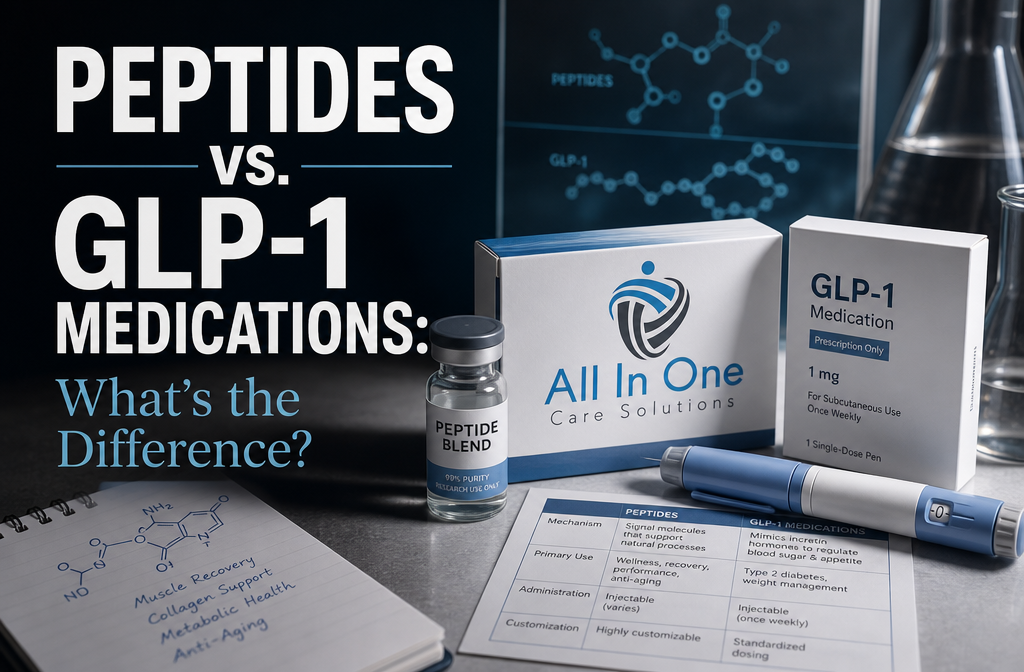
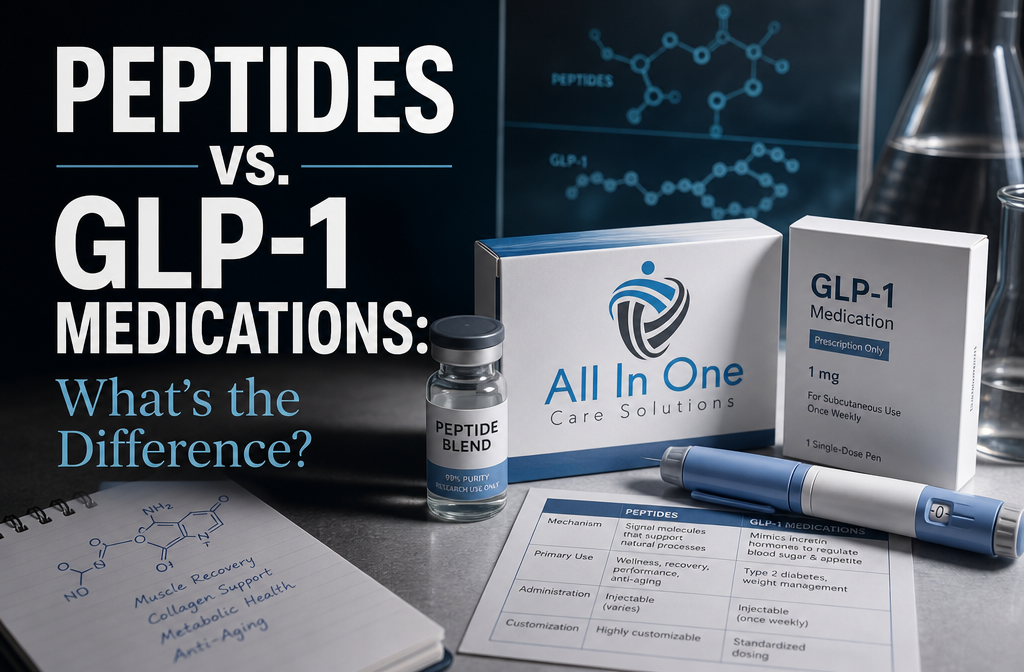
Quick Answer: GLP-1 medications like semaglutide and tirzepatide are a specific class of peptide drugs approved to treat obesity and type 2 diabetes by mimicking gut hormones that regulate appetite and blood sugar. Traditional peptide therapies, such as BPC-157 or CJC-1295/Ipamorelin, work through entirely different pathways and are used for goals like tissue repair, growth hormone support, and cellular recovery. Understanding which option fits your health goals requires a personalized medical consultation, not a one-size-fits-all answer.
Key Takeaways
- GLP-1 medications are peptides, but not all peptides are GLP-1 medications. The two categories serve very different clinical purposes.
- GLP-1 drugs (Ozempic, Wegovy, Mounjaro, Zepbound) target appetite regulation and blood sugar control through specific hormone receptors.
- Therapeutic peptides like BPC-157, CJC-1295, and Ipamorelin are used for recovery, anti-aging, and growth hormone stimulation, not direct weight loss via appetite suppression.
- GLP-1 medications have FDA approval for specific indications. Most compounded peptides are not FDA-approved drugs, and results vary by individual.
- As of 2026, GLP-1 medications are becoming more accessible, with new oral formulations and federal programs reducing cost barriers.
- Side effects differ significantly between peptide classes. Knowing which you are taking matters for safety monitoring.
- Both categories require physician supervision for safe, effective use. Self-administering either without medical oversight carries real risk.
- For residents in Miami Gardens, Miami Lakes, and Hialeah, medically supervised peptide therapy and GLP-1 programs are available through primary care clinics like All In One Care Solutions.
What Exactly Are Peptides and How Do They Work in the Body
Peptides are short chains of amino acids, the same building blocks that make up proteins. They act as biological messengers, signaling cells and organs to perform specific functions. The human body produces thousands of peptides naturally, and they regulate everything from hormone release to immune response to tissue repair.
When used therapeutically, synthetic or compounded peptides are designed to mimic or amplify these natural signals. Here is how a few common therapeutic peptides work:
- BPC-157 (Body Protection Compound): Supports tissue healing, reduces inflammation, and may protect the gut lining. Studied in animal models for tendon and muscle repair.
- CJC-1295 / Ipamorelin: A combination that stimulates the pituitary gland to release growth hormone. Used for anti-aging, body composition, and recovery support.
- Thymosin Beta-4 (TB-500): Promotes cell migration and regeneration, often used in injury recovery protocols.
- NAD+ peptide precursors: Support cellular energy production and mitochondrial function.
Peptide therapy is administered by injection, oral capsule, or nasal spray depending on the compound. Because peptides are fragile molecules, many must be injected to survive digestion and reach target tissues effectively.
Compounded peptides are not FDA-approved drugs. They are prepared by licensed compounding pharmacies under physician supervision. Results vary and individual medical evaluation is required before starting any peptide protocol.
For patients in the Miami area interested in cellular wellness support, our NAD+ IV therapy and peptide programs offer a medically supervised starting point.
Understanding GLP-1 Medications: A Specific Peptide Class
GLP-1 (glucagon-like peptide-1) medications are a specific subclass of peptide drugs that mimic a gut hormone your body releases after eating. This hormone signals the brain to reduce appetite, slows gastric emptying, and stimulates insulin release while suppressing glucagon. The net result: you feel full sooner, eat less, and your blood sugar stays more stable.
FDA-approved GLP-1 receptor agonists currently available in 2026 include:
| Medication | Brand Name | Primary Indication | Delivery |
|---|---|---|---|
| Semaglutide | Ozempic / Wegovy | Type 2 diabetes / Obesity | Weekly injection |
| Tirzepatide | Mounjaro / Zepbound | Type 2 diabetes / Obesity | Weekly injection |
| Liraglutide | Victoza / Saxenda | Type 2 diabetes / Obesity | Daily injection |
| Orforglipron | Foundayo | Obesity | Daily oral pill |
| Oral semaglutide | Wegovy pill | Obesity / Cardiovascular risk | Daily oral pill |
In April 2026, the FDA granted expedited approval to Eli Lilly’s oral GLP-1 medication Foundayo (orforglipron) for obesity treatment, with pricing ranging from $149 to $349 per month depending on dose [3]. Novo Nordisk also received FDA approval for an oral Wegovy pill in December 2025, marking the first oral GLP-1 option for weight management [4].
These are not the same as general peptide therapies. GLP-1 drugs are highly specific, extensively studied, and approved for defined medical indications.
Are GLP-1 Medications Better Than Traditional Peptide Treatments
Neither category is universally “better.” They address different health goals, and comparing them directly is like comparing blood pressure medication to a vitamin protocol.
Choose GLP-1 medications if:
- Your primary goal is significant, medically supervised weight loss (typically 10–20% body weight reduction)
- You have type 2 diabetes or prediabetes requiring blood sugar management
- Your physician has identified cardiovascular risk factors linked to obesity
- You qualify based on BMI criteria (generally 30+ or 27+ with a weight-related condition)
Choose traditional peptide therapy if:
- Your goals include recovery from injury, improved sleep quality, or growth hormone optimization
- You are managing age-related decline in tissue repair or energy
- You want cellular support alongside a primary care wellness plan
- You do not meet the clinical criteria for GLP-1 prescriptions
Some patients benefit from both, under physician guidance. The key distinction: GLP-1 medications have robust clinical trial data behind them. Traditional peptide therapies have a growing but less extensive evidence base, and most are not FDA-approved for specific indications [9].
For patients exploring medical weight loss programs in Miami, a physician evaluation will clarify which path is clinically appropriate.
How Much Do GLP-1 Medications Like Ozempic and Wegovy Cost Without Insurance
Without insurance, brand-name GLP-1 medications have historically cost $900 to $1,400 per month. However, 2025 and 2026 have brought meaningful cost reductions.
Current pricing landscape (2026):
- LifeMD announced a collaboration with Novo Nordisk in November 2025 to offer Wegovy and Ozempic at $199 per month for new cash-pay patients [5].
- Oral orforglipron (Foundayo) is priced at $149 to $349 per month depending on dose [3].
- Starting July 1, 2026, CMS launched the Medicare GLP-1 Bridge, providing eligible Medicare Part D beneficiaries access to certain GLP-1 medications for $50 per month through December 31, 2027 [2].
- The CMS BALANCE Model is also expanding Medicaid access to GLP-1 medications in participating states as early as May 2026 [1].
In 2025, the U.S. spent $131.9 billion on GLP-1 medications, representing 14% of all prescription drug spending, which reflects how widely these drugs are now being used [7].
For patients in Miami Gardens and surrounding areas who are self-pay or underinsured, our team can discuss current pricing and program options during a medical consultation. You can also review our tirzepatide weight loss program details for current clinical pricing.
Who Should Consider Taking GLP-1 Medications and Who Should Avoid Them
GLP-1 medications are appropriate for adults with a BMI of 30 or higher, or a BMI of 27 or higher with at least one weight-related health condition such as type 2 diabetes, hypertension, or high cholesterol. They are also prescribed for cardiovascular risk reduction in qualifying patients.
Who should avoid GLP-1 medications or use them with caution:
- Individuals with a personal or family history of medullary thyroid carcinoma (MTC) or Multiple Endocrine Neoplasia syndrome type 2 (MEN 2)
- Patients with a history of pancreatitis
- Pregnant or breastfeeding women
- Patients with severe gastrointestinal disorders
- Those with a history of eating disorders (use requires careful psychiatric and medical coordination)
A thorough evaluation, including lab testing and a review of your medical history, is required before starting any GLP-1 medication. Our chronic disease management services in Miami include the baseline assessments needed to determine eligibility safely.
Why You May Be Experiencing Side Effects With Your GLP-1 Medication
Side effects with GLP-1 medications are common, especially during the dose escalation phase. The most frequently reported include nausea, vomiting, constipation, diarrhea, and fatigue. These typically improve as the body adjusts over several weeks.
Common reasons side effects feel worse than expected:
- Dose escalation was too fast. Standard protocols increase the dose gradually over weeks or months to allow tolerance to build.
- Eating habits have not adjusted. Large, high-fat, or high-sugar meals worsen GI symptoms significantly.
- Hydration is insufficient. Nausea combined with reduced appetite can lead to dehydration, which amplifies fatigue and headaches.
- A compounded formulation may differ from the brand-name product in concentration or excipients.
Less common but serious side effects to report immediately:
- Severe abdominal pain (possible pancreatitis)
- Vision changes (possible diabetic retinopathy progression)
- Signs of thyroid nodules or neck swelling
- Significant muscle loss alongside fat loss (requires protein and resistance training protocol adjustment)
If you are experiencing persistent side effects, do not stop the medication abruptly without speaking to your physician. Dose adjustment is often the appropriate first step, not discontinuation.
What Long-Term Health Risks Might Come With Extended GLP-1 Medication Use
Long-term GLP-1 use is still being studied, but current evidence from multi-year trials is generally reassuring for most patients. The SELECT trial demonstrated cardiovascular benefit from semaglutide in high-risk patients. However, some concerns remain under active investigation.
Areas of ongoing monitoring:
- Muscle mass loss: Significant weight loss from any cause can reduce lean muscle. Resistance training and adequate protein intake are standard recommendations alongside GLP-1 therapy.
- Bone density: Rapid weight loss may affect bone density over time. Monitoring is appropriate for older patients.
- Thyroid risk: Animal studies showed thyroid C-cell tumors at high doses. Human relevance is not confirmed, but patients with relevant family history are excluded from GLP-1 use.
- Rebound weight gain: Most patients regain weight after stopping GLP-1 medications without lifestyle modifications in place.
- Gastroparesis: Prolonged slowing of gastric emptying is reported in some long-term users.
Eli Lilly’s experimental drug retatrutide achieved an average weight loss of approximately 28% over 18 months in a Phase 3 trial as of May 2026, results comparable to bariatric surgery [6]. As these more powerful agents move toward approval, long-term safety monitoring will be even more critical.
Regular lab testing and follow-up visits are essential during extended GLP-1 use. Our medical laboratory services in Miami Gardens support ongoing monitoring for patients on these programs.
Can Peptides and GLP-1 Medications Be Used Together Safely
In many cases, yes, but only under physician supervision with a clear clinical rationale for combining them. There is no blanket prohibition, but the combination requires careful evaluation.
Reasonable combination scenarios:
- A patient on semaglutide for weight loss also uses CJC-1295/Ipamorelin to preserve lean muscle mass and support growth hormone levels during caloric restriction.
- A patient on tirzepatide for diabetes management uses BPC-157 to support gut lining health during the GI adjustment phase.
Caution points:
- Combining multiple compounds increases the complexity of monitoring for side effects.
- Some peptides may interact with insulin sensitivity changes caused by GLP-1 medications.
- Compounded peptides from unverified sources carry contamination and dosing risks that can complicate an otherwise well-managed GLP-1 protocol.
The answer is not “yes” or “no” in the abstract. It depends on your specific health profile, the peptides involved, and the clinical goals. A physician who understands both categories is the right person to make that call.
Do Peptides Work Differently for Men Versus Women
Yes, and this is an important clinical consideration. Hormonal differences between men and women affect how peptides are processed and how the body responds to them.
Key differences:
- Growth hormone peptides (CJC-1295/Ipamorelin): Women naturally have higher baseline growth hormone pulse frequency but lower amplitude. Peptide protocols may be dosed differently to account for this.
- BPC-157: Animal research suggests broadly similar healing effects across sexes, but human data is limited.
- Weight loss peptides and GLP-1 drugs: Clinical trials generally show similar efficacy across sexes, though women in some studies lose a slightly lower percentage of body weight compared to men on the same GLP-1 dose.
- Hormonal context matters: Women in perimenopause or postmenopause may respond differently to growth hormone-stimulating peptides due to lower estrogen levels affecting IGF-1 signaling.
Any peptide protocol for women should account for menstrual cycle phase, menopausal status, and any concurrent hormone therapy. A comprehensive evaluation at a primary care clinic in Miami that includes hormonal lab testing is the appropriate starting point.
How Quickly Can You Expect Results From Peptide or GLP-1 Treatments
Results timelines differ significantly between these two categories.
GLP-1 medications:
- Most patients notice reduced appetite within the first 1 to 2 weeks.
- Measurable weight loss (2 to 5 lbs) typically occurs within the first month at starter doses.
- Significant weight loss (10 to 15% of body weight) generally requires 3 to 6 months at therapeutic doses.
- Maximum benefit from high-dose protocols is typically seen at 12 to 18 months.
Traditional peptide therapies:
- BPC-157 for injury support: Some patients report reduced pain and improved function within 2 to 4 weeks.
- CJC-1295/Ipamorelin for body composition: Changes in sleep quality and recovery often appear within 3 to 4 weeks; body composition shifts take 2 to 3 months.
- NAD+ protocols for energy: Many patients report improved energy within days of IV administration, though sustained cellular effects build over weeks.
Realistic expectations matter. Neither category produces overnight results, and both require consistency, appropriate dosing, and lifestyle support to deliver meaningful outcomes.
What Other Weight Loss Options Exist Besides GLP-1 Drugs
GLP-1 medications are not the only medically supervised weight loss option available in 2026.
Medically supervised alternatives include:
- Tirzepatide (GIP/GLP-1 dual agonist): Technically distinct from pure GLP-1 drugs, tirzepatide targets two hormone receptors and has shown superior weight loss in clinical trials. Our tirzepatide program in Miami Lakes is available for qualifying patients.
- Structured medical weight loss programs: Physician-supervised caloric protocols combined with behavioral support and lab monitoring.
- IV therapy for metabolic support: Nutrients like glutathione, B12, and NAD+ support energy metabolism and can complement a weight loss plan. Learn more about our Glutathione IV Therapy in Miami Gardens.
- Hormone optimization: Addressing thyroid dysfunction, insulin resistance, or low testosterone through primary care can remove metabolic barriers to weight loss.
- Bariatric surgery: For patients with severe obesity and multiple comorbidities, surgical options remain the most effective long-term intervention.
The right choice depends on your BMI, health history, and personal goals. A physician-supervised evaluation is the only reliable way to match the treatment to the patient.
Are There Natural Alternatives to Prescription GLP-1 Medications
There are dietary and lifestyle strategies that modestly stimulate GLP-1 release naturally, though their effect is far smaller than pharmaceutical GLP-1 agonists.
Evidence-supported natural GLP-1 stimulators:
- High-fiber foods: Fermentable fibers from vegetables, legumes, and whole grains stimulate GLP-1 release from gut L-cells.
- Protein-rich meals: Protein is a stronger GLP-1 stimulus than fat or refined carbohydrates.
- Berberine: A plant compound that modestly improves insulin sensitivity and may have some GLP-1 pathway activity. Evidence is preliminary.
- Resistant starch: Found in cooled cooked potatoes, green bananas, and legumes; supports gut microbiome health and incretin hormone release.
- Regular physical activity: Exercise increases GLP-1 sensitivity and supports insulin regulation.
These strategies are appropriate for weight maintenance, metabolic health, and prevention. For patients with clinical obesity or type 2 diabetes, natural approaches alone are rarely sufficient to achieve the weight reduction needed to reduce cardiovascular and metabolic risk. They work best as complements to, not replacements for, medical treatment.
What Are the Most Common Mistakes People Make When Starting Peptide or GLP-1 Treatments
Starting either category without proper medical oversight is the single most common and consequential mistake.
Specific mistakes to avoid:
- Sourcing peptides online without a prescription. Unregulated peptide products sold online vary widely in purity, concentration, and sterility. Contaminated products cause infections and unpredictable effects.
- Skipping baseline lab work. Starting a GLP-1 medication without checking kidney function, thyroid status, and blood glucose creates blind spots for side effect monitoring.
- Expecting GLP-1 medications to work without dietary changes. These drugs reduce appetite but do not override consistently poor dietary choices. Patients who do not adjust eating habits see limited results.
- Stopping GLP-1 medications abruptly. Most patients regain weight rapidly after stopping without a maintenance plan in place.
- Using growth hormone peptides without hormonal baseline testing. Stimulating growth hormone without knowing your baseline IGF-1 levels can lead to over-supplementation.
- Combining multiple peptides from different sources simultaneously. This makes it impossible to identify which compound is causing a side effect.
- Ignoring follow-up appointments. Both peptide therapy and GLP-1 programs require regular monitoring to adjust dosing and catch problems early.
Working with a licensed physician at a medical clinic in Miami Gardens that offers both primary care oversight and peptide services is the safest approach. You can start with a new patient registration here.
Frequently Asked Questions
Q: Is semaglutide a peptide?
Yes. Semaglutide is a synthetic peptide that mimics the GLP-1 hormone. All GLP-1 medications are technically peptides, but they belong to a specific pharmaceutical drug class with FDA approval, which distinguishes them from general therapeutic peptides used in wellness protocols.
Q: Can I get peptide therapy in Miami without a prescription?
Compounded peptides legally require a physician’s prescription and must be dispensed through a licensed compounding pharmacy. Any source offering peptides without a prescription is operating outside legal and safety standards. At All In One Care Solutions, every peptide protocol starts with a physician consultation.
Q: How is tirzepatide different from semaglutide?
Tirzepatide targets two hormone receptors (GIP and GLP-1), while semaglutide targets only GLP-1. Clinical trials have shown tirzepatide produces greater average weight loss than semaglutide at equivalent treatment durations. Both require a prescription and medical supervision. See our tirzepatide vs. semaglutide comparison for a detailed breakdown.
Q: Are compounded GLP-1 medications the same as brand-name versions?
Compounded semaglutide and tirzepatide contain the same active ingredient but are not FDA-approved finished drug products. They are prepared by licensed compounding pharmacies and may differ in inactive ingredients and concentration. Quality varies by pharmacy, which is why physician oversight and pharmacy accreditation matter.
Q: How long do I need to stay on a GLP-1 medication?
GLP-1 medications are generally considered long-term treatments. Most clinical evidence shows weight regain within 12 months of stopping the medication without sustained lifestyle changes. Your physician will help you develop a maintenance strategy.
Q: What lab tests do I need before starting peptide therapy?
At minimum, a comprehensive metabolic panel, complete blood count, thyroid panel, and hormone levels (including IGF-1 for growth hormone peptides) are standard. Patients starting GLP-1 medications also need HbA1c and kidney function testing. Our clinical laboratory services in Miami Gardens can run all required panels.
Q: Do GLP-1 medications help with diabetes as well as weight loss?
Yes. Semaglutide (Ozempic) and tirzepatide (Mounjaro) are FDA-approved for type 2 diabetes management. They lower blood sugar by stimulating insulin release and suppressing glucagon. Weight loss is an additional benefit. For patients managing diabetes in Miami, our comprehensive diabetes management program integrates GLP-1 therapy with primary care oversight.
Q: Is peptide therapy covered by insurance?
Most traditional peptide therapies (BPC-157, CJC-1295, etc.) are not covered by insurance because they are not FDA-approved drugs. GLP-1 medications may be covered for qualifying diagnoses (type 2 diabetes, obesity) depending on your plan. Starting July 2026, Medicare Part D beneficiaries can access certain GLP-1 drugs for $50/month through the CMS GLP-1 Bridge program.
Conclusion
The question of peptides vs. GLP-1 medications comes down to clinical purpose, evidence base, and individual health goals. GLP-1 medications are a specific, FDA-approved class of peptide drugs with strong clinical data for weight loss and blood sugar management. Traditional therapeutic peptides serve a broader range of functions, from tissue repair to growth hormone support, and require physician oversight to use safely and effectively.
Neither category is a shortcut. Both work best when paired with consistent lifestyle habits, regular medical monitoring, and a treatment plan built around your actual health profile.
Actionable next steps for Miami-area residents:
- Schedule a physician consultation to review your health history, current medications, and weight loss or wellness goals.
- Complete baseline lab testing before starting any peptide or GLP-1 protocol.
- Ask specifically about compounding pharmacy accreditation and the clinical rationale for any recommended peptide.
- Set realistic timelines: weeks for early signs of response, months for meaningful body composition changes.
- Plan for ongoing follow-up, not a one-time prescription.
At All In One Care Solutions in Miami Gardens, our physicians provide medically supervised peptide therapy, GLP-1 weight loss programs, and primary care for patients across Miami Gardens, Miami Lakes, Hialeah, and surrounding communities. We offer bilingual care in English and Spanish, same-week appointments, and pharmaceutical-grade compounded formulations from accredited pharmacies.
To schedule your consultation, visit our weight loss and wellness services page or register as a new patient today.
References
[1] Innovation Insight Affordability Glp 1s Takes Next Step Balance Model Rfas – https://www.cms.gov/priorities/innovation/innovation-insight-affordability-glp-1s-takes-next-step-balance-model-rfas?utm_source=openai
[2] 2026 05 07 Cms Provide Medicare Part D Beneficiaries 50 Monthly Access Certain Glp 1 Medications – https://www.aha.org/news/headline/2026-05-07-cms-provide-medicare-part-d-beneficiaries-50-monthly-access-certain-glp-1-medications?utm_source=openai
[3] 2dbd4bf2 2de8 11f1 Aac2 F56b5ccad184 Story – https://www.washingtonpost.com/health/2026/04/01/eli-lilly-orforglipron-glp1-weight-loss-obesity/2dbd4bf2-2de8-11f1-aac2-f56b5ccad184_story.html?utm_source=openai
[4] Novo Nordisk Wins Fda Approval Wegovy Pill Introducing First Oral Glp 1 Option Obesity – https://www.fiercepharma.com/pharma/novo-nordisk-wins-fda-approval-wegovy-pill-introducing-first-oral-glp-1-option-obesity?utm_source=openai
[5] Lifemd To Offer Market Leading Pricing For Glp 1 Medications Wegovy And Ozempic In Continued Collaboration With Novo Nordisk – https://www.globenewswire.com/news-release/2025/11/17/3189112/6480/en/LifeMD-to-Offer-Market-Leading-Pricing-for-GLP-1-Medications-Wegovy-and-Ozempic-in-Continued-Collaboration-with-Novo-Nordisk.html?utm_source=openai
[6] Experimental Lilly Drug Surgery Level Weight Loss – https://www.axios.com/2026/05/21/experimental-lilly-drug-surgery-level-weight-loss?utm_source=openai
[7] The Next Phase Of The Glp 1 Boom – https://www.beckershospitalreview.com/glp-1s/the-next-phase-of-the-glp-1-boom/?utm_source=openai
[8] New Formulations Glp 1s Demonstrate Positive Results Potentially Offering – https://diabetes.org/newsroom/press-releases/new-formulations-glp-1s-demonstrate-positive-results-potentially-offering?utm_source=openai
[9] Is Difference Between Peptides And Glp 1 Complete Guide – https://formblends.com/articles/aeo-hub/is-difference-between-peptides-and-glp-1-complete-guide?utm_source=openai
Tags: peptide therapy Miami, GLP-1 medications, semaglutide vs peptides, tirzepatide Miami, medical weight loss Miami Gardens, peptide injections Miami, BPC-157 Miami, CJC-1295 Ipamorelin, Ozempic alternatives, GLP-1 side effects, compounded peptides Miami, preventive care Miami