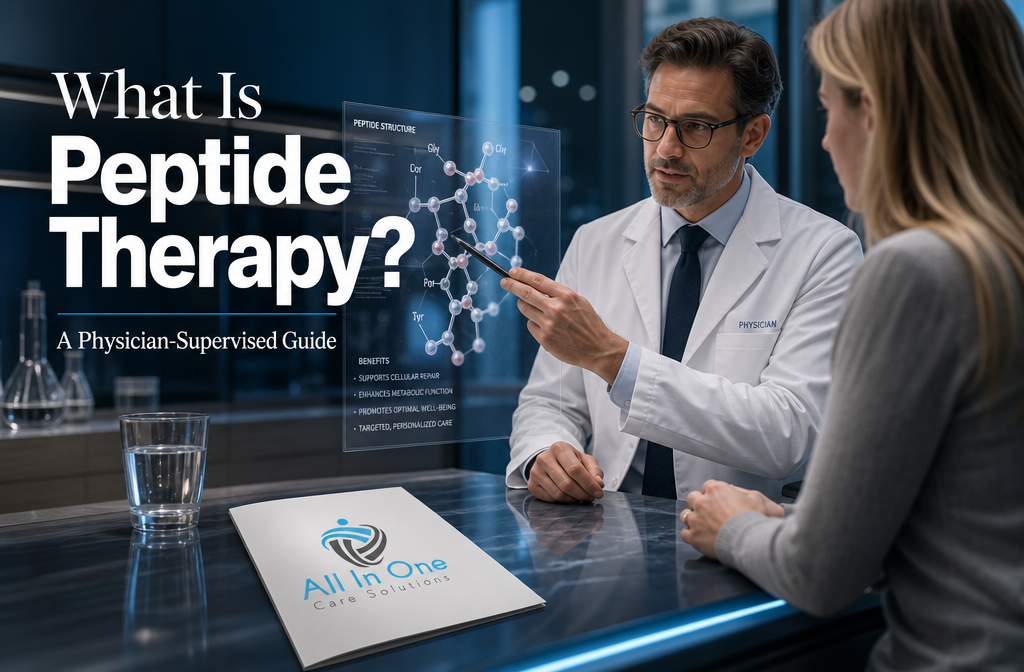
What Is Peptide Therapy? A Physician-Supervised Guide
Last updated: June 10, 2026
Quick Answer: Peptide therapy is a medically supervised treatment that uses short chains of amino acids (peptides) to signal the body to repair, regulate, or optimize specific biological functions. It is used for goals ranging from anti-aging and weight management to injury recovery and hormonal support. In 2026, physician-supervised peptide therapy in Miami is available at specialized clinics that customize protocols based on lab testing, health history, and individual goals.
Key Takeaways
- Peptides are naturally occurring molecules already present in your body; therapy uses pharmaceutical-grade versions to support specific biological processes.
- Common protocols include BPC-157 for tissue repair, CJC-1295/Ipamorelin for growth hormone support, and PT-141 for sexual wellness.
- Peptide therapy is not the same as hormone replacement therapy, though the two are sometimes used together.
- Most people begin noticing changes within 4 to 12 weeks, depending on the peptide and the condition being addressed.
- Compounded peptides are not FDA-approved drugs; they are prepared by accredited compounding pharmacies and must be prescribed by a licensed physician.
- Cost typically ranges from $150 to $600 per month depending on the protocol, and most insurance plans do not cover it.
- Certain groups, including pregnant women, people with active cancers, and those on specific medications, should not use peptide therapy without careful physician review.
- Choosing a licensed medical clinic, not a wellness spa or online vendor, is the single most important safety step.
- Patients in Miami Gardens, Miami Lakes, and Hialeah can access physician-supervised peptide therapy through primary care clinics that also offer lab testing and ongoing monitoring.
- Results vary; a baseline medical evaluation and follow-up labs are essential for safe, effective treatment.
What Exactly Are Peptides and How Do They Work in the Body
Peptides are short chains of amino acids, the same building blocks that make up proteins. Your body already produces thousands of different peptides naturally, and they act as biological messengers that tell cells what to do, when to grow, when to repair, and how to respond to stress or injury.
When peptide levels decline with age or due to chronic illness, specific functions slow down. Therapeutic peptides work by mimicking or stimulating these natural signaling pathways.
- Growth hormone-releasing peptides (like CJC-1295 and Ipamorelin) signal the pituitary gland to produce more growth hormone.
- Tissue repair peptides (like BPC-157) accelerate healing in tendons, muscles, and the gut lining.
- Metabolic peptides influence fat storage, insulin sensitivity, and energy regulation.
Because peptides act on specific receptors, they tend to be more targeted than many traditional medications. However, that specificity also means the wrong peptide for the wrong condition will produce little benefit and could cause unintended effects. Physician supervision is not optional; it is what makes the difference between a safe outcome and a wasted investment.
What Conditions Can Peptide Therapy Help Treat
Peptide therapy is used to support a range of health goals, but it is not a cure for any disease. Physician-supervised protocols are most commonly applied to the following conditions and goals:
| Condition or Goal | Commonly Used Peptide |
|---|---|
| Growth hormone deficiency / anti-aging | CJC-1295, Ipamorelin, Sermorelin |
| Tissue and injury recovery | BPC-157, TB-500 |
| Medical weight loss support | AOD-9604, CJC-1295 |
| Sexual dysfunction | PT-141 |
| Immune modulation | Thymosin Alpha-1 |
| Cognitive support | Selank, Semax |
| Gut health and inflammation | BPC-157 |
Patients seeking medical weight loss in Miami Gardens sometimes combine peptide protocols with programs like tirzepatide, particularly when metabolic support is part of a broader treatment plan.
Important note: Peptide therapy is not a replacement for treating underlying conditions. If you have diabetes, thyroid disease, or cardiovascular issues, those conditions require primary care management first. Peptides work best as a complement to, not a substitute for, evidence-based chronic disease management.
What Are the Most Common Types of Peptide Treatments
The most commonly prescribed peptides in physician-supervised clinics in 2026 fall into a few clear categories.
Growth hormone secretagogues:
- CJC-1295 with or without DAC
- Ipamorelin
- Sermorelin
These are often combined (CJC-1295/Ipamorelin is a popular pairing) to support muscle recovery, sleep quality, fat metabolism, and energy levels in adults over 35.
Tissue repair peptides:
- BPC-157 (Body Protection Compound): used for gut healing, tendon repair, and inflammation reduction
- TB-500 (Thymosin Beta-4): supports cellular repair and flexibility
Metabolic and weight-related peptides:
- AOD-9604: a fragment of human growth hormone studied for fat metabolism
Immune support:
- Thymosin Alpha-1: used to modulate immune response, particularly in patients with chronic infections or immune dysregulation
Sexual wellness:
- PT-141 (Bremelanotide): prescribed for sexual dysfunction in both men and women
Each protocol is delivered through subcutaneous injection (under the skin), nasal spray, or oral capsule depending on the specific peptide. Your physician will determine the delivery method, dose, and frequency based on your labs and goals.
How Is Peptide Therapy Different from Hormone Replacement
Peptide therapy and hormone replacement therapy (HRT) are related but distinct treatments. HRT directly replaces hormones like testosterone, estrogen, or progesterone that the body is no longer producing in adequate amounts. Peptide therapy, by contrast, signals the body to produce or regulate its own hormones and repair processes.
Think of it this way: HRT delivers the hormone directly. Peptide therapy tells your body to make more of it on its own.
Key differences:
- Peptides do not suppress the body’s natural hormone production the way exogenous hormones can.
- HRT is typically used when hormone levels are clinically deficient; peptide therapy can be used earlier, in a preventive or optimization context.
- The two are sometimes combined under physician supervision for patients with significant hormonal decline.
- HRT is more likely to be covered by insurance; peptide therapy generally is not.
Patients interested in both approaches should discuss them together with their physician during a comprehensive evaluation that includes lab testing in Miami to establish baseline hormone and biomarker levels.
Are Peptide Treatments Safe or Do They Have Serious Side Effects
For most healthy adults, physician-supervised peptide therapy carries a low risk of serious side effects. That said, safety depends heavily on the specific peptide, the dose, the source, and whether the patient has been properly screened.
Common, mild side effects include:
- Injection site redness or irritation
- Temporary water retention (with growth hormone-releasing peptides)
- Mild fatigue or headache during the first 1 to 2 weeks
- Increased hunger (with some growth hormone secretagogues)
Less common but more serious concerns:
- Elevated fasting glucose or insulin resistance with long-term growth hormone stimulation
- Potential interaction with cancer-related pathways (growth hormone stimulation is contraindicated in active malignancy)
- Cardiovascular effects in patients with pre-existing heart conditions
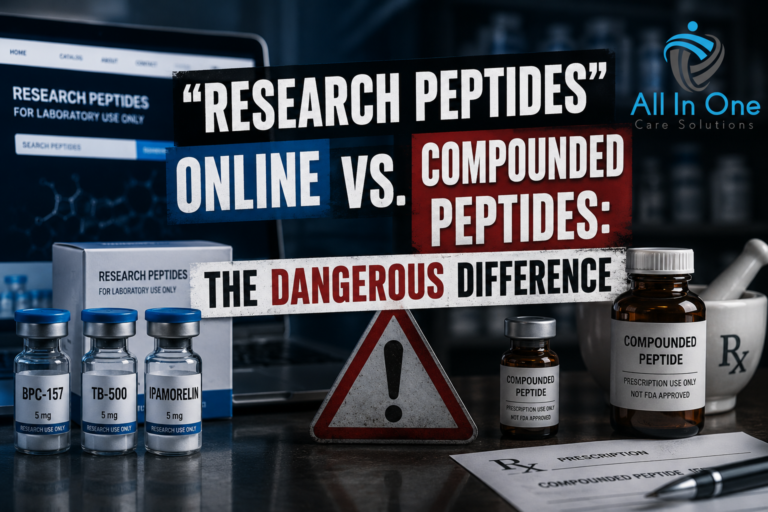
The critical safety factor is sourcing. Peptides purchased from unregulated online vendors or non-medical sources carry serious contamination and dosing risks. Physician-supervised clinics use pharmaceutical-grade compounded peptides from accredited, licensed compounding pharmacies, which are subject to quality testing standards.
Who Should Not Get Peptide Therapy
Peptide therapy is not appropriate for everyone. A physician must review your full medical history before any protocol begins.
Contraindications and cautions include:
- Active cancer or a history of hormone-sensitive cancers (growth hormone-releasing peptides may stimulate tumor growth)
- Pregnancy or breastfeeding
- Uncontrolled diabetes or significant insulin resistance
- Severe kidney or liver disease
- Patients on immunosuppressive medications (depending on the peptide)
- Children and adolescents, unless under specialist supervision for specific diagnosed conditions
If you are over 50 and have multiple chronic conditions, a same-day physician consultation is the appropriate first step before considering any peptide protocol. Our same-day appointments in Miami Gardens allow patients to get a proper evaluation without a long wait.
Can I Do Peptide Therapy If I Am Over 50
Yes, and in fact many of the most studied applications of peptide therapy are specifically relevant to adults over 50. Growth hormone secretion naturally declines with age, a process called somatopause, and peptides like Sermorelin, CJC-1295, and Ipamorelin are designed to address this decline.
Adults over 50 who are candidates for peptide therapy often report improvements in:
- Sleep quality and duration
- Muscle mass and recovery time
- Fat distribution, particularly around the abdomen
- Energy levels and cognitive clarity
Choose peptide therapy over 50 if: You have had a baseline lab panel confirming low IGF-1 levels or growth hormone deficiency markers, you are otherwise in stable health, and you are working with a physician who monitors your response every 3 to 6 months.
Be cautious if: You have a history of cancer, uncontrolled blood pressure, or are on multiple medications that have not been reviewed for interactions. Patients managing chronic conditions through chronic disease management in Miami should always integrate peptide therapy into their overall care plan, not pursue it separately.
How Long Does It Take to See Results from Peptide Treatments
Most patients begin to notice initial changes within 4 to 6 weeks, with more significant results appearing between weeks 8 and 12. Full benefits from growth hormone-releasing peptide protocols typically develop over 3 to 6 months of consistent use.
General timeline by goal:
- Sleep improvement: Often noticed within 2 to 3 weeks
- Energy and mood: 4 to 6 weeks
- Body composition changes: 8 to 12 weeks
- Tissue repair (BPC-157): Varies widely; some patients report joint or gut improvement within 3 to 4 weeks
- Immune modulation (Thymosin Alpha-1): Effects may take 6 to 8 weeks to become apparent
Results vary based on age, baseline health, lifestyle factors, and adherence to the protocol. Patients who also support their treatment with adequate sleep, nutrition, and exercise consistently see better outcomes than those relying on peptides alone.
Complementary treatments like NAD+ IV therapy in Miami Gardens or a Myers’ Cocktail IV drip can support cellular energy and recovery alongside a peptide protocol.
How Much Does Peptide Therapy Cost on Average
Peptide therapy costs vary depending on the protocol, the clinic, and the duration of treatment. In Miami in 2026, patients can expect the following general ranges:
| Protocol | Estimated Monthly Cost |
|---|---|
| Sermorelin (single peptide) | $150 to $250/month |
| CJC-1295/Ipamorelin (combo) | $250 to $400/month |
| BPC-157 | $150 to $300/month |
| Thymosin Alpha-1 | $300 to $600/month |
| Multi-peptide protocols | $400 to $800+/month |
These figures are estimates based on typical compounding pharmacy and clinic pricing in South Florida. Actual costs depend on dose, frequency, and whether lab monitoring is included.
Are peptide injections covered by insurance? In most cases, no. Because compounded peptides are not FDA-approved drugs, standard health insurance plans, including Medicare and Medicaid, do not cover them. Some clinics offer flexible payment plans. At All In One Care Solutions, we offer flexible medical payment plans to help patients access supervised wellness treatments without the burden of large upfront costs.
How Do I Find a Reputable Doctor Who Does Peptide Treatments
Finding a qualified physician for peptide therapy in Miami requires more than a Google search. Here is what to look for:
Verify these before booking:
- The provider is a licensed MD, DO, or NP practicing under physician supervision
- The clinic uses compounded peptides from a licensed, accredited (503A or 503B) compounding pharmacy
- A full medical history review and lab work are required before any prescription is written
- The clinic provides ongoing monitoring, not just a one-time prescription
- The provider can explain the mechanism, risks, and expected outcomes of your specific protocol
Red flags to avoid:
- Clinics that prescribe peptides without labs or a medical consultation
- Online vendors selling “research peptides” without a prescription
- Providers who cannot name the compounding pharmacy they use
- Any clinic that guarantees specific results
Our primary care clinic in Miami Gardens follows a structured intake process: consultation, lab panel, personalized protocol, and scheduled follow-up. This is the standard that protects both patient safety and treatment effectiveness.
What Mistakes Do People Make When Starting Peptide Therapy
The most common mistake is bypassing physician supervision entirely. Patients who purchase peptides from unregulated online sources, skip baseline labs, or self-dose based on internet forums are taking serious risks with both safety and money.
Other frequent mistakes:
- Starting multiple peptides at once: This makes it impossible to identify which peptide is causing an effect, positive or negative.
- Expecting immediate results: Impatience leads patients to abandon protocols before the 8 to 12-week window when meaningful changes typically appear.
- Ignoring lifestyle factors: Peptides are not a substitute for sleep, nutrition, or exercise. Patients who treat them as a shortcut consistently underperform.
- Not disclosing all medications: Some peptides interact with medications for diabetes, blood pressure, or thyroid conditions.
- Skipping follow-up labs: Without monitoring, there is no way to confirm the protocol is working safely or adjust the dose appropriately.
What Are Alternative Treatments If Peptide Therapy Does Not Work for Me
If peptide therapy is not appropriate or does not produce the desired results, several evidence-based alternatives exist depending on the underlying goal.
For anti-aging and energy:
- NAD+ IV therapy supports mitochondrial function and cellular repair through a different pathway than peptides
- Glutathione IV therapy addresses oxidative stress and immune function
- Traditional hormone replacement therapy if deficiency is confirmed by labs
For weight management:
- GLP-1 receptor agonists like semaglutide or tirzepatide are FDA-approved medications with strong clinical evidence for medical weight loss
For tissue repair and recovery:
- Physical therapy combined with anti-inflammatory protocols
- Platelet-rich plasma (PRP) injections for joint and tendon injuries
For immune support:
- Immune boost IV therapy with high-dose vitamin C, zinc, and B-complex vitamins
The right alternative depends on your specific labs, goals, and medical history. A physician consultation is the most direct path to finding the right fit.
Frequently Asked Questions
What is peptide therapy in simple terms?
Peptide therapy uses short chains of amino acids to send specific signals to your body’s cells, prompting them to repair tissue, regulate hormones, reduce inflammation, or support metabolism. It is administered under physician supervision using pharmaceutical-grade compounded formulations.
Is BPC-157 legal in 2026?
BPC-157 is legal in the United States when prescribed by a licensed physician and compounded by an accredited pharmacy. It is not FDA-approved as a drug, but it can be legally prescribed as a compounded medication for individual patients. It is banned by the World Anti-Doping Agency (WADA) for competitive athletes.
How is peptide therapy administered?
Most peptides are delivered via subcutaneous injection (a small needle under the skin, similar to insulin injections). Some are available as nasal sprays or oral capsules, though the latter have lower bioavailability. Your physician will recommend the appropriate delivery method for your protocol.
Do I need a prescription for peptide therapy?
Yes. In the United States, peptides used for therapeutic purposes must be prescribed by a licensed physician. Any vendor offering peptides without a prescription is operating outside legal and safety standards.
Can peptide therapy help with weight loss?
Some peptides, particularly those that stimulate growth hormone or influence fat metabolism, can support weight loss as part of a broader program. However, for significant medical weight loss, GLP-1 medications like tirzepatide typically produce more consistent and well-documented results.
Is there a difference between peptide therapy for men and women?
The protocols differ based on individual hormonal profiles and goals, but both men and women can benefit from peptide therapy. Women often use peptides for skin health, hormonal balance, and recovery, while men frequently focus on muscle composition, energy, and sexual wellness.
How do I know if peptide therapy is working?
Follow-up lab work at 3 and 6 months is the most reliable indicator. Clinically, patients typically track sleep quality, body composition, energy, and recovery time. Subjective improvement without lab confirmation is not sufficient for dose adjustments.
Are there peptide options for patients who speak Spanish?
Yes. All In One Care Solutions provides bilingual care in English and Spanish, serving patients across Miami Gardens, Miami Lakes, and Hialeah. Consultations, protocols, and follow-up care are available in both languages.
What is the difference between a peptide and a protein?
Peptides are shorter chains of amino acids, typically fewer than 50. Proteins are longer chains. Peptides are small enough to be absorbed and act as targeted signaling molecules, which is why they are used therapeutically.
Can I combine peptide therapy with IV therapy?
Yes, and many patients do. IV therapy delivers nutrients and cofactors that support cellular health, which can complement peptide protocols. Common combinations include NAD+ IV therapy for energy support alongside growth hormone-releasing peptides.
Conclusion
Peptide therapy represents a growing area of physician-supervised medicine that offers targeted support for recovery, aging, metabolic health, and hormonal balance. It is not a shortcut, and it is not appropriate for everyone. But for adults who have completed a proper medical evaluation, confirmed their candidacy through lab testing, and are working with a licensed provider, it can be a meaningful addition to a comprehensive wellness plan.
In Miami, patients from Miami Gardens, Miami Lakes, and Hialeah have access to medically supervised peptide therapy through clinics that combine primary care, lab testing, and ongoing monitoring under one roof. That integrated approach, not a standalone peptide prescription, is what produces safe and consistent outcomes.
Your next steps:
- Schedule a physician consultation that includes a full lab panel to establish your baseline.
- Discuss your specific goals, whether that is recovery, energy, body composition, or hormonal support.
- Ask your provider which compounding pharmacy they use and confirm it is accredited.
- Plan for a minimum 3-month commitment with follow-up labs before evaluating results.
At All In One Care Solutions in Miami Gardens, we offer same-day appointments for new patients seeking medically supervised peptide therapy, preventive care Miami services, and comprehensive wellness programs. Contact our clinic to schedule your consultation and take the first step toward a physician-guided plan built around your individual health profile.
Tags: peptide therapy Miami, peptide injections, BPC-157, CJC-1295 Ipamorelin, medically supervised peptide therapy, anti-aging Miami, peptide clinic Miami Gardens, compounded peptides, growth hormone peptides, medical weight loss Miami, preventive care Miami, wellness injections