Peptide Therapy in Miami Gardens: What to Expect at Your First Consultation
Last updated: June 10, 2026
Quick Answer: Peptide therapy in Miami Gardens involves a physician-supervised consultation where your health history, lab work, and wellness goals are reviewed before any treatment begins. Your first visit typically takes 45 to 60 minutes, ends with a personalized protocol, and costs between $100 and $250 depending on the clinic and services included. Most peptide treatments are self-pay, though some labs may be covered by insurance.
Key Takeaways
- Peptides are short chains of amino acids that signal your body to perform specific functions, such as producing growth hormone, reducing inflammation, or burning fat.
- Your first consultation at a peptide clinic in Miami Gardens will include a health history review, goal assessment, and often baseline bloodwork.
- Common treatment goals include weight loss, muscle recovery, better sleep, anti-aging, and hormone support.
- Most peptide therapy programs are not covered by insurance and are billed as self-pay wellness services.
- Compounded peptides are not FDA-approved drugs; results vary by individual and protocol.
- You should look for a board-certified physician or licensed medical provider overseeing your care.
- Side effects are generally mild but can include injection site reactions, water retention, or temporary fatigue.
- Visible results typically begin within four to twelve weeks, depending on the peptide used and your health baseline.
- Peptide therapy pairs well with complementary services such as IV therapy in Miami Gardens and medically supervised weight loss programs.
- Always confirm that your clinic uses pharmaceutical-grade compounded formulations from an accredited pharmacy.
What Exactly Are Peptides and How Do They Work in Your Body
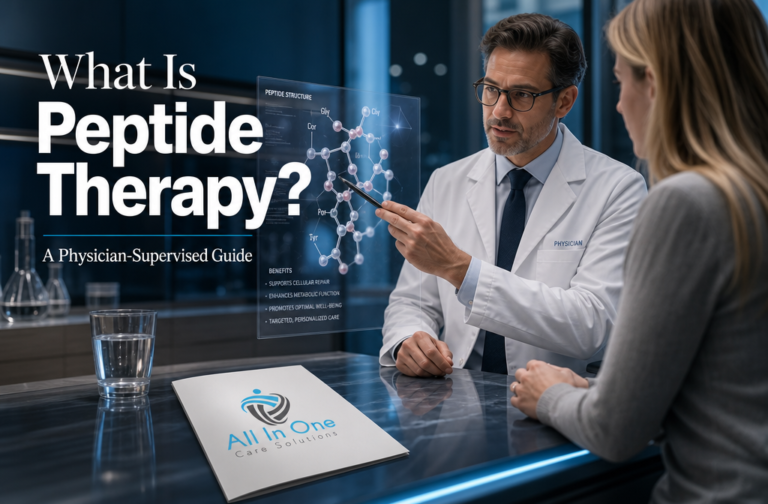
Peptides are short chains of amino acids, which are the building blocks of proteins. They act as biological messengers, telling your cells and glands to carry out specific tasks, such as releasing growth hormone, repairing tissue, or regulating inflammation.
Your body already produces hundreds of peptides naturally. As you age, production of key peptides declines, which can contribute to slower recovery, reduced muscle mass, increased fat storage, and lower energy levels. Therapeutic peptides, administered under medical supervision, are designed to restore or amplify these signals.
For example:
- CJC-1295 with Ipamorelin stimulates the pituitary gland to release more growth hormone, supporting muscle growth and fat metabolism.
- BPC-157 (Body Protection Compound) has been studied for its role in tissue repair and reducing gut inflammation.
- Sermorelin is a growth hormone-releasing hormone analog often used in anti-aging protocols.
- Tirzepatide and Semaglutide are GLP-1 receptor agonists technically classified as peptides, widely used in medically supervised weight loss programs in Miami Gardens.
Peptides are typically administered by subcutaneous injection, though some are available as nasal sprays, oral capsules, or topical creams. The delivery method depends on the specific peptide and your treatment goals.
What Medical Conditions Can Peptide Therapy Help Treat
Peptide therapy is used to support a range of health and wellness goals, though it is not a cure for any diagnosed disease. Physicians use peptides as part of a broader clinical strategy.
Common applications include:
- Weight management: GLP-1 peptides like Semaglutide and Tirzepatide are among the most clinically studied for fat loss and blood sugar regulation.
- Muscle recovery and growth: Growth hormone secretagogues such as CJC-1295 and Ipamorelin are frequently used by active adults and athletes.
- Sleep quality: Peptides like DSIP (Delta Sleep-Inducing Peptide) have been explored for improving sleep architecture.
- Hormone optimization: Some peptides support testosterone production or reduce symptoms of hormone decline in both men and women.
- Inflammation and injury recovery: BPC-157 is often discussed in the context of joint pain, gut health, and soft tissue repair.
- Cognitive function: Certain peptides are being studied for neuroprotective effects, though this remains an emerging area.
- Immune support: Thymosin Alpha-1 is used in some protocols to modulate immune response.
Choose peptide therapy if you have wellness goals that have not been fully addressed through diet, exercise, or standard primary care. It works best as part of a supervised, integrative health plan.
Can Peptide Therapy Help With Weight Loss or Muscle Building
Yes, and this is one of the most common reasons patients seek peptide therapy in Miami Gardens. GLP-1 peptides (Semaglutide, Tirzepatide) have strong clinical evidence for weight loss, while growth hormone secretagogues are frequently used to support lean muscle development.
For weight loss specifically, GLP-1 receptor agonists work by slowing gastric emptying, reducing appetite, and improving insulin sensitivity. Patients in medically supervised programs often see meaningful weight reduction within 12 to 24 weeks. Our Semaglutide weight loss program in Miami Gardens and Tirzepatide program are physician-supervised from the first consultation through ongoing monitoring.
For muscle building and recovery, growth hormone-releasing peptides are typically stacked (combined) in a protocol designed around your training schedule and baseline hormone levels. Results depend heavily on diet, exercise, sleep, and consistency with the protocol.
How Much Does a First Peptide Therapy Consultation Cost in Miami Gardens
Initial consultation fees at peptide clinics in Miami Gardens generally range from $100 to $250, though some clinics offer a complimentary first consultation as part of a broader wellness intake. [1]
After the consultation, ongoing treatment costs vary widely based on the peptide protocol:
| Peptide Protocol | Estimated Monthly Cost (Self-Pay) |
|---|---|
| Semaglutide (weight loss) | $200 – $400 |
| Tirzepatide (weight loss) | $250 – $500 |
| CJC-1295 / Ipamorelin | $150 – $350 |
| BPC-157 | $100 – $250 |
| Sermorelin | $150 – $300 |
| NAD+ (IV or injection) | $150 – $300 per session |
These are estimates based on typical compounding pharmacy pricing and clinical fees in the Miami area. Actual costs depend on dosage, frequency, and the specific clinic’s fee structure.
Some clinics offer membership or wellness packages that reduce per-treatment costs significantly. Ask about bundled pricing during your first visit.
Are Peptide Treatments Covered by Insurance or Am I Paying Out of Pocket
In most cases, peptide therapy is a self-pay service. Standard health insurance plans, including Medicare and Medicaid, do not typically cover compounded peptides used for wellness, anti-aging, or performance goals.
However, there are some nuances:
- Lab work ordered during your consultation (bloodwork, hormone panels) may be covered by your insurance depending on your plan and the diagnosis codes used.
- GLP-1 medications like Semaglutide (Ozempic/Wegovy) may be covered when prescribed for Type 2 diabetes or obesity with qualifying conditions, but compounded versions are generally not covered.
- Primary care visits associated with your consultation may be billable to insurance if the provider is in-network and the visit is coded appropriately.
Our primary care services in Miami Gardens accept many insurance plans for the medical evaluation component of your visit. We also serve self-pay patients with transparent pricing and no hidden fees.
What Tests or Bloodwork Do You Need Before Your First Consultation
Most peptide therapy providers will request baseline labs before finalizing your treatment protocol. You may not need to complete all of these before your first appointment, but they are typically ordered at or shortly after the initial consultation.
Standard baseline labs often include:
- Complete Metabolic Panel (CMP): Assesses kidney and liver function, blood sugar, and electrolytes.
- Complete Blood Count (CBC): Evaluates red and white blood cells and platelets.
- Lipid Panel: Cholesterol and triglyceride levels.
- Hormone Panel: Testosterone (total and free), estradiol, DHEA-S, thyroid function (TSH, Free T3, Free T4).
- IGF-1 (Insulin-like Growth Factor 1): A key marker for growth hormone activity, essential before starting growth hormone secretagogue protocols.
- HbA1c and Fasting Glucose: Especially important before starting GLP-1 peptides.
- PSA (for men over 40): Prostate-specific antigen screening.
Our comprehensive medical exams in Miami Gardens include the lab panels most commonly needed for a peptide therapy evaluation. If you already have recent labs from your primary care doctor, bring them to your first appointment.
Who Should Not Get Peptide Therapy and What Are the Health Risks
Peptide therapy is not appropriate for everyone. A qualified physician will screen for contraindications during your first consultation.
Absolute or relative contraindications include:
- Active cancer or a personal history of hormone-sensitive cancers (some peptides stimulate growth pathways)
- Pregnancy or breastfeeding
- Uncontrolled diabetes or severe metabolic disorders (without additional medical management)
- Severe kidney or liver disease
- Known hypersensitivity to specific peptide compounds
- Uncontrolled thyroid disease
Common side effects to be aware of:
- Injection site redness, swelling, or bruising
- Water retention, especially in early growth hormone protocols
- Temporary fatigue or headache during the first few weeks
- Nausea, particularly with GLP-1 peptides at higher doses
- Elevated blood glucose in some growth hormone protocols
- Tingling or numbness (less common)
Most side effects are dose-dependent and resolve with protocol adjustments. This is why physician supervision is non-negotiable. Self-administering peptides purchased online without medical oversight carries significant health risks, including contamination, incorrect dosing, and drug interactions.
How Peptide Treatments Compare to Traditional Hormone Replacement Therapy
Peptide therapy and traditional hormone replacement therapy (HRT) work differently, and one is not universally better than the other. The right choice depends on your lab results, symptoms, and health history.
| Feature | Peptide Therapy | Traditional HRT |
|---|---|---|
| Mechanism | Signals body to produce its own hormones | Replaces hormones directly |
| FDA approval | Compounded peptides are not FDA-approved drugs | Many HRT products are FDA-approved |
| Reversibility | Generally reversible; stimulates natural production | Can suppress natural production over time |
| Customization | Highly individualized protocols | Standardized dosing available |
| Insurance coverage | Rarely covered | Sometimes covered |
| Best for | Early-to-moderate hormone decline, performance goals | Significant hormone deficiency, menopause, hypogonadism |
Many patients in Miami Gardens use both approaches together, with peptides supporting natural hormone production and HRT addressing documented deficiencies. Your physician will recommend based on your lab values and clinical picture.
What Credentials Should You Look for in a Peptide Therapy Specialist
Your peptide therapy provider should be a licensed medical professional with training in functional or regenerative medicine. This is not a service that should be administered by unlicensed wellness coaches or aestheticians.
Look for:
- MD, DO, NP, or PA with active Florida licensure
- Experience in hormone therapy, internal medicine, or functional medicine
- Clinic that uses compounded peptides from a 503B-accredited or state-licensed compounding pharmacy
- Transparent documentation of your protocol, including dosing and monitoring schedule
- Willingness to order and review labs before starting treatment
- Clear informed consent process that explains risks, benefits, and the non-FDA-approved status of compounded peptides
A red flag is any provider who prescribes peptides without reviewing your bloodwork or medical history, or who cannot tell you where the compounds are sourced. [1]
Our primary care doctors in Miami Gardens oversee all peptide consultations with full medical documentation and pharmacy-grade sourcing.
What Common Mistakes Do People Make When Starting Peptide Therapy
Several avoidable errors can reduce results or create safety concerns.
Mistake 1: Skipping baseline labs. Starting a protocol without knowing your IGF-1, hormone levels, or metabolic baseline makes it impossible to track progress or catch adverse effects early.
Mistake 2: Buying peptides online without medical supervision. Research-grade peptides sold online are not manufactured for human use. Purity, sterility, and dosing accuracy are not guaranteed.
Mistake 3: Expecting immediate results. Peptide therapy is not a quick fix. Most protocols require four to twelve weeks before meaningful changes are noticeable.
Mistake 4: Ignoring lifestyle factors. Peptides work best when combined with adequate sleep, protein intake, and regular exercise. They amplify healthy habits; they do not replace them.
Mistake 5: Stopping too soon. Patients who discontinue after two to three weeks because they do not see results often miss the window where the protocol begins working.
Mistake 6: Not disclosing all medications. Some peptides interact with insulin, thyroid medications, or other hormones. Full disclosure at your consultation is essential.
How Long Does a Typical First Consultation Take
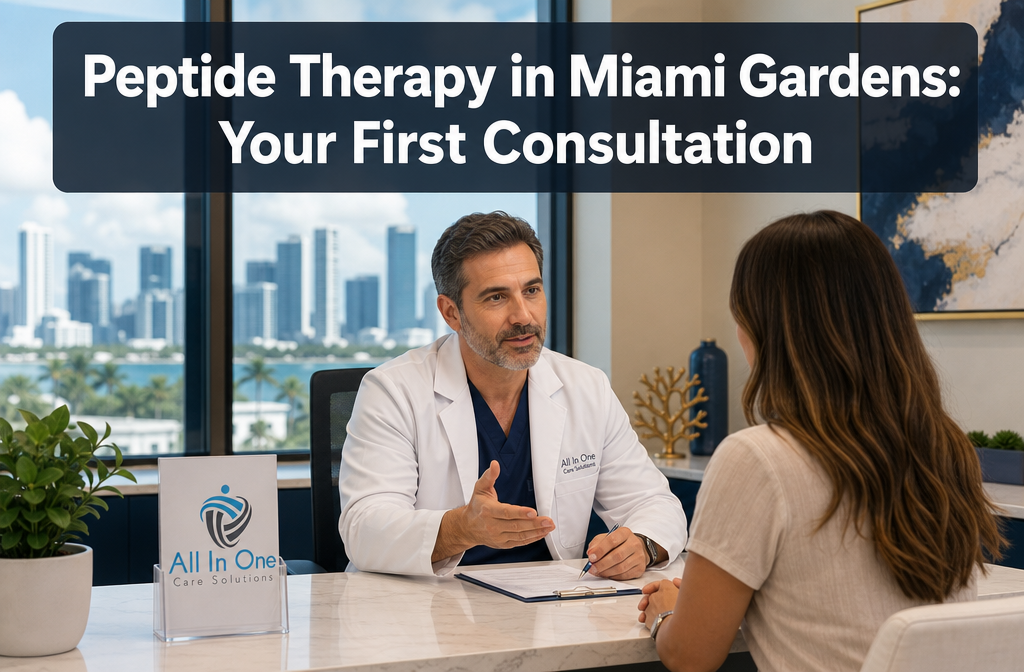
A first peptide therapy consultation at a medical clinic in Miami Gardens typically takes 45 to 60 minutes. [1] This includes:
- Intake form review and health history discussion (10-15 minutes)
- Physician assessment of symptoms, goals, and current medications (15-20 minutes)
- Review of any existing labs or ordering of new bloodwork (5-10 minutes)
- Discussion of treatment options and protocol design (10-15 minutes)
- Informed consent, pricing review, and scheduling of follow-up (5-10 minutes)
If bloodwork is ordered at the same visit, you may need an additional 10 to 15 minutes for the draw. Some clinics schedule a second appointment after labs return to finalize the protocol.
You can also ask about same-day doctor appointments in Miami Gardens if you need to be seen quickly.
How Quickly Can You Expect to See Results From Peptide Therapy
Results depend on the peptide used, your starting health status, and how consistently you follow the protocol. Most patients report the following general timeline:
- Weeks 1-2: Improved sleep quality is often the first change noticed, particularly with growth hormone secretagogues.
- Weeks 3-4: Energy levels and recovery time may begin to improve.
- Weeks 6-8: Body composition changes (fat reduction, muscle tone) become more visible.
- Weeks 10-16: More significant changes in weight, strength, and overall wellness markers.
For GLP-1 peptides used in weight loss, patients typically see measurable weight reduction within four to eight weeks, with continued progress over three to six months.
Results are not guaranteed and vary based on individual physiology, adherence, diet, and exercise habits. Compounded peptides are not FDA-approved drugs, and clinical outcomes differ from person to person.
What Side Effects Might You Experience During Initial Treatments
Most side effects from peptide therapy are mild and temporary, particularly during the first two to four weeks as your body adjusts.
Common early side effects:
- Mild injection site reactions (redness, itching, small bump)
- Temporary water retention or mild bloating
- Fatigue or grogginess, especially with evening injections
- Mild headache during the first week
- Nausea with GLP-1 peptides, which typically improves with dose titration
Less common but worth monitoring:
- Elevated fasting blood glucose (with growth hormone protocols)
- Increased hunger or appetite changes
- Tingling in hands or feet (usually dose-related)
Contact your provider if you experience significant swelling, chest pain, shortness of breath, or severe allergic reactions. These are rare but require immediate medical attention.
Pairing your peptide protocol with supportive treatments like NAD+ IV therapy in Miami Gardens or a Myers’ Cocktail IV drip can help support cellular energy and reduce early fatigue during the adjustment period.
Frequently Asked Questions
Q: Is peptide therapy legal in Miami Gardens in 2026?
A: Yes. Peptide therapy administered by a licensed physician using compounded formulations from an accredited pharmacy is legal in Florida. Compounded peptides are not FDA-approved drugs, but they can be legally prescribed by licensed providers for individual patients.
Q: Do I need a referral to see a peptide therapy specialist?
A: No referral is required. You can schedule a consultation directly with a primary care or wellness clinic that offers peptide services. Many clinics in Miami Gardens accept new patients without a referral.
Q: Can I do peptide therapy while taking other medications?
A: Possibly, but your physician must review all current medications before prescribing. Some peptides interact with insulin, thyroid medications, or corticosteroids. Full disclosure at your consultation is essential.
Q: Are there peptide therapy options in Spanish for Miami Gardens patients?
A: Yes. All In One Care Solutions provides bilingual care in English and Spanish. Terapia de péptidos está disponible con atención médica supervisada para pacientes hispanohablantes en Miami Gardens.
Q: How often do I need to inject peptides?
A: Frequency depends on the protocol. Some peptides are injected daily, others five days per week, and some are used on a cycling schedule. Your physician will specify the exact regimen in your treatment plan.
Q: Can I combine peptide therapy with IV therapy?
A: Yes, and many patients do. IV therapy can complement peptide protocols by delivering nutrients, antioxidants, and hydration directly into the bloodstream. Our Glutathione IV therapy and NAD+ drips are commonly paired with peptide programs.
Q: What happens if I stop peptide therapy?
A: For growth hormone secretagogues, your body will return to its baseline production levels over time. For GLP-1 weight loss peptides, weight regain is possible if lifestyle changes are not maintained. Stopping should always be done with physician guidance.
Q: Is peptide therapy safe for women?
A: Yes, with appropriate protocols. Women use peptide therapy for hormone support, weight management, skin health, and recovery. Dosing and peptide selection differ from male protocols. Our women’s health primary care services include hormone and peptide evaluations tailored to women’s physiology.
Q: Do I have to come into the clinic for every treatment?
A: Not necessarily. Many peptide protocols involve self-administered subcutaneous injections at home after your initial training. Your first few visits will be in-clinic for assessment and instruction, but ongoing treatment is often done independently.
Q: How is peptide therapy different from steroids?
A: Peptides work by stimulating your body’s own hormone production or signaling pathways. Anabolic steroids introduce synthetic hormones directly and suppress natural production. Peptides carry a much lower risk profile and are not classified as controlled substances in the same category as anabolic steroids.
Conclusion
Peptide therapy in Miami Gardens is a growing area of physician-supervised wellness care that can support weight loss, muscle recovery, hormone balance, and overall vitality. But the results you get depend almost entirely on the quality of your first consultation.
A proper first visit means a licensed physician reviews your health history, orders the right labs, explains your options clearly, and builds a protocol around your specific goals. It is not a one-size-fits-all prescription.
Actionable next steps for Miami Gardens residents:
- Schedule a consultation with a licensed primary care or wellness physician who specializes in peptide therapy.
- Gather any recent lab work you have, or ask your provider to order a baseline panel at your first visit.
- Come prepared with a clear list of your health goals, current medications, and any symptoms you want to address.
- Ask your provider about the pharmacy source for all compounded peptides.
- Set realistic expectations: four to twelve weeks for most protocols to show measurable results.
At All In One Care Solutions in Miami Gardens, our physician-supervised approach to peptide therapy starts with a thorough medical evaluation, not a sales pitch. We serve patients across Miami Gardens, Miami Lakes, and Hialeah with bilingual care, transparent pricing, and pharmaceutical-grade compounded formulations.
To schedule your first consultation, visit our primary care clinic in Miami Gardens or book a same-day appointment online. Compounded peptides are not FDA-approved drugs; individual results vary.
References
[1] Peptide Therapy – https://www.iambiowell.com/miami/peptide-therapy?utm_source=openai
Tags: peptide therapy Miami Gardens, peptide injections Miami, BPC-157 Miami, CJC-1295 Ipamorelin Miami, medically supervised peptide therapy, medical weight loss Miami Gardens, hormone therapy Miami, anti-aging clinic Miami Gardens, peptide consultation Miami, compounded peptides Miami, primary care Miami Gardens, wellness injections Miami